
A relocation that lands in November or December asks more of an employee than a summer move does. Holidays, school schedules, and year-end work deadlines all compete for the same few weeks. Here is how HR teams can prepare employees and their families so a year-end move feels organized instead of overwhelming.
Start the Conversation Early
The biggest difference between a calm move and a stressful one is how early the employee knows what is happening. Share the timeline, the benefits, and the first steps as soon as the move is approved. Employees who hesitate about moving often do so because of unanswered questions, a pattern we describe in overcoming reluctance to move.
For fall and winter moves, build in extra lead time. Our guide to fall corporate relocation planning explains how to work backward from the start date.
Give a Clear Picture of the Timeline
Employees should see the whole sequence in one place: key dates, who handles each step, and what they need to do themselves. A checklist helps, and our 2026 employee relocation checklist is a good starting point.
Be specific about the holidays. Tell employees which dates carriers and offices will be closed or slower, so they are not surprised when a pickup or a callback is delayed.
Set Expectations About the Challenges
Every move has friction, and year-end moves add a few more: limited daylight, weather, and busy calendars. Naming those challenges up front makes them easier to handle. Our look at common transferee moving challenges covers what employees typically run into and how to prepare for it.
Involve the Family
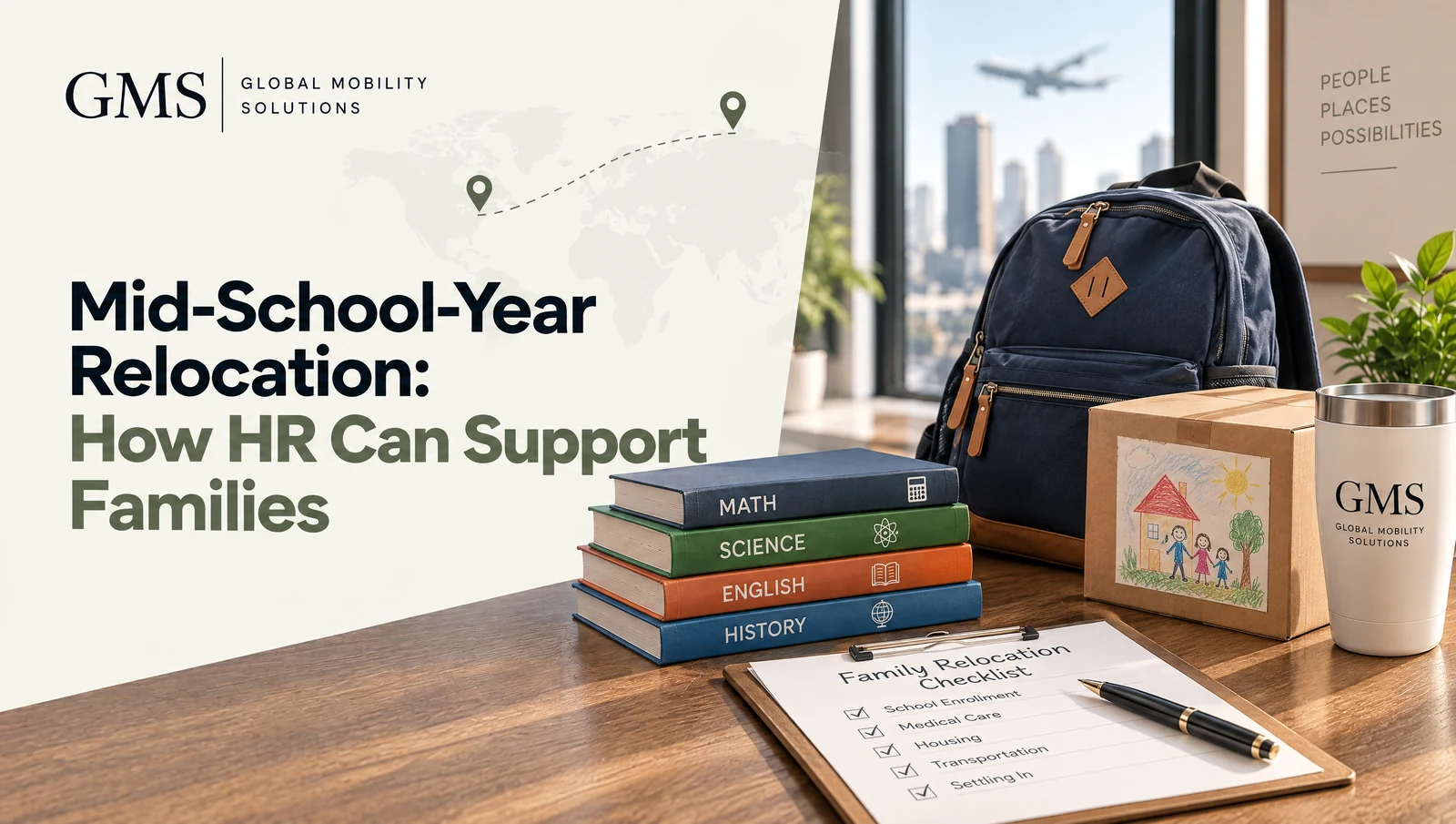
Spouses, partners, and children are part of the decision and the move. Holidays can intensify the emotions, especially when a family is leaving relatives behind or starting over in a new place during a season built around home. Resources such as spousal support and family services help the whole household feel included. If children are changing schools mid-year, see mid-school-year relocation for specific support ideas.
Provide a Single Point of Contact
Employees should never have to wonder who to call. A dedicated relocation coach handles questions, coordinates the vendors, and keeps the move on track, which is why GMS provides a relocation coach to each transferee. The coach’s role in domestic moves is described in the essential role of a relocation coach.
Plan for the Arrival, Not Just the Move
Support should not end when the truck is loaded. Confirm that housing is ready, that utilities are set up, and that the employee knows where to go on the first day. Our destination services help employees and families settle in, which matters even more when they arrive right before the holidays.
Check In After the Move
A short follow-up a couple of weeks after arrival catches problems early, such as delayed deliveries or school enrollment issues. If you would like help preparing your employees for year-end moves, contact GMS to talk through your program.