Categories
Corporate Relocation

Press Release: GMS Takes Top Spot in HRO

Leading Global Mobility Provider Recognized for Exceptional Service and Performance

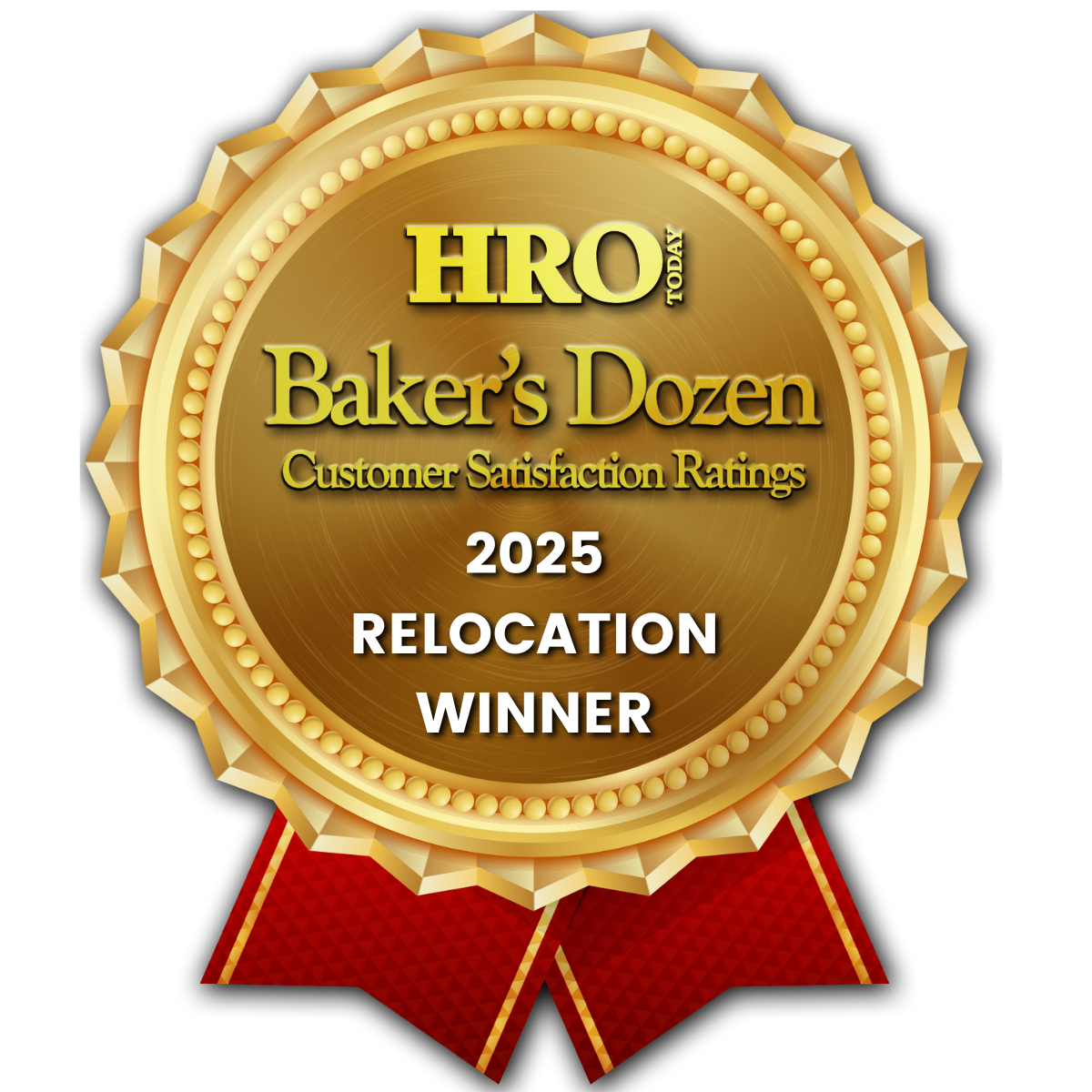
Global Mobility Solutions (GMS) is proud to announce its ranking as the #1 overall global mobility provider in the prestigious 2025 Bakers Dozen Customer Satisfaction Survey conducted by HRO. This recognition underscores the company’s commitment to delivering top-tier mobility solutions to clients worldwide.

The 2025 Bakers Dozen survey, a widely respected industry ranking, evaluates providers based on key metrics, including quality of service, deal size, and breadth of service. In addition to its overall #1 ranking, Global Mobility Solutions also earned recognition for its outstanding performance in individual categories, ranking second in “Quality of Service” and third in “Size of Deal” and “Breadth of Service.”

“Being ranked #1 overall in the 2025 Bakers Dozen survey is a tremendous honor for our team and a direct reflection of the hard work and dedication we put into delivering the best possible mobility solutions for our clients.” Steven Wester, President of GMS, shared his thoughts on the achievement. “We’re particularly proud of our strong showings in service quality, deal size, and breadth of offerings, which illustrate our ability to meet the diverse needs of global mobility programs. This recognition motivates us to continue enhancing our services and innovate to remain a trusted partner for companies managing international workforce mobility.”

HRO’s 2025 Bakers Dozen Rankings – Overall Winners:

  1. Global Mobility Solutions
  2. Xonex Relocation
  3. MoveCenter
  4. Cornerstone Relocation Group
  5. NEI Global Relocation
  6. CapRelo
  7. Aires
  8. Sterling Relocation

GMS’s position as a global mobility leader highlights its dedication to providing high-quality, scalable solutions for businesses worldwide. The company’s comprehensive range of services is designed to simplify the complexities of international relocations, ensuring a seamless experience for both employers and employees.

Categories
Corporate Relocation

Understanding the Difference Between PEO and EOR for Expat Payroll

Which Is Right for Your Company?

As businesses grow internationally, overseeing payroll and ensuring compliance for expatriate workers can be challenging. Many companies use PEO (Professional Employer Organization) and EOR (Employer of Record) to simplify employee management abroad. Although these terms are commonly confused, they refer to distinct approaches, particularly when it comes to managing payroll for expatriates.

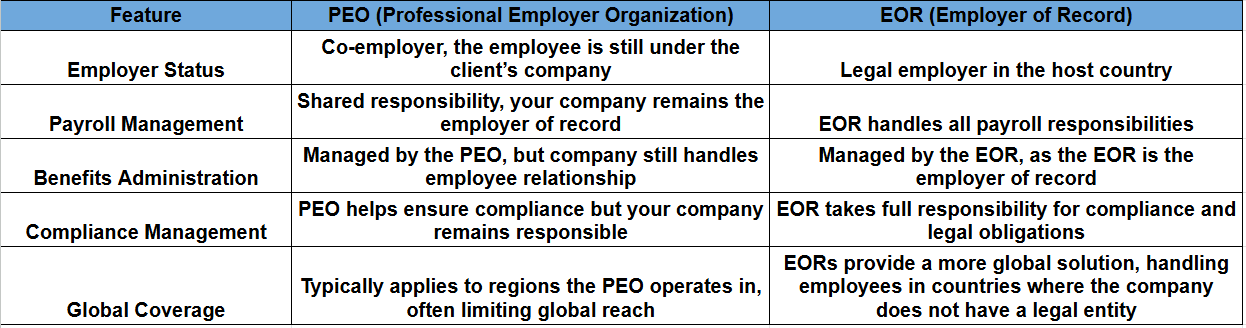
Understanding the nuances between PEO and EOR is crucial for businesses looking to navigate the complexities of international employment. The primary difference between PEO and EOR lies in the level of responsibility and control. With a PEO, your company remains the employer, sharing duties with the PEO. In contrast, an EOR takes on the full employer role, allowing your company to operate without establishing a legal entity in a foreign country.

What is a PEO (Professional Employer Organization)?

A PEO, or Professional Employer Organization, collaborates with your business to oversee HR tasks such as payroll, employee benefits, taxation, and adherence to regulations in a designated area. While your staff is still part of your payroll, the PEO takes on specific employer duties, including compliance with laws, salary management, and benefits handling.

Key Features of a PEO:

  • Co-employment Model: With a PEO, there’s typically a co-employment relationship. This means the PEO handles administrative HR tasks while your company still has a direct relationship with the employee, making decisions about roles, pay, and performance.
  • Payroll and Benefits Management: PEOs handle payroll processing, tax filings, benefits administration, and worker compensation claims. They also help ensure compliance with local labor laws.
  • Risk Management: By partnering with a PEO, your company can mitigate legal risks related to employment law and compliance in foreign countries.

What is an EOR (Employer of Record)?

An Employer of Record (EOR) is the legal employer for your staff while overseas. This entity manages compliance, taxation, payroll, and employment regulations. The main distinction is that the EOR holds legal employment status for your personnel, even though they are engaged in tasks that are directly related to your organization and contribute to your business objectives.

Key Features of an EOR:

  • Full Employer Responsibility: The EOR takes on all the responsibilities of an employer, including hiring, paying, and managing the legal employment obligations of the worker in the host country.
  • Compliance and Legal Oversight: Since the EOR is the official employer, they ensure all local labor laws are followed, including tax regulations, health and safety standards, and contract terms.
  • Payroll and Benefits: Like PEOs, EORs manage payroll processing, tax compliance, and employee benefits. However, the critical difference is that they are the legal employer in the eyes of the law.

Key Differences Between PEO and EOr

data table showing the difference between PEO and EOR

Choosing the Right Option for Your Expatriate Employees

Several critical factors must be carefully assessed when deciding whether to utilize a professional employer organization (PEO) or an employer of record (EOR) to manage the payroll of expatriates. This decision is not merely a matter of preference; it requires a thorough understanding of your organization’s specific needs and the unique circumstances surrounding the expatriate employees you intend to manage.

1. Employee Type:

  • Expatriates on Short-Term Assignments: If your employees are on short-term international assignments (less than a year) and your company has no legal presence in that country, an EOR might be better. The EOR can immediately take on the employer’s responsibilities, ensuring that the employee is legally employed and compliant with local laws.
  • Long-Term Expatriates: A PEO may benefit employees working abroad for extended periods. If your company has a long-term relationship with the employee and is likely to maintain some level of direct supervision, a PEO allows for continued co-employment. This can be helpful if the employee eventually returns to their home country or is relocated elsewhere.

2. Length of Assignment:

  • Short-Term Assignments: If your expatriates work abroad for a few months (e.g., six months or less), an EOR can be a cost-effective and hassle-free option. The EOR takes care of the complexities while your company focuses on the employee’s job role.
  • Long-Term Assignments: For employees staying in a foreign country for an extended period, a PEO might be more suitable if your company plans to maintain a closer working relationship with them. Over the long term, a PEO can also benefit companies planning to set up a more formal operation or subsidiary in that country.

3. Global Expansion Needs:

  • Limited Global Footprint: If your company does not have legal entities in the countries where you need to hire expats, an EOR is an ideal solution. EORs allow you to expand globally without the complexity of establishing local entities or navigating foreign payroll systems.
  • Established Global Presence: A PEO is a good choice if your company already operates in the region where your expatriates work. The PEO can manage HR functions and ensure compliance with local regulations without fully assuming the employer’s role.

4. Compliance and Legal Risk:

  • Complex Compliance Requirements: If the country you’re sending employees to has complex employment laws or regulations (especially in regions with stringent labor laws), an EOR can take the burden off your company. The EOR will handle all the legal and compliance risks, ensuring your expatriates fully comply with local employment laws.

Basic HR Needs: A PEO is a solid option if compliance is not as complex in the host country and your company prefers to maintain a direct relationship with employees. However, careful management must ensure the company complies with all labor laws.

Final Verdict: PEO or EOR?

Choosing between a PEO and EOR depends on expatriate needs, assignment length, and desired legal responsibility; EOR offers flexibility, while PEO suits long-term, specialized requirements.

Ultimately, the choice between a PEO and an EOR hinges on the specific requirements of the organization and the expatriates involved. A PEO may be a better fit if the focus is on long-term, specialized assignments with a stable workforce. Conversely, if the organization prioritizes flexibility and the ability to adapt to changing project needs, an EOR would likely be the more appropriate choice. Careful consideration of these factors will ensure that the selected model aligns with the company’s strategic goals and the expatriates’ needs.

Whether you partner with the right provider ensures your expatriate payroll is streamlined, compliant, and efficient, helping your company expand globally. Schedule a consultation with Global Mobility Solutions today, and we will help you decide which route to take.

We're Here to Help! Request a Courtesy Consultation

Are you ready to talk to a Mobility Pro? Learn how GMS can optimize your mobility program, enhance your policies to meet today’s unique challenges, receive an in-depth industry benchmark, or simply ask us a question. Your Mobility Pro will be in touch within 1 business day for a no-pressure, courtesy consultation.

Categories
Corporate Relocation Corporate relocation tips Domestic Relocation Domestic Relocation Trends Global Relocation Global Relocation Tips Relocation Management Relocation Policy Review

Maximizing Your Relocation Package: Essential Considerations for Assignees

How to make sure you’re not leaving relocation benefits on the table

Relocating for work can be an exciting yet challenging journey. As companies increasingly offer lump sum payments to facilitate employee relocations, assignees need to plan and strategize to make the most out of these funds. If you’ve just received a lump sum for your move, here’s a comprehensive guide on what to consider to maximize your budget without sacrificing time and quality service.

Work with an RMC to Create a Relocation Plan

The first step in ensuring a successful move is developing a detailed plan. As each relocation is different, consider your family’s unique needs. Working with a relocation management company (RMC) can help get you on the right track. Many RMCs will assign moving employees a relocation coach, who can help outline a plan—but getting ready for the move on behalf of you and your family, ask yourself:

  • Housing Needs: Will you need to break a lease, pay security deposits, or cover home sale/purchase costs? Understand the local housing market to make informed decisions.
  • Final Move Costs: Factor in expenses related to your final move, including transportation (driving or flying), meals, and accommodation during transit. These costs can add up quickly if not accounted for early on.
  • Relocation Tax Implications: Be aware that lump sum payments may be taxable. Consulting a tax professional can help you understand how these funds will impact your overall tax situation.
  • Time Considerations: Planning your moving arrangements can be time-consuming. Be realistic about how much time you can devote to organizing your move while balancing work and personal commitments.

Make a Detailed Budget

Creating a comprehensive budget is essential once you have a plan in place. Outline all anticipated expenses related to your move, ensuring you include:

  • Moving Supplies: Boxes, tape, and other packing materials.
  • Transportation Costs: Fuel, flights, or vehicle rental.
  • Temporary Housing: Costs related to short-term rentals or hotels.
  • Miscellaneous Expenses: These include utility connection fees and pet care.

Establishing a detailed budget can help you track your spending better and identify areas where you can cut costs without compromising quality.

Optimize Your Shipment

When shipping your belongings, consider using a full-pack shipment managed by a Global Mobility Solutions (GMS) provider. Here’s why:

  • Expert Support: A GMS provider offers professional packing and handling, ensuring your belongings are safeguarded throughout the move. In the event of damages or losses, having professional assistance can be invaluable.
  • Reducing Shipment Costs: While saving money by managing your shipment independently may be tempting, a GMS provider often has established relationships with shipping companies, leading to better rates and less hassle.

Leverage a Destination Services Provider (DSP)

A Destination Services Provider (DSP) can be an indispensable asset during relocation. Here’s how they help:

  • Local Expertise: A DSP offers insights into the local area, helping you find suitable housing, schools, and amenities tailored to your family’s needs.
  • Advocacy Upon Arrival: It is crucial to have a local advocate. They can navigate challenges, ensuring a smoother transition into your new community.

Plan for Budget Holds

As you prepare your budget, consider including budget holds for unexpected expenses. Here are some common areas where extra funds might be necessary:

  • Customs Fees: If you’re relocating internationally, customs can be a significant expense.
  • Shuttles and Logistics: Don’t overlook transportation from the airport or rental car services.
  • Unexpected Carry Costs: If your new home isn’t easily accessible, you may incur additional costs for moving your belongings from the moving truck to your new residence.

By anticipating these potential costs, you can avoid the stress of overspending or being caught off guard.

Weigh Temporary Housing vs. Airbnb

Finally, when considering where to stay during your transition, weigh the pros and cons of temporary housing versus Airbnb.

  • Temporary Housing: Often offers more space and amenities, making it a comfortable choice for families. However, it may come at a higher cost and involve longer-term commitments.
  • Airbnb: Provides flexibility and can be a more economical option. Still, consider the trade-offs regarding space and amenities, especially if you’re moving with a family or pets.

GMS Gets Employees from Point A to Point B

Relocating with a lump sum requires thoughtful planning and budgeting. You can maximize your lump sum by creating a comprehensive relocation plan, making a detailed budget, and utilizing the resources available to you, such as GMS. Always think ahead to account for unexpected costs and weigh your temporary housing options wisely. With careful consideration, you can ensure a smooth transition into your new home without compromising the quality of your relocation experience. 

Work with GMS to create comprehensive relocation packages. These packages can be tailored to meet your specific needs, whether you require assistance with finding a new home, settling into a new community, or managing the logistics of the move itself. GMS offers various services, including home search assistance, school search support, and cultural training for those relocating to a new country.

Remember, relocating is not just about moving your belongings; it’s about starting a new chapter in your life. Embrace the change, and don’t hesitate to seek support from friends, family, or professionals during this time. With the correct planning and resources, you can turn what may seem daunting into an exciting opportunity for growth and adventure.

We're Here to Help! Request a Courtesy Consultation

Are you ready to talk to a Mobility Pro? Learn how GMS can optimize your mobility program, enhance your policies to meet today’s unique challenges, receive an in-depth industry benchmark, or simply ask us a question. Your Mobility Pro will be in touch within 1 business day for a no-pressure, courtesy consultation.

Categories
Corporate Relocation

The Best Ways to Stay Organized During a Job Move

Here are some tips for staying organized when relocating for a job

Moving to a new job is exciting but can also be stressful. Whether moving to a new city, shifting within your current town, or moving with children, staying organized during a job move is essential. Moreover, without a plan, it’s easy to become overwhelmed by the various details, from packing and moving logistics to managing your professional responsibilities.

Top 7 Ways to Stay Organized During a Job Move

Breaking down tasks into manageable steps is essential to stay organized during a job move. Whether you’re moving across town or the country, planning and creating a detailed checklist can help you stay on track. Keep important documents, like your job offer and relocation details, in one place. Ensure that your personal life, including finances and housing, is handled well in advance. With the right tools and a clear plan, you can stay on top of everything, making your transition to a new job as seamless as possible.

Start Early and Make a List

The first step in any job move is to start early. Begin by making a detailed list of everything that needs to be done before your first day. Include practical steps like updating your resume, arranging interviews, notifying your current employer, and preparing for the relocation. For example, gather all the necessary documents for international relocation if you’re moving internationally. A well-planned checklist will ensure you don’t miss any steps. Breaking down the tasks into manageable chunks will also make it easier to stay organized during a job move.

Organize Your Packing Strategically

Packing is often one of the most daunting tasks during a move, but staying organized can significantly reduce the stress. Start by packing non-essential items first while keeping crucial belongings—such as work equipment and important documents—easily accessible throughout the process. Clearly label every box with its contents and the room it’s meant for, and consider using a spreadsheet to track what’s inside each box. This way, you’ll save valuable time hunting for items once you arrive at your new destination.

Also, if you’re relocating to a new office, it’s helpful to separate office supplies from personal items to streamline your workspace setup. If you’re wondering how long it takes to pack, the timeline depends on your home or office size and the number of items you need to pack. For example, filling a three-bedroom home can take about 3–5 days, assuming you dedicate a few hours each day. Therefore, planning and breaking the process into manageable steps can ensure a smoother, more efficient move.

Keep Track of Important Dates

Effective time management is vital during a job move. Create a timeline of key dates and tasks, such as your moving date, your first day at the new job, and deadlines for turning in paperwork. Mark these dates on your calendar to ensure nothing is forgotten. You can also set reminders on your phone or computer to alert you about upcoming deadlines.

It’s easy to get caught up in the excitement of a new job, but staying organized during a job move will ensure that you meet all your obligations and are well-prepared for your first day in the new position.

Set Up a Dedicated Moving Folder

Organize all your moving-related documents in one folder as you approach your move date. This folder should contain your job offer, relocation agreements, housing contracts, and other necessary paperwork. Also, keep copies of identification and address change forms in the folder.

Plan Your Finances

Moving involves unexpected expenses. Create a budget that includes moving costs, housing deposits, and related fees. It’s essential to keep track of your financial situation to avoid surprises. Consider consulting with a financial advisor to ensure you’re budgeting correctly for your move.

Stay in Touch with Your New Employer

Maintaining communication with your new employer is essential during a job move. Confirm the details of your start date, work schedule, and any other important information. If you’re relocating far away, asking for advice or assistance regarding housing or local amenities may be helpful. Staying in contact will help you feel more prepared and organized as your move approaches.

Set Up a Moving Day Plan

On the day of the move, it’s vital to have a clear plan. If you’re working with movers, confirm when they arrive and give them instructions on handling your items. However, if you’re moving on your own, enlist the help of friends or family. Plan out the most efficient route to your new home and have a checklist of tasks for the day, including checking that all utilities are set up in the new place and that your old home is secure. If you’re facing some challenges, address any issues early on to overcome housing challenges during relocation.

Final Words

The best ways to stay organized during a job move revolve around careful planning, time management, and prioritizing tasks. Following these tips can minimize the stress often accompanying a job move and ensure you are well-prepared for success in your new role. Take it one step at a time, stay organized, and enjoy the exciting new chapter in your career.

Ready to Calculate YOur Program Savings? Request Access Now!

Are you ready to calculate your potential relocation program savings? Request access to our easy-to-use Relocation Cost Savings Calculator. Your Mobility Pro will grant your access request within 1 business day.

Looking for something?