

Categories
Corporate Relocation Corporate relocation tips Domestic Relocation Relocation Challenges

Family Matters and Career Support for the Trailing Spouse

Relocating employees often face serious concerns regarding their children’s education, family healthcare, eldercare, and the job market for their accompanying partner or fiancé. Understanding your employee’s needs and concerns can help them make the right decision with regard to relocating. While some candidates may appear perfect for a job opportunity on paper there may be a plethora of unseen obstacles that could result in a candidate declining an assignment, or worse, failing to relocate midway through their move.

Impact Stats:

In Worldwide ERC’s latest 2015 U.S. Transfer Volume and Cost Survey there are 3 statistics that will likely cause considerable stress to any human resources professional:

  • The number 1 reason for an employee’s reluctance to relocate is family resistance to the move. (60% of all relocating employees!)
  • The average cost to relocate a home owning employee comes in at around $72,000.
  • Career concerns for the trailing spouse is a top 10 issue in addition to family resistance to the move.

That’s a lot of risk, and highlights the absolute necessity for comprehensive pre-decision planning and quality family support solutions. Understanding your employee’s concerns can help them make the right mobility decision. The right decision means better return on investment for your organization’s mobility program and a smoother transition for the employee and their family.[divider line_type=”No Line” custom_height=”20″]
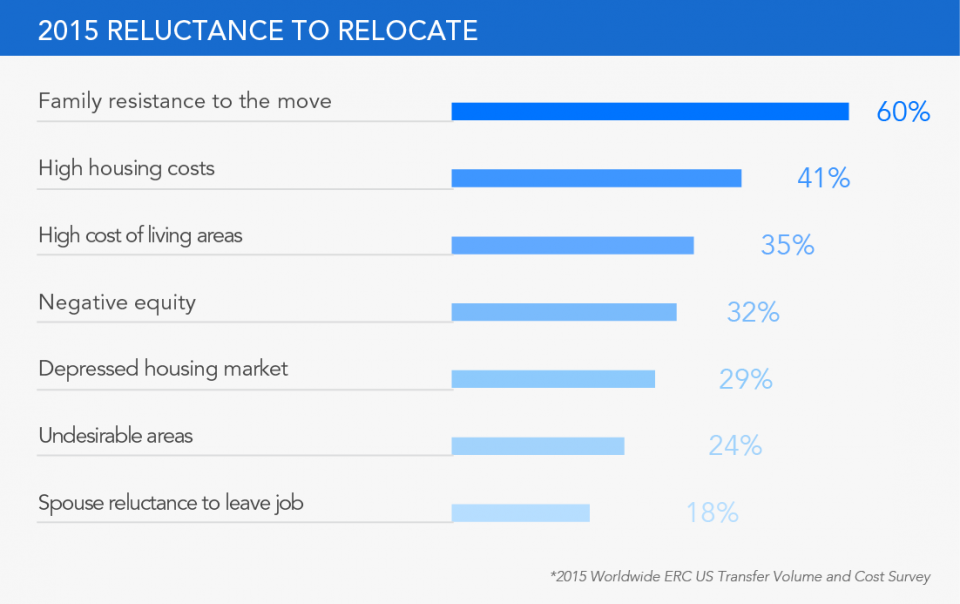
Worldwide Executive Relocation Council Statistics, Reluctance to relocate

Put a plan into place:

Organizational planning before the move is crucial to your program’s success. If you can’t remember the last time your organization revisited your relocation policy and process, it may be time for a quick dust off. Start with the family support essentials:

  • Look into your career and family assistance offerings. Every organization and industry has its own idiosyncrasies. How do you determine how much assistance an employee needs? What level of support is too little? How much is too much? There are a lot of moving parts and given the amount of risk involved, reaching out to relocation management experts should be a part of any comprehensive plan.
  • Provide a single point of contact. According to HRO Today’s 2015 provider report, a single point of contact is a hallmark of quality service at relocation management companies. A relocation manager or “coach” is the employee’s confidant and adviser if concerns arise before or during their relocation. Depending on the organization, policies can be complex and difficult for an employee to navigate. A relocation manager can help explain and coordinate career and family assistance benefits for the employee and their family. Without a single point of contact that understands the big picture some needs may inevitably fall through the cracks.
  • Ensure your organization offers core services. Every relocation program should include a family pre-decision evaluation, career assistance, lifestyle and family support programs. Do your employees fully understand the impact the move will have on their partner’s career or their family’s lifestyle? Is a suburban family moving to a big city? What does the job market at destination look like for the employee’s spouse? Quality pre-decision screening and family support benefits help uncover underlying issues, and address them before they become problematic.
  • Pre-decision screening should be proactive. The core elements of any pre-decision program includes: needs assessments to identify top concerns and potential red flags, general overview of the local job market and community, general information about companies that may fit the partner’s career goals, cost of living assessment and general salary information, and an in depth career assessment such as the Hiring Edge DISC.
  • Be Better Than A Google Search. Some programs have website portals that simply list online resources for job searches. While sending an employee’s spouse to job boards like Career Builder or Jobing is a good start, but such services hardly offer anything more than a simple Google Search would. Comprehensive career assistance should review a candidate’s experience, identify personality type, discuss the importance of corporate culture, develop an application schedule and goals, offer resumé critique, provide networking and interview preparation and assist candidates in navigating the sea of job listings and online resources available today.
  • Leverage your recruiting network. Possibly one of the best resources a company can offer up is their network of recruiters. Most organizations employ 3rd party recruiting companies to meet the demands of their own staffing needs. Providing a warm hand-off to these networks can make a world of difference. This is where some relocation management companies have an edge over in house relocation programs, as well as a key differentiator when comparing RMC’s.
  • Support for the entrepreneur. Some spouses may have a small business and will have unique needs and guidance when relocating their business. Guidance and resources for spouses looking to start a new business or relocating an existing business may include market analysis, networking assistance, and introductions to the startup community in the new area.
  • Understand the stressors of the relocating family. When employees and families relocate they undergo a massive amount of change. The biggest tasks such as finding living accommodations or working with moving companies, require a great deal of attention and leave little time to deal with other needs. This time crunch plus the stress that accompanies relocation can make it difficult for the employee and the family to adjust to the new location, emotionally and physically.
  • Culture shock can happen anywhere. While traditionally thought of as an issue exclusively impacting employee on global assignment, domestic culture shock is a common occurrence. Any drastic change in lifestyle can have an unnerving effect such as: suburban life vs. inner city bustle, west coast laissez-faire style work environments vs. hard nosed New York hustle, even climate and geography play a significant role in a families ability to settle into a new location. Due to these factors, benefit packages should include services that assist the family after the move is completed. (These are sometimes called settling-in or acclimation services.)
  • Get connected to the community. Moving to a new location often means employees and families must recreate their lifestyle without the help of the support network they traditionally relied on. An organization’s relocation program should fill in the gaps of a families support network during the transition with services that identify relevant community networks, activities, medical specialists, secondary and higher educational resources as well as licensed preschools and/or day cares.

While there are a lot of moving parts and face value costs to providing a comprehensive family support plan, the benefits pay dividends. With over 60% of employees confirming that family issues presented major challenges to their relocation, family support services deserve healthy attention. Given a price tag of 72,000 per relocation, organizations can’t likely afford policy missteps. While this article provides a quality overview of the topic, organizational needs are unique and may depend on program type, industry, company size, and geographic location. If you have questions on how your program’s family support benefits measure up, reach out to a family support consultant at Global Mobility Solutions today for a free comprehensive program review.


Categories
Domestic Relocation Domestic Relocation Challenges Relocation Challenges

Navigating Silicon Valley’s Housing Market

Imagine having to relocate to the most expensive metropolitan area in America. An area that stretches from the southern banks of San Francisco to San Jose County, better known as Silicon Valley. A place where “only 44 percent of Santa Clara County households could afford to purchase an entry-level home — defined as costing $833,850, or 85 percent of the county’s median sale price.”  The housing sector has seen an explosion in population “reaching three million people just last quarter at a rate of one person for every sixteen seconds”. As the world’s leader for thousands of startup companies and high tech corporations, it has hit an all-time high in housing cost; forcing workers farther away from their place of employment and schools.

The combination of high-income industry leaders, a rising population and shortage of land is the perfect storm for the future rising cost in real estate. It is important to note that sales data mentioned is not adjusted and accounted for seasonal factors that can influence home sales. Movements in sales prices should not be interpreted as changes in the cost of a standard home, but rather by the price per square foot. Which is determined by how much space a buyer is willing to pay for the property. So when shopping for a home, by focusing on off-peak seasons, i.e., November through February, will help save time and money.

silicon valley housing market“Click Map to Navigate Housing Market in Silicon Valley.” – Powered by Google Maps

Prior to looking for a home without sacrificing your other needs, you may have to consider driving a few extra hours to save money. According to the Silicon Valley Leadership Group and the Silicon Valley Community Foundation in 2015, the average commute time of workers rose by 8 percent in which 1 in 6 commuters travel two or more hours each day to work and growing. It could be difficult to make price comparisons, regarding commute times by having too many locations. So it’s best to limit yourself to two or three locations. By choosing the right real estate agent, they will be able to determine a cost comparison on price per square foot. As well as discovering several resources in the different areas by saving precious contract time and money in the end. Without these vital factors this will cost the winning the offer on the home. If the buyer is not ready to buy they should wait. Only if one has a strong stomach, nerves and able to take strong suggestions from their Realtor.

Currently, housing is being underpriced in hopes of getting an overbid. The strategy works bringing in offers over a $1000/square foot. Looking for the needle in a haystack can be time-consuming, but possible. If there is no time to wait and have a weak stomach, then cash is your quickest answer. While choosing to rent, remember it is always more expensive in the long run. Plan carefully. Renters are being priced out of the areas as prices are increasing, less than 25 percent of workers and just 40 percent of households in metro San Jose can rent or buy average-priced housing.” While Justin Fichelson, stated that “We’re slowing down. Instead of seeing 30 percent appreciation, homeowners may see 10 to 15 percent appreciation, echoing Zillow’s assessment last week that the pace of appreciation is slowing. Redfin had a different take on the strength of the Bay Area housing market. Such debates are common as some perceive shifts in the housing market.” However, housing markets fluctuate during seasons, and while going into the holiday season, we are going to see a slight change in the market.

Ever since Zuckerberg, founder of Facebook, moved to Palo Alto – prices have increased dramatically. Along with the idea of buying multiple lots and rebuilding, brokers are calling Silicon Valley a tear-down market. Anything in the $4 million and below range will likely be demolished, or they will need to rent and place their money in another investment. However on the other side of the spectrum, lower to middle-income housing plans are being implemented by city, state and federal officials. San Jose affordable housing law was upheld earlier this year by state Supreme Court. The California Building Industry Association and the Pacific Legal Foundation announced on Tuesday, and they have asked the U.S. Supreme Court to review a June decision by California’s highest court. Clearing the way for San Jose to implement a long-planned “inclusionary” housing ordinance. Lawyers for the industry argue that San Jose’s law and others like it across California violate federal constitutional protections against the “taking” of private property. Requiring developers of new, for-sale homes to set aside 15 percent of units as affordable housing, or pay a fee.

Instead of using the term “housing bubble”, which is widely used and less understood, a correction in the housing price index will continue into 2016. While San Jose and San Francisco “are projected to have yearly growth rates of around 3%, entering winter 2015-2016 on the downside is of great concern. What started as ‘red hot’ at the start of 2014 may end as ‘in the red’ come 2016,” stated by Alex Villacorta from Clear Capital. As 2015 begins, eight years after the peak and six years after the crash, real estate markets across the country are transitioning from the recovery phase to the expansion phase. For many areas, like Silicon Valley, the expansion phase is well under way. According to Glen Mueller (Full report Author of The Cycle Monitor) Boston, New York, Denver, and San Francisco, are already experiencing incredibly tight rental markets and robust new construction in apartments. Between now and then, aside from the occasional slowdown, the real estate industry is likely to enjoy a long period of expansion.

Brought to you by Global Mobility Solutions, a trusted partner in global talent management.

Categories
Corporate Relocation Domestic Relocation Global Relocation

Global Mobility Solutions Sponsors Global Workforce Symposium

SCOTTSDALE, Ariz., Sept. 1st, 2015 Global Mobility Solutions announces sponsorship of the 2015 Global Workforce Symposium, the annual gathering of relocation professionals from across the world.  This year’s Global Workforce Symposium will be held at Boston’s Hynes Convention Center from October 7–9. Global Mobility Solutions will be exhibiting at the event at booth 518.

GWS 2015 Sponsored by Global Mobility SolutionsWorldwide ERC’s Global Workforce Symposium is the largest conference of its kind.[divider line_type=”No Line” custom_height=”30″]


“Support of Worldwide ERC and participation in this global mobility event is very important to us” says GMS Executive Vice President Michael Setze. “ The chance to learn and share industry expertise with clients, prospective clients, and other workforce mobility professionals is exceptional. We also feel that Worldwide ERC provides strong value with their Certified Relocation Professional (CRP) and Global Mobility Specialist (GMS) certification programs. All of our relocation coaches have earned their CRPs.”[divider line_type=”No Line” custom_height=”30″]

The Global Workforce Symposium is organized annually by Worldwide ERC, also known as the Workforce Mobility Association. Founded in 1964, the organization’s membership includes individuals from diverse fields like HR, recruiting, consulting, relocation and real estate. Worldwide ERC holds the Americas Mobility Conference each spring and the Global Workforce Symposium each fall.

The upcoming symposium will feature a diverse slate of events. Keynote speaker Lisa Bodell, CEO of Futurethink and a board member of the Women’s Congress, will share her provocative insights on modern organizations. Peer 2 Peer Case Study sessions will provide an educational opportunity for attendees. Each 30-minute session presents best practices for specific workforce mobility challenges.

“Nearly 4 out of 5 employees are willing to relocate for the right opportunity, including millennials” adds Setze. “Our role is to help companies facilitate and manage the relocation process. Sponsoring and attending the Global Workforce Symposium is another means for us to be an integral part of the industry’s growth and evolution.”

[divider line_type=”No Line” custom_height=”30″]

About Global Mobility Solutions

Founded in 1987, Global Mobility Solutions is a global corporate relocation services company that specializes in workforce mobility. The company’s corporate relocation services include global assignment management, domestic relocation management and a range of pre-decision solutions. Global Mobility Solutions is a back-to-back winner of HRO Today’s 2014 and 2015 customer satisfaction survey, and rated #1 in the relocation services industry for breadth of services.

Contact:

Thomas Belnap
Marketing Director
800-617-1904 ext. 8832
[email protected]

Categories
Corporate Relocation Domestic Relocation Global Relocation

Powerful Cloud Relocation Technology Unveiled

SCOTTSDALE, Ariz., July 28, 2015 ­ Global Mobility Solutions (https://gmsmobility.com), a leader and innovator in the relocation and talent mobility space, has launched a proprietary, cloud-based MyRelocation technology solution for clients and their relocating employees. MyRelocation technology provides industry-leading tools and services along with advanced 24×7 information access from any device. These solutions support and empower corporate relocation programs across the globe.

MyRelocation Technology | Mobility Cloud TechnologyThe MyRelocation login shown on multiple devices, the cloud technology features a modern responsive design.[divider line_type=”No Line” custom_height=”30″]



“We are committed to offering the best technology value-added services for our clients,” says Global Mobility Solutions (GMS) President Steven Wester, “with a focus on providing the highest level of personal service and attention. Cloud-based MyRelocation technology achieves both of these objectives and underscores our continual focus on providing forward-thinking solutions and unparalleled value.”[divider line_type=”No Line” custom_height=”25″]

MyRelocation technology has been designed from the ground up with feedback from hundreds of human resource professionals and their transferring employees. A convenient transferee dashboard unlocks a wealth of information and functionality, from downloadable relocation guides to interactive Google Maps™ pre-programmed with origin and destination data. Relocating employees can view and track initiated services, submit expenses and connect with their relocation coach all with a few clicks. MyRelocation works with any connected device on any platform, with a responsive design that makes for unmatched ease of use on desktop, mobile or tablet devices.

“Simplicity was a high priority”, said Marketing Director Thomas Belnap. “Many technologies today offer complex dashboards with a melee of options. MyRelocation technology consolidates all of that to deliver a straight forward and intuitive user experience.”

This approach to simplicity is immediately apparent upon logging in to the customizable management dashboard. Initiating new employee relocations can be managed and activated on a single screen. According to GMS executives, MyRelocation also features over 200 customizable reports available on demand. Additionally, MyRelocation features an extensive “Relocation Knowledge Base” drawing upon decades of industry expertise and research. A selection of white papers, blog articles, and other valuable information helps both relocating employees and their employers.

Check Out The New MyRelocation FeaturesCheck Out the New MyRelocation Features

About Global Mobility Solutions

Founded in 1987, Global Mobility Solutions is a global corporate relocation services company that specializes in workforce mobility. The company’s corporate relocation services include global assignment management, domestic relocation management and a range of pre-decision solutions. Global Mobility Solutions is a back-to-back winner of HRO Today’s 2014 and 2015 customer satisfaction survey, and rated #1 in the relocation services industry for breadth of services.

Contact:

Thomas Belnap
Marketing Director
800-617-1904 ext. 8832
[email protected]

Categories
Corporate Relocation Domestic Relocation Domestic Relocation Tips

2 Mandatory Mortgage Changes Starting This Fall

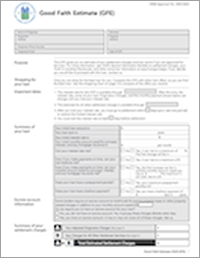
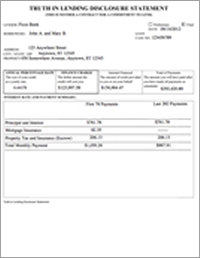
Two key changes set by the Consumer Financial Protection Bureau (CFPB) in 2013 are set to effect mortgage lending practices October 2015. Pushed back from the original implementation date of August. More on why this date was pushed back can be found on the CFPB blog The CFPB rule change will replace the Good Faith Estimate, Early Truth in Lending Disclosure, Final Truth in Lending Disclosure and HUD-1.

One-quarter of uninsured respondents cited good health as the primary reason for a lack of coverage. Newly implemented forms are easier for consumers to use and understand than existing forms according to the Bureau.

According to the CFPB these newly designed forms, “highlight the information that has proven to be most important to consumers. On the new forms, the interest rate, monthly payments, and the total closing costs will be clearly presented on the first page. This will make it easier for consumers to compare mortgage loans and choose the one that is right for them”. The rule’s impact on the relocation industry and implementation background can be found in this related article. Here’s what you need to know in preparation for these pending changes:

Implementation: 

October 3rd, 2015

Scope:
Majority of closed end mortgage loans submitted on or after October 1st, 2015. Not applicable to reverse mortgages, home equity credit lines, or mobile and unattached units.

The Loan Estimate Form:
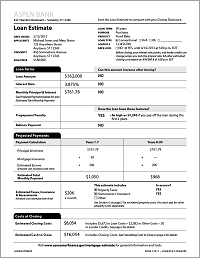
The new Loan Estimate form replaces the Good Faith Estimate and the “early” Truth in Lending Disclosure. This form must be provided to the home buyer within three business days of their mortgage application submission. All written estimates provided to the would-be home buyer must have a clear disclaimer noting that it is not the official Loan Estimate Form.

Replaced Forms New Form

GFE and Initial TiL
View PDF
New CFPB Document
Loan Estimate
View PDF

The Closing Disclosure Form
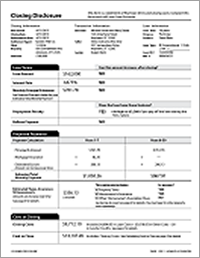
The Closing Disclosure form replaces the HUD-1 and the Truth in Lending Disclosure. Lenders must provide the Closing Disclosure form to the would-be homebuyer at least 3 business days prior to closing. If any significant changes are made to the loan (interest rates, pre-payment penalties, etc.) during the 3 day waiting period the lender must provide a new Closing Disclosure form along with another 3 day waiting period before closing.

Replaced Forms New Form

Final TiL and HUD-1
View PDF
closing disclosure form from the Consumer Financial Protection Bureau
Closing Disclosure
View PDF

Detailed information from the CFPB:
Rule change details for consumers
Detailed CFPB Rule Change Information

Brought to you by Global Mobility Solutions, a trusted partner in global talent management.

Categories
Corporate Relocation Domestic Relocation Global Relocation

Global Mobility Solutions Recognizes Top-performing Relocation Industry Partners at 2015 Forum and Awards Dinner

SCOTTSDALE, Ariz., Mar. 03, 2015 – Global Mobility Solutions, an international leader in corporate relocation services, recently hosted its 2015 Forum and Awards Dinner to honor members of its Premier Alliance Network who have shown extraordinary dedication to customer service throughout the year.

Armbruster Moving of Mayflower Transit received Platinum Partner of the Year award, while Unipack Global Relocation accepted honors for International Partner of the Year. Atlas Van Line providers V. Santini, Inc. and Lytle’s Transfer and Storage were awarded Silver and Gold Partners of the Year, respectively.

Adam Lowy, founder of non-profit Move For Hunger, speaking at GMS 2015 Forum & Awards Dinner | Service Unplugged.
[divider line_type=”No Line” custom_height=”30″]
The theme of this year’s forum was “Service Unplugged,” a nod to the fact that great customer service begins at the personal level – and that technological conveniences are merely tools. The event was held on February 5th at the Hotel Palomar in Phoenix. Hal Becker, bestselling author and renowned expert on customer service and sales, delivered the keynote address. Following Hal Becker’s Keynote speech, a Global Mobility Solutions Client Q&A Panel was held, where partner’s top priorities were discussed in depth. Guest speaker Adam Lowy, founder of Move For Hunger, offered some compelling remarks on how the relocation industry, and GMS in particular, have made tremendous strides toward ending food insecurity. In addition to guest speakers, the 2015 forum featured breakout education sessions between providers and Global Mobility Solutions’ leadership, discussing customer service improvements and efficiency.[divider line_type=”No Line” custom_height=”30″]
“Our 2015 forum and awards dinner was an opportunity to celebrate and recognize exceptional service within the Global Mobility Solutions’ Premier Alliance Network. I’d like to personally congratulate this year’s winners, who have consistently demonstrated the highest standards in customer service,” remarked Steven Wester, president of Global Mobility Solutions. “We simply can’t do what we do without the participation and support of these fine partners – they’ve contributed immensely to making our brand a trusted leader.”

Global Mobility Solutions 2015 Forum and Awards Dinner Keynote Speaker Hal Backer Posing with GMS President Steven Wester. From left: GMS Vice President of Global Services John Fernandez, Keynote Speaker Hal Becker, GMS President Steven Wester, GMS Chief Administrative Officer Fayette Wester.
[divider line_type=”No Line” custom_height=”30″]
“Service Unplugged” evokes the core, hands-on attributes that define winning customer service. For GMS, that means giving individuals and families the most seamless possible relocation experience – allowing them to focus on starting a new life in a new city rather than worrying about logistics. In selecting this year’s award winners, GMS relied on its in-house scoring system that grades the performance of every member of its Premier Alliance Network. On-time performance and claims are among the factors that generate a partner’s score, but customer satisfaction is the most heavily weighted data point.

About Global Mobility Solutions

Founded in 1987, Global Mobility Solutions is a global corporate relocation services company that specializes in workforce mobility. The company’s corporate services include global assignment management, domestic relocation management and a range of pre-decision solutions. Global Mobility Solutions was ranked second in the relocation industry for overall customer satisfaction in HRO Today’s Annual Relocation Survey.

View the full corporate relocation forum gallery on Facebook

Contact:

Thomas Belnap, Marketing Director
800-617-1904 ext. 8832
[email protected]

Categories
Domestic Relocation

Global Mobility Solutions Appoints Tim Rambo as Director of Business Development

SCOTTSDALE, Ariz. January, 2015 – Global Mobility Solutions is pleased to announce the appointment of Tim Rambo as Director of Business Development. He will be responsible for new business development in the Western United States.

”We are most fortunate to have Tim Rambo as part of our team,” commented Executive Vice President Mike Setze. “He has a history of providing exceptional service and guidance to both clients and prospective clients”. Tim Rambo will be based at Global Mobility Solutions headquarters in Scottsdale, Arizona.

Before accepting his new position at Global Mobility Solutions, Tim worked for a decade in the business and financial services industry at leading firms such as Wells Fargo, JP Morgan Chase and PNC Financial. His roles included sales and account management. At PNC Financial, Tim was a member of the corporate relocation team, serving both relocating employees and corporate clients. Tim also brings a wealth of specialized relocation experience in mortgage lending, real estate, and home equity lending. He plans to lean on that experience as he helps build new business relationships at Global Mobility Solutions.

Tim has built a strong reputation of being a proactive business problem solver. He has demonstrated a talent for anticipating and meeting the needs of clients with individualized, effective solutions. Likewise, Tim has consistently been a respected teammate and contributor to his colleagues’ success, a characteristic that Global Mobility Solutions considers essential to its mission.

About Global Mobility Solutions

Founded in 1987, Global Mobility Solutions is a global corporate relocation services company that specializes in workforce mobility. The company’s corporate services include global assignment management, domestic relocation management and a range of pre-decision solutions. Global Mobility Solutions was ranked second in the relocation industry for overall customer satisfaction in HRO Today’s Annual Relocation Survey.

Contact:

Thomas Belnap, Marketing Director
800-617-1904 ext. 8832
[email protected]

Categories
Domestic Relocation Domestic Relocation Trends

Pending changes in real estate laws

Pending Changes Real Estate Laws: Six federal agencies recently adopted new rules requiring mortgage bankers to keep a certain percentage of risk for every loan they provide. As a result, corporate relocation could be affected for the better.

Citing the Associated Press, RISMedia said the agencies are adopting a new, more relaxed approach to mortgage lending. The new stance is one that eliminates the 20 percent down payment if a lender doesn’t hold at least 5 percent of the mortgage securities tied to those loans on its books – or what most consider a high-quality mortgage. In essence, borrowers may soon be able to carry greater debt relative to their income than before, which is good news for prospective homebuyers.

Relaxed regulations in mortgage lending are making it easier to obtain a loan, pending changes real estate laws
Relaxed regulations in mortgage lending are making it easier to obtain a loan.

Talent mobility and refined mortgage lending
The news of the easing mortgage lending practices comes at a particularly interesting time, especially when looked at from a talent mobility perspective. Relocating employees can breathe a sigh of relief when it comes to finding a home in their new location, and renters may be more inclined to purchase.

In fact, The Wall Street Journal reported that Mel Watt, director of the Federal Housing Finance Agency, said both Fannie Mae and Freddie Mac are planning on offering some loans with down payments as small as 3 percent. An agreement was also reached with lenders that outlines what types of mistakes on loans could result in penalties after they’re issued, which could ultimately lower restrictions and ease the loan acquisition process for borrowers with weak credit.

Real estate industry leaders and mortgage bankers have been aggressively lobbying against the 20 percent down payment requirement, noting that it could stifle access to mortgage financing for low- to middle-income borrowers – an integral aspect of the continuing national housing recovery. The new rules come shortly after the real estate market has shown signs of weakening.

Who benefits from the new rules?
That said, it seems as if those on Capital Hill are trying to inject life back into the real estate market. Shortly before the 20 percent down payment regulation was nixed, regulators softened agreements that help protect taxpayers from losses on bad mortgages, The New York Times reported. They also relaxed a regulation that aimed to set safe standards for home loans.

Relocating employees across all industries will likely reap the benefits of the relaxed regulations and pending changes real estate laws recently rolled out by federal regulators. Industry experts feel the new rules are long overdue and that qualified, prospective homeowners couldn’t obtain a line of credit to finance a new home purchase. However, the relaxed regulations, albeit calculated and controlled, will likely help the everyday home buyer secure a mortgage.

Future policy changes could be on their way as well, pending changes real estate laws, The Wall Street Journal added. The Federal Housing Administration is currently under pressure from mortgage lenders to lower the premiums it charges to lenders because it doesn’t offer loans to low- and middle-income borrowers.

Brought to you by Global Mobility Solutions, a trusted partner in global talent management.

Categories
Corporate Relocation Domestic Relocation Domestic Relocation Challenges Domestic Relocation Tips Global Relocation

How to oversee and provide support for millennial transferees

The face of talent management is changing for a wide variety of reasons, but the impact of technology has been a particular catalyst for this evolution.

Today’s new workforce wants to be a part of the new globally connected workplace. Businesses are beginning to see the value in relocation assignments in new and diverse markets, and it’s often young adults who are making the trip to a new location. Companies are investing in the future of talent mobility because millennials are not only well-versed in the technology that’s driving mobility growth, but also because young adults are the future of the modern-day workforce. According to a recent PricewaterhouseCoopers study, Gen Y currently accounts for one-quarter of the workforce. By 2020, that figure will increase to 50 percent.

Support millennials during relocation
Their skills are in high demand, seeing as increased relocations and development in technology are coinciding with one another. However, since industry practices are evolving, the manner in which companies support and oversee transferees will have to mature as well.

A recent Deloitte study outlined a support framework for companies to follow during relocation management. The framework is based on the business value of sending an employee to a new market and the development value for talent growth. Millennial relocation is primarily characterized as a “learning experience” in that it doesn’t cost companies a lot to move young talent, but the developmental ceiling is high since the employee is looking for diversity in experience and professional growth.

Millennial employees want their companies to embrace new technology.

Businesses that move young employees are helping to develop well-rounded leaders of the future. When it comes to millennial support, businesses are primarily focused on developmental reinforcement above all else. PwC found Gen Y employees are more committed to personal learning and development than flexible work hours and cash bonuses from their employers. Seventy percent of millennial respondents said work-life balance was very important to them, so businesses need to moderate the number of hours young assignees work.

Before and during the move, businesses should be ready to offer rental assistance programs, especially those with housing options. Young employees are active, experience-seeking individuals who want to be surrounded by others like them. Helping transferees find lodging in a walkable or culturally vibrant neighborhood is a great place to begin during a relocation, especially since young employees don’t own vehicles like they did in the past. In fact, a recent AAA Foundation for Traffic Safety study found from 2007 to 2011, the number of automobiles purchased by adults aged between 18 and 34 dipped nearly 30 percent, Fast Company reported.

Millennials also have different needs than previous generations; they expect employers to adopt new technology and the flexibility it brings to their lives. Certain rental assistance programs can extend the resources young employees desire to better help streamline the transition. Things like mobile apps and do-it-yourself tools are two aspects of a strong millennial relocation as well. Even corporate resources like hands-on job training or settling-in services that help the employee acclimate to his or her new surroundings are highly beneficial during the process. Millennial transferee support doesn’t stop once the wheels hit the ground in their new location; rather, it’s an ongoing process that requires meeting their complex needs and doing so in a fashion that they can ultimately connect with on a comfortable level.

Since the demand for talent mobility is growing, companies need to adjust with the evolving state of the industry. Young employees are a good investment from a business and developmental standpoint, but they need to be supported with the right technology and continual training and support that will fuel professional growth.

Brought to you by Global Mobility Solutions, a trusted partner in global talent management.

Categories
Domestic Relocation Domestic Relocation Challenges Global Relocation Global Relocation Challenges

Growth in rental market poses challenge to talent mobility

Rental Market Workforce Mobility Challenges

Rental fees are increasing, thanks in part to a tightening rental property market, increasing the challenges for rental market workforce mobility as renters are facing higher prices while wage raises grow at a tepid pace. Domestic relocation may be impacted as a result, posing a challenge for transferees as they look to take on a new location. Companies can provide relocated talent with help before a move, but as rent in most markets continues to mature, transferees are likely to see a larger portion of their income spent toward rent.

Rent, Number of Renters Increasing

Rent is growing in a number of major markets.

According to new industry research, the number of domestic renters grew in 2013. More specifically, a recent study conducted by the National Low Income Housing Coalition found that last year there were 42.4 million renters in the U.S., which represented slight growth from the 41.9 million in 2012. High housing costs continue to plague the modern-day renter as the rental property market tries to combat historically low vacancy rates. Renters made up 36.5 percent of all households in 2013, a nearly 1.5 percent increase from 2012 and close to 4 percent more than in 2006.

Major domestic metropolitan areas have experienced moderate to steep inclines in rent per household in recent years as well. The New York Times, citing real estate website Zillow, recently pointed out that 90 cities in the U.S. had a median rent that was more than 30 percent of the median gross income when factoring out utility fees. Individuals moving within domestic borders will likely have to dedicate a greater portion of their salary toward housing costs. As a result, there is less room for peripheral moving expenses, which can add up quickly.

Further research shows rent will likely increase in the near future as well. Citing research firm Capital Economics, The Times noted rent could rise as much as 4 percent this year, which is a modest incline from the 2.8 percent growth in 2013. However, as inflation in certain markets is annually at 1 percent or higher, rent increases could even outpace Capital Economics’ projections. For instance, rent in Miami costs, on average, 43 percent of the typical household income. In Chicago, that figure rose 10 percent in one year as renters give way to 31 percent of their incomes on average.

Brought to you by Global Mobility Solutions, a trusted partner in global talent management.