

Categories
Global Mobility Global Relocation Global Relocation Trends Relocation Programs

Tokyo-based Employees Urged to Use Relocation Incentives

Japanese government is offering workers perks to relocate to less-populated areas

Tokyo, always known for being one of the most populated cities in the world, is starting to get just a little too crowded. The dynamic lifestyle of this great city is what brings many people to it in the first place. Many relocate to Tokyo for school but then remain for job opportunities. With so many people living in Japan’s capital now, it is estimated that 30% of the country’s entire population is concentrated in the greater Tokyo metropolitan area. This resulted after 25 years of year-over-year hikes in the population numbers. The number of inbound migrants in 2020 was about 38,000, a significant decrease from about 87,000 in 2019 (down about 56%), but still of significant volume.

This centralization of the Japanese population in Tokyo has been identified as a significant national risk. The potential (and realized) damages to the country and the economy that can be caused by disasters such as infectious diseases and earthquakes occurring in such a densely populated area have highlighted the need for a change in thinking. The mitigation of the impact of such disasters occurring in Tokyo can be helped by working towards the building of a decentralized society.

Additional benefits of this new direction can create a positive impact on the people that live in Japan. While there is much to do in Tokyo, like all major cities, there are a few drawbacks. The crowds in this big city atmosphere can make life harder, especially in a pandemic setting like most of the world as seen in the past two years. Additionally, the cost of living is not cheap. Living in the greater Tokyo area can be extremely expensive compared to more rural countryside areas of Japan. In fact, Tokyo is consistently ranked as one of the most expensive cities in the world.

So, what is Japan doing to promote citizens to consider moving to more rural and less crowded parts of the country? The government is offering relocation incentives to those who are able to work remotely from their new home. This big urge to relocate people to less crowded areas can be financially beneficial for those willing to do so.

Financial Support Relocation Incentives

Hoping to revitalize the rural parts of Japan, the government is offering individuals grants of up to 1 million yen (about $9,000 USD) to move out of Tokyo, while working remotely of course. Remote work is an important aspect of this program, removing the need to commute in and out of Tokyo for work. It has been reported that the government is committed to shelling out more than $10 billion yen in grants for this program. 

On top of the grants, local governments are also offering programs to attract new residents to their cities and towns. Many municipalities are providing ongoing support to help new residents find employment. Some of these programs are even geared toward helping entrepreneurs establish a new business in a local storefront. There are also some relocation programs that are helping movers either purchase or rent a home in their new area.

Experience Relocation Support Through GMS

Japan is one of many countries right now offering government relocation incentives. Contact GMS today with any questions regarding your relocation program, policies, or needs. Our qualified team has been helping people relocate all over the world since 1987. We will listen to your needs, examine your relocation program, and provide expert feedback on how to develop a competitive program based on industry best practices.

We're Here to Help! Request a Courtesy Visa Program Consultation

Properly managing a visa and immigration program involves meticulous coordination, precise communication, and worldwide interaction with government agencies, corporate personnel, and relocating employees.

At GMS, we provide you with peace of mind in knowing your mobility program is fully compliant and being managed by the best in the industry.

Request a no-pressure, courtesy consultation from a GMS Mobility Pro. We’ll be in touch within 1 business day.

Categories
Corporate Relocation Domestic Relocation Domestic Relocation Tips Domestic Relocation Trends Global Mobility Global Relocation Global Relocation Tips Global Relocation Trends Relocation Best Practices

Pre-Decision and Best Practices for Global Mobility

Pre-decision Best Practices: Why do many companies have a 50% rate for assignment rejection? It is primarily because the potential transferees do not have a clear understanding of the destination location and the support available for their families.

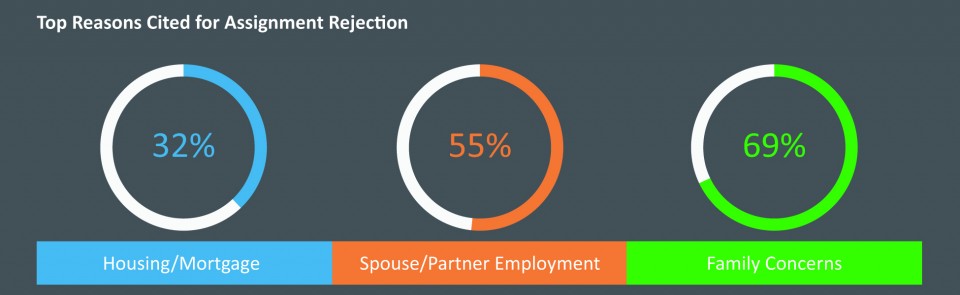
The top 3 reasons cited for rejecting relocation assignments are housing/mortgage concerns, trailing spouse/partner employment concerns, and overall family concerns. Pre-Decision Best Practices

Assignment rejection and failure can be very costly to a company. Firms spend an average of half a year’s salary in recruiting and training when onboarding a new employee. For high-level executives, the expense can be six to nine months of their salaries. However, according to the ERC, it can be as high as three-times an annual salary for international executives. If assignments are rejected, or fail after a move – which adds much more to the financial loss – companies must go through the expense of onboarding and training new staff.


How can companies ensure that they get the right people in the right place at the right time and for the right price?

The answer is to use pre-decision programs. Global Mobility Solutions (GMS) is the pre-decision pioneer and we continue to develop new, innovative features for pre-decision programs.

Although the number is growing, currently only 22 percent of companies around the world are utilizing pre-decision programs. However, when working with an RMC, nearly 60 percent choose to incorporate pre-decision into their mobility management solutions.

Employees decline relocation assignments due to housing, family, and spousal/partner employment concerns. Many firms had a 50% rate for assignment rejection. 32% housing/mortgage, 55% spouse/partner employment, 69% family issues. By using pre-decision, companies increase assignment acceptance, reduce failed relocations, save money, and project a progressive and employee-friendly image.

Going back to the reasons cited for assignment rejection, let’s see how the in-depth questioning and available services of pre-decision can address each of those concerns.


Housing

Candidates are interviewed to learn about community and lifestyle preferences. Candidates are presented with destination spotlights that highlight the cost of living and attractions of the assignment location. Area tours are arranged. Candidates are pre-approved by participating mortgage lenders. Candidates are provided with home selling and home buying assistance.

Spouse/Partner Employment

The pre-decision interview includes an employee’s spouse or partner. Pre-decision best practices programs offer a career assessment to develop an action plan that will help the spouse or partner adjust to the new location. This can include resume services, aggressive job searching, and more.

Family

Through the pre-decision interview process, the specific needs of the family are determined. To help candidates better understand the new location before moving, they are presented with school reports and detailed community information. Community tours are arranged so that transferees and their families can see schools, hospitals, and centers of culture and entertainment prior to moving.


The talent acquisition program manager of a large healthcare company said, “By using pre-decision to initiate relocations prior to the face-to-face interview, we know that transferees have arrived more quickly, have settled better, and stayed longer.”

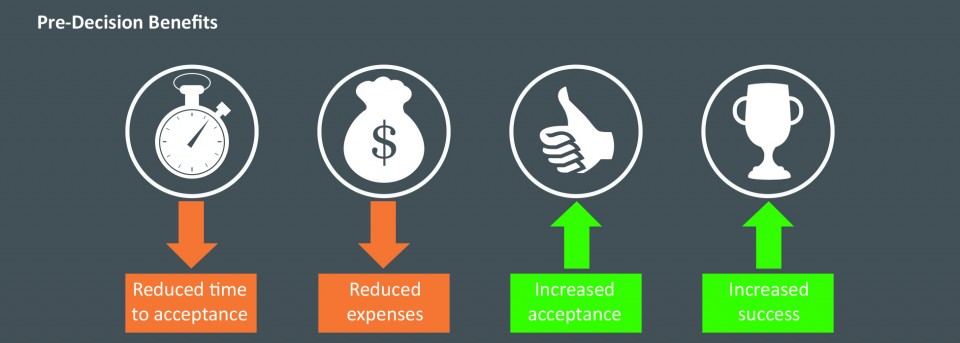
Benefits of utilizing pre-decision programs include reduced time to acceptance, reduced overall costs to the company, an increased acceptance rate, and an increase in successful assignments.

Because of how it engages relocation candidates and their families, increases assignment acceptance and success, and saves companies time and money, pre-decision best practices should be utilized when it comes to mobility management.

Learn more about how pre-decision programs can benefit both you and your transferees.


Looking for something?