With unemployment near a ten-year low and new jobs surpassing monthly expectations, one might be wondering, “Where are all of these opportunities, what are the 50 US cities with the most jobs?”
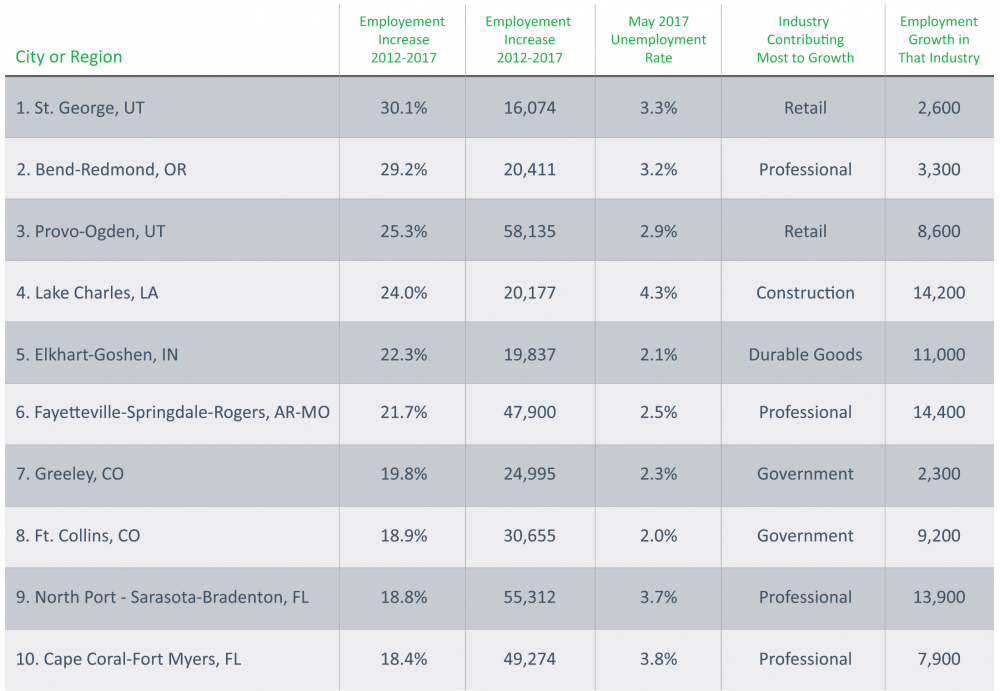
In an article for msn.com this July, writer Michael B. Sauter composed a comprehensive list of the top 50 cities for job growth in the United States. The data was tracked from 2012 through 2017 and details the percentage of employment increase, the number of new jobs, the industry (excluding agriculture) contributing most to the growth in opportunities, as well as other key factors.
The top ten cities experienced job growth from 18% to over 30%. Here is a sampling of the top ten cities from Mr. Sauter’s article:
Not surprising, early 50% of the cities on the comprehensive list were from states that have the highest inbound relocation activity1. Fort Myers, FL earned the number one spot on a list of the top U.S. cities for relocation, as posted by US News & World Report.
Modern Mobility Made Easy™
What this means for you and your relocating employees
Global Mobility Solutions (GMS) has destination spotlights for many of the cities mentioned in the overall list. These spotlights contain information about a city’s climate, geography, transportation, entertainment, culture, sports, schools, and more. GMS spotlights are great tools for helping mobility managers explain the benefits of a relocation assignment and for transferees to become accustomed to an area before actually moving there.
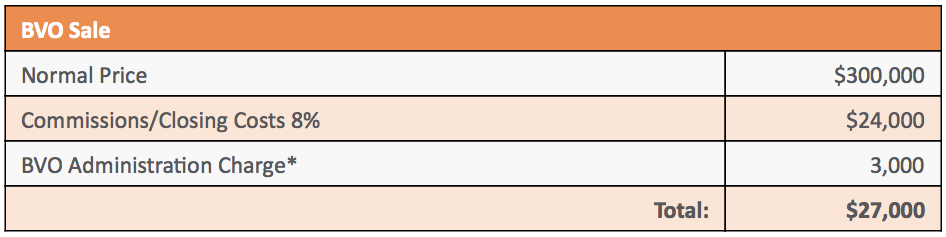
The Buyer Value Option (BVO) program avoids the costly process of “grossing up” dollars used to pay for the commissions and closing costs on the sale of a transferee’s home, enabling a company to reduce relocation expenses.
Typically, the commissions and closing costs associated with the sale of a transferee’s home represent the majority of the total costs incurred during a relocation. Reimbursement to a transferee of these expenses is considered taxable compensation by federal and state authorities.
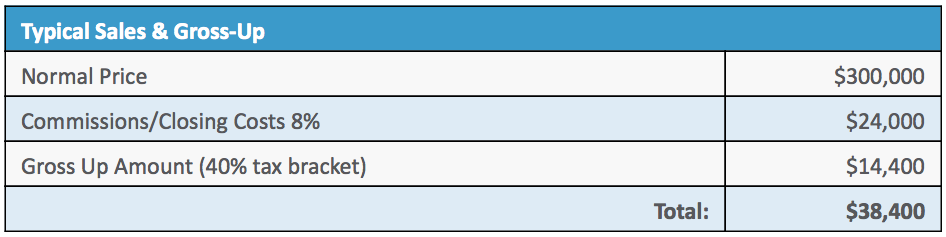
Most corporations use a form of tax assistance, known as gross-up, to help offset the tax impact felt by the transferee receiving reimbursement. The gross-up expense can add substantial costs.
Example:
A transferee in the 40% tax bracket receiving a $24,000 home sale expense reimbursement will require around $39,900 in order to approximately cover the impact of income taxes being withheld and still net the $24,000 needed to cover the actual expenses.
Total Savings: $11,400
*Commissions and closing costs shown reflect a 6% commission and 2% closing costs. Actual costs, including BVO fee, may vary.
Once a transferee receives a valid offer to purchase from a 3rd party buyer, and after the relocation management company (RMC) has been able to verify that all contractual terms are customary, the transferee turns the sale of the home over to the RMC.
The RMC then purchases the home from the transferee and subsequently transfers the home to the 3rd party purchaser. All closing costs and realtor commissions are paid by the RMC and billed directly to the employer. Since the transferee never incurs any home sale expense, normal reimbursement of these expenses is not required.
Fast, Easy, and Economical
Once the origin home is turned over to the RMC, the transferee relinquishes all obligations including attending the actual closing. The RMC manages the entire sale and closing process on behalf of the transferee. The BVO program allows the transferee to move quickly, and focus on his or her new job and community. This is one more way of reducing both the stress and expenses associated with workforce mobility.
To learn more about BVOs or other relocation programs, please visit our contact page and an experienced Global Mobility Solutions relocation consultant will answer all of your questions.
Beautiful young couple is holding moving cardboard boxes, looking at camera and smiling
The recent devaluation of Chinese yuan could prompt China’s real estate investors to look towards the global real estate market to protect their investments. Capital is expected to move far from developing markets to be safe from increasing currency risks. There are expectations however that extreme wealthy Chinese real estate investors and developers will invest heavily in an established economy like the US before further yuan devaluation. Thomas Lam, a Senior Director and Head of Valuation & Consultancy with Knight Frank states, “mainlanders mostly buy overseas homes for immigration, for their children who are studying abroad or as holiday homes. They will be unlikely to sell in haste unless significant problems arise with that country’s property market such as political unrest.” Decisions to invest in the United States housing market will rest on how the Xi markets hedge the Renminbi against their currency or the industrial sector.
Although the yuan is projected to slip further, wealthy Chinese investors and developers will likely convert their money into other currencies or purchase properties in different countries with higher yields as an approach to fence hazard. David Crowe, NAHB Chief Economist, assures our economy to be healthy, “since the affordability had edged slightly lower in the second quarter. The Housing Opportunity Index (HOI) will remain well above 50. And where half the households can afford half the homes sold, low mortgage rates, pent-up demand and continued job growth should contribute to a gradual, steady rise in housing throughout the year.”
Countries such as Korea, Russia, Portugal and as of late New Zealand will continue to witness investment influx from mid-level Chinese investors as properties in developed economy like the United States may prove to be a greater expense. Some market experts say, more Chinese investors will invest in other countries as they seek diversification. It’s likely to witness a slight drop in the reported investment flow from China when reported in US dollars; one of the effects of yuan devaluation.
Records also show that “China is the largest investor in the American real estate sector over the last year”. According to Michael Cole, an editor with Mingtiandi, “Chinese investors have already put $13.4 billion into overseas real estate this year, with over $3 billion heading to the US.” This confirms Chinese real estate developers today are experienced when it comes to foreign investment and their decision to invest in any country. However, the level of investiture will depend chiefly on the availability of properties and good exchange rates.
CFPB Rule Changes – New regulations set forth by the Consumer Finance Protection Bureau are scheduled to take effect next year, which will likely impact the corporate relocation process going forward. The financial information that relocating employees have to provide to lenders is changing.
Employee relocation is a complex process, which is why an expert relocation management company proves to be beneficial in moving talent. A major aspect of an employee relocation is the sale or purchase of a home, and up until this point, the real estate aspect of a relocation has been relatively static.
The Real Estate Settlement Procedures Act of 1974 and the Truth in Lending Act of 1968 laid the groundwork for buying and selling residential real estate in that both pieces of legislation required substantial financial information from the buyer. This included a detailed advanced disclosure of estimated and actual mortgage lender, title and other settlement costs to borrowers, according to the U.S. Department of Housing and Urban Development’s website. In essence, the legislation made it easier to obtain mortgage financing.
Changes are wide-sweeping
Employee relocation services may be impacted by the new CFPB regulations.
In the past, a number of different parties all worked together to provide a seamless and comfortable moving experience for the moving employee. More specifically, the third-party relocation service, the employee’s company, insurance underwriters, attorneys and real estate agents all pitched in to create a comfortable moving experience for relocating employees. While it may seem unrelated that the CFPB – an agency that was created to help prevent another financial meltdown in 2010 after the economic recession was in full swing – has laid out new regulations set to take place in April 2015, corporate relocation will be impacted nonetheless. Since so many parties are involved in making the employee transition smooth, almost everyone is affected in some way.
In April 2012, the CFB Bulletin 2012-03 established new regulations that placed responsibility on the lender to protect consumers who obtained loans to purchase real estate property. The rules were put in place to protect the consumer. Yet, even though banks and lenders are now responsible for financial oversight and protection, the trickle-down affect corporate relocation efforts as well. Although most relocation companies interact with relocated employees prior to the purchase of a property, transferees may likely use a portion of an allocated allowance to apply for a mortgage, which is where the reach of the CFPB comes into play.
Relocation services impacted
More recently, the CFPB announced a rule that eliminated the good faith estimate, the HUD-1, or the former settlement sheet where all seller and buyer costs and proceeds are calculated and shown. The new closing disclosure form must be provided to the buyer three days before closing, or consummation, as the CFPB now calls it. After this window, only limited items can change, according to relocation services industry trade group Worldwide ERC.
Worldwide ERC pointed out that since most relocation service providers now require a HUD-1 at least two days before closing to obtain client approval, the process may be backed up to five days once the new regulations take effect. These added regulations point to the increased complexities surrounding employee relocation, and highlight the need for partnering with an expert in global talent management.