Categories
Corporate Relocation Global Relocation

5 Ways to Avoid an International Faux Pas

5 Ways to Avoid an International Faux Pas – Whether it’s writing in red ink in Korea or stabbing food with a chopstick in Japan, violations of cultural norms and traditions, no matter how unintentional, can lead to stares, anger, and even the loss of business. Here are 5 Ways to Avoid an International Faux Pas to help you avoid being the bane of your host country.

  1. Silence Your Steins in Hungary
    Clinking of beer glasses has been frowned upon in Hungary for over 160 years. The ban was established after Austria defeated Hungary in the 1849 war and Austrian generals celebrated by clinking their glasses and drinking beer. Upset Hungarians pledged to not clink their glasses for 150 years. Although the vow has expired, Hungarians, who really enjoy their beer, still refrain from clinking glasses.
  2. Giving Yellow Flowers in Russia Can Leave You Blue
    Certain colored flowers have different meanings in Russia, so be careful when presenting a bouquet to a friend or business associate. Unlike in the United States in which it signifies friendship, yellow flowers stand for deceit or the end of a relationship in Russia. Avoid giving red carnations, too, as Russians typically use these flowers on graves.
  3. Using Salt is Worse Than a Mummy’s Curse in Egypt
    One of the fastest ways to insult your Egyptian host is to dash your food with salt. Egyptians believe that if you need to season your meal, you think the food tastes bad.
  4. You’ll Receive No Good Fortune Giving These Gifts in China
    All associated with death and funerals, the Chinese consider the giving of clocks, handkerchiefs, straw sandals, and flowers to be morbid and highly inappropriate.
  5. Punctuality is Not Valued in Venezuela
    When invited to someone’s home in Venezuela, do not show up on time. Early is worse! It is customary to arrive 10 to 15 minutes after the requested time. Those who come early – or even on time – are typically viewed as being too eager and greedy.

Do you want your transferees to avoid other international social disasters? Global Mobility Solutions (GMS) offers a myriad of Intercultural Training and Development programs designed to help your transferees and their families understand and quickly adjust to the cultural nuances of their new host countries. Our flexible, customizable training will reduce the anxiety associated with moving to a foreign region and increase your transferees’ readiness to perform and interact with the businesspeople in their new locations. GMS also has youth and teen cultural training so that the children of your transferees can assimilate easily into their new schools. At Global Mobility Solutions, we don’t just specialize in moving your employees all around the world, we ensure that they are prepared to perform when they arrive at their destinations, and they will know 5 Ways to Avoid an International Faux Pas.

Categories
Corporate Relocation Domestic Relocation Challenges Global Relocation Challenges

Overcoming a Reluctance to Move

Relocating one’s self – and in some cases one’s family – to a new, unfamiliar location can be a stressful, frightening experience, regardless the financial opportunity. A recent Worldwide ERC study evidenced that “Family resistance to move” was cited as the overwhelming reason why candidates were reluctant to relocate.

How can a human resources department, that has already spent a lot of time and money searching for the right candidate, ensure that an offer that includes relocation is accepted? How can they take the anxiety out of moving?

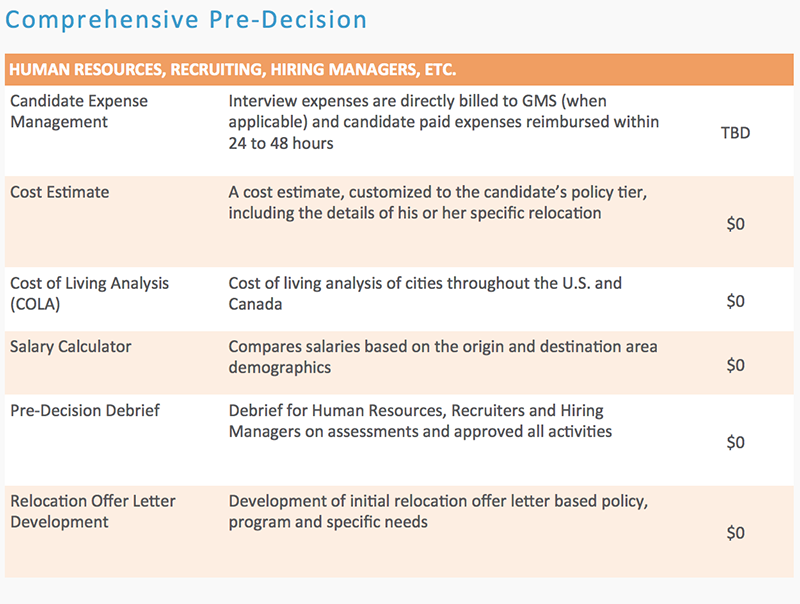
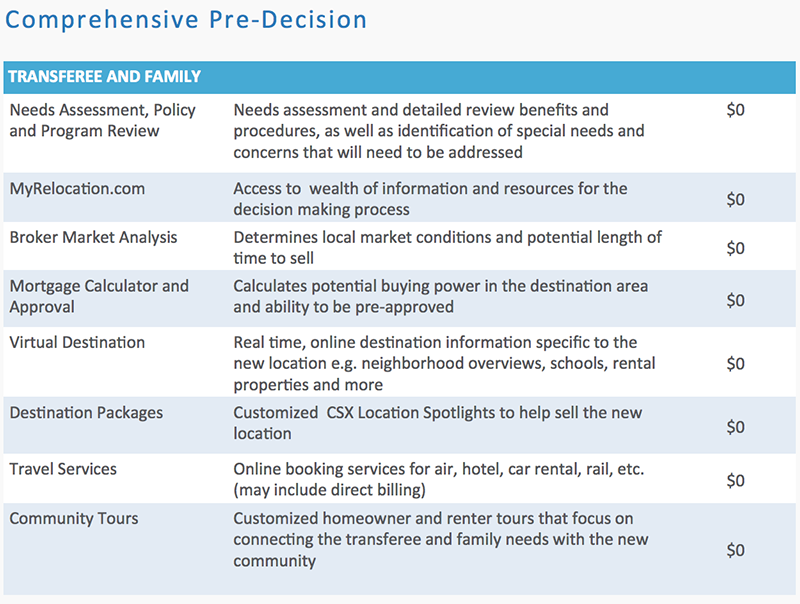
Pre-decision solutions are designed to assist both the employee and the company in determining the benefits and challenges of a potential relocation and overcoming reluctance. First, a mobility management company engages the candidate or transferee early in the process. Since mobility management companies are not bound by the same EOC rules that apply to human resource departments, they can ask more specific questions about lifestyle and family. This creates a complete picture of what would make the transferee comfortable in a new setting. This can include information about schools, shopping, activities, desired commute, and much more. Because the process includes questions that go beyond job performance, spouses and families feel more involved with the relocation process. The mobility management company further reduces stress by arranging community tours, housing information, and cost of living analyses. A pre-decision program can remove all the unknowns – generating positive excitement for the transferee and overcoming a family’s resistance to move.

Global-Mobility-Solutions-Pre-Decision-HR-Benefits overcoming reluctance

Global-Mobility-Solutions-Pre-Decision-Transferee-Benefits overcoming reluctance

For the company, pre-decision solutions are proven to increase offer acceptance and decrease time to acceptance. Additionally, because of built-in programs like Candidate Expense Management, the final cost of relocation have been shown to be less when utilizing a pre-decision solution. The Program Manager of Talent Acquisition at Providence Health and Services said of her experience with pre-decision, “By initiating relocations prior to the face-to-face interview, we know that transferees have arrived more quickly, have settled better, and stayed longer.” What more could a human resources department want?

To learn more about mobility pre-decision solutions, please visit www.gmsmobility.com/pre-decision/

Categories
Global Relocation Global Relocation Challenges Global Relocation Tips

3 things assignees need to know about expat health insurance

An increasing number of assignees are extending their stays abroad, which may require employers to consider more permanent relocation benefits for their expat mobile workforce. For instance, employees moving internationally for longer periods of time may likely have a greater need for expatriate health insurance.

Talent living and working abroad should have access to quality health care; but for a wide-variety of reasons, insurance may not be the same in the host country as it is in the United States. Keeping that in mind, here are three things assignees and their employers should know about expat health insurance:

One-quarter of uninsured respondents cited good health as the primary reason for a lack of coverage. One-quarter of uninsured respondents cited good health as the primary reason for a lack of coverage.

  1. Uninsured individuals face massive health bills: Relocate Magazine cited a recent online survey conducted by health insurance provider Now Health International that found one-quarter of expats fail to take out international health insurance when they move abroad. The 25 percent of uninsured respondents cited good health as the primary reason for a lack of coverage. Yet, as medical care costs in popular expat areas continue to grow, the uninsured will face large bills if their optimism proves to be incorrect.
  2. Some countries are better providers than others: Access to medical resources and the level of industrialization are two key reasons why some nations have better expat healthcare options than others. Taiwan is one of the highest rated countries for both healthcare affordability and quality. In fact, in its most recent Expat Explorer survey, HSBC found that nearly 70 percent of assignees in Taiwan spent less on health care while on assignment than in their home country. While assignee satisfaction with Taiwanese healthcare affordability and quality is 3 times the global average, inexpensive health care options can also be found in the U.K., Thailand, Japan and Saudi Arabia. The U.S., Ireland, Brazil and New Zealand are on the opposite end of the spectrum.
  3. Employers want to provide it, but they can’t always afford it: A study conducted by Expacare found 23 percent of employers want to provide health insurance for talent abroad but don’t have room in their budgets. However, budget restricted employers can still help their assignees by providing information and resources covering the host location’s healthcare system and available expatriate insurance options. Although some countries provide universal health care solutions, dependence on government programs can be risky. In fact, Twelve percent of respondents in the Now Health International study thought they would be taken care of by their host country’s health care system. However, a growing number of nations are beginning to pass legislation that limits expat coverage to accident and emergency incidents only; one of many reasons that highlight the need for quality assignee education on expatriate healthcare.
  4. There are sources to learn about expat health insurance: VisaGuide.World has developed a useful resource that explores the topic of health insurance for expats, including its importance and how to purchase an expat health insurance plan.

Brought to you by Global Mobility Solutions, a trusted partner in global talent management.

Categories
Global Relocation

3 Tips For Seamless International Talent Relocation

Relocating business within the U.S. is difficult enough, but when a company needs to relocate talent to another country, things can get even more challenging. According to a recent Atlas Van Lines survey, 27 percent of respondents are expecting their international relocation volumes to increase. Keeping that in mind, here are three tips to help with an international talent relocation process:

  1. Help the employee get accustomed: Moving a single employee or a group of individuals is a complicated task, which is why it’s critical to help transferees get accustomed to their surrounding environments before they start working.
    International talent relocation presents unique challenges.
    International talent relocation presents unique challenges.

    If employees aren’t able to arrange a visit to the new location before they pack their things and move, they should do as much research on the area as they can, Forbes suggests. This may include reading local news or publications that focus on the surrounding area, which can help new residents get accustomed to the language and cultural interests. Cultural training is one of the most highly overlooked areas of employee training, and depending on the destination, can be crucial to assignment success. Culture shock is a very real phenomenon that impacts many western travelers. When preparing for or managing culture shock, the U.S. Bureau of Educational and Cultural Affairs recommends keeping an open mind, staying physically active and making an effort to get to know other people as much as possible.

  2. Paperwork exists outside of the office: When talent is relocating overseas, they must first get their paperwork in order, otherwise the move won’t happen at all. A business can significantly help its employees do their homework on important travel documents such as customs and immigration information to Visa acquisition or even identifying which vaccinations, if any, their talent has to get before they depart. Some countries have currency restrictions for entry as well – so companies that do their due diligence will make the moves much easier on their employees. The IATA and the U.S. Bureau of Consular Affairs are both excellent supplementary resources that outline what countries require upon arrival.
  3. Hire an experienced partner: If a business is unsure how to tackle this issue, global relocation management companies can provide insightful solutions necessary to navigate today’s mobility challenges. In fact, Relocate Magazine highly recommends employing a trusted partner in this capacity, especially if management or C-level executives are unfamiliar with global relocation, much less the new area where they’re moving their talent. Even if higher-ups have employee relocation experience, global relocation firms can provide unique and fresh insight into each move. Whether a company needs a partner to help with the entire move, or just needs to outsource certain aspects of a relocation effort, third-party talent relocation firms can help alleviate a large amount of stress and weight off of a business’s shoulders by providing faster, more efficient and often cheaper results.

Brought to you by Global Mobility Solutions, a trusted partner in global talent management.

Categories
Global Relocation

Global Mobility Solutions’ Virtual Trainer Empowers Corporations to Succeed in 21st Century, Transnational Business Environment

Global Relocation Virtual Trainer

Global Relocation Virtual Trainer

SCOTTSDALE, Ariz., Sept. 29, 2014 – New Global Relocation Virtual Trainer: The relocation consultants at Global Mobility Solutions (www.gmsmobility.com) understand that employees face tremendous challenges when transplanted to a new culture. To ease these transitions for both employees and their families, the company has introduced a web-based “Global Relocation Virtual Trainer” system for bridging the language and culture gap.

“The modern enterprise sees the boundless opportunity in multinational expansion,” remarked GMS Global Services Vice President John Fernandez. “These corporations need flexible, convenient and affordable language and cultural training solutions that provide quality deliverables. Our Virtual Trainer hits all of these benchmarks and has helped organizations pursue globalization with more assurance and adaptability.”

How the Global Relocation Virtual Trainer Works

The Virtual Trainer combines one-on-one coaching with self-paced, conversation-oriented language learning. The emphasis is on finding common ground between cultures as a means to build new relationships, meet business objectives and create an environment of trust and confidence. Traditional programs have stressed the idea of cultural “dos” and “don’ts” when preparing employees for global relocation; this black-and-white, list-based approach to acculturation, though, is ultimately counterproductive.

GMS provides 24/7 access to the tools and support of the Virtual Trainer. Because the software is cloud-based, employees can work with the system from anywhere – at home, in a hotel, on a plane, etc. All that’s necessary is a computer or mobile device and a stable Internet connection. The company makes the Virtual Trainer available to employees for the duration of an international assignment. Plus, spouses/partners and families can take advantage of the system at no extra charge.

To streamline the acquisition of essential cultural knowledge, the Virtual Trainer includes one-on-one personal training sessions via webcam. Coaches explain how working across cultures is not about simply tolerating differences or memorizing a litany of social faux pas, but rather seeing differences as a chance to create synergy and leverage the various skill sets one finds around the world. Cultural training communicates values like mutual understanding and respect. Practical, actionable guidance gives executives and employees the competencies to support a 21st century business model.

The language learning aspect of GMS’s Virtual Trainer features an intuitive, straightforward interface, with self-paced lessons focusing on conversation proficiency. The tool goes beyond mere conversation, however, by incorporating cultural insights and nuances that underpin vocabulary and grammar. Just like the personalized training, GMS offers limitless access to the language instruction tool; a slate of mobile apps lets employees brush up between meetings, on the road or anywhere else.

Addressing Common Corporate Relocation Challenges

Taking the uncertainty out of global relocations is part of the mission at GMS. Historically, such relocations have ended early or otherwise failed at an alarming rate. These botched assignments cost time and money and often permanently damage potentially lucrative relationships. The Virtual Trainer deploys current best practices and leverages the organizational knowledge and experience of GMS to maximize the success of global relocations. The training program typically begins prior to relocation, which gives employees and their families a head start on settling in to their new surroundings.

Companies that have adopted the Virtual Trainer have saved from 50% to 75% over the usual costs of culture and language training. At the same time, the cloud-based software frees up human resources to concentrate on other responsibilities, whereas executives can have confidence that international assignments have a high probability of producing a return on investment.

About Global Mobility Solutions

Founded in 1987, Global Mobility Solutions is a global corporate relocation services company that specializes in workforce mobility. Their relocation services include global assignment management, domestic relocation management and a range of pre-decision solutions. Global Mobility Solutions is a winner of the 2014 HRO Today Customer Satisfaction Survey.

Contact:

Thomas Belnap, Marketing Manager
800-617-1904 ext. 8832
[email protected]

Categories
Corporate Relocation Domestic Relocation Global Relocation

Employee Relocation or Workforce Mobility?

Workforce mobility or employee relocation refers to the processes or relocation services involved in the transfer of employees or potential employees from one location to another. Other terms that refer to these processes may include:

  • Employee Transfer
  • Employee Mobility
  • Global Mobility
  • Domestic Relocation
  • Corporate Relocation

While some of these terms may be used interchangeably, the terms global and domestic mobility may differ in the range of services commonly required for relocating an employee. Reference to global mobility is commonly used as an umbrella term, and includes domestic mobility processes. Reference to domestic mobility usually excludes processes commonly needed for international employee relocation such as visa acquisition, repatriation or language training.

Generally, a company’s management of workforce mobility accounts for ongoing employee support services, supplier management, candidate selection, relocation benefits and expense management. Corporate relocation programs may vary between companies due to size, need, or destination.

The overall process of employee relocation is commonly divided into one of four service brackets including:

Pre-Decision Services

According to Worldwide ERC data, the average cost to relocate an executive level home-owning employee comes to $97,000. For this reason companies seek assurances that a given employee is a good fit for relocation. Pre-decision services aim to uncover any potential issues that may arise prior to the employees relocation in order to reduce the risk of a failed relocation. Some of the most common reasons for failed relocations according to Worldwide ERC include:

  • Negative home equity
  • Slow real estate housing market
  • Family resistance to move
  • Spousal employment
  • High costs of housing

The below are examples of a few common pre-decision services:

Candidate Assessment – Services that assess candidate expectation, skills, personal qualities, family circumstance, financial preparedness, etc.

Cost of Living analysis – Cost of living comparison of origin and destination cities to help determine acceptable or competitive salary range.

Market analysis – Determines the likely home sale timeline and identifies potential home sale challenges such as negative equity.

School Reports – Public and Private School reports provided to the relocating employee to aid community selection.

Moving Cost Estimates – Cost estimates on household goods transport, helps budget for relocation costs.

Community Search and Tours – Coordinates community orientation tours to familiarize relocating employees to their new location, and assist in selecting an area that fits their particular interests.

Origin services

Origin services account for all services necessary at the transferring employees origin location. Some of these services include:

Expense Management – Establishment of expense reporting and management services for both the company and employee. Designed to track and contain costs during the relocation process. Utilized throughout the entire relocation process*

Home Sale Assistance – May include connecting employees with real estate agents, home marketing assistance, home buying programs, etc.

Household Goods Management – Management of household goods transport from origin to destination. May include procurement of van line services, replacement insurance, and guaranteed “not to exceed” estimates for goods transportation, etc.

Visa and Immigration Services – For international relocations, visa and immigration services organize company and employee documents required for visa acquisition.

Property Management – For employees not selling their home. May include rental marketing assistance, tenant management, vacant property management, landlord consulting, or property maintenance.

Destination services

Destination services account for all services necessary at the transferring employees destination location. The range of destination services sometimes includes a further segmentation of “settling in services” aimed at helping the employee acclimate to their new location. Some of these services may include:

Home Finding Services – Services include connecting employees with real estate agents at destination, home buying assistance, corporate housing, temporary housing, rental assistance, home finding tours, etc.

Settling in Services – Services that aid employee acclimation to their new location including access to online resources, attaining local driver’s license, child care, connecting utilities, locating a primary care physician, etc.

Vehicle Lease or Purchase – Services that assist relocating employees acquire a vehicle including loan support, lease negotiation, etc.

Family Assistance – Services that assist the relocating employee’s family, including spousal employment support, counseling services, stress management assistance, etc.

Return or Repatriation Services

In most cases,  employee relocation services for individuals returning from temporary domestic assignments are equivalent to services provided at departure. While there are some short term domestic relocation programs amongst companies, the majority of return services handle an employee’s return from international assignment. International assignments are usually classified into one of four categories:

  1. Extended Business Travel (EBT): an assignment of 3 months or less.
  2. Short Term: an assignment lasting 6 months to a year. (range may go up to 2 years)
  3. Long term assignments: An assignment lasting 2-3 years.
  4. Permanent: An assignment lasting 3 years or more.

For EBT, short term, and long term assignments, repatriation plans have become an industry recognized necessity for effective employee retainment. According to Atlas surveys around 40% of expatriate employees leave their sponsoring company after assignment. Repatriation services seek to close this gap, and help organizations maximize their workforce investment and retain employees that have acquired substantial knowledge capital. Repatriation is a dynamic service area that has wide variation. For example repatriation counseling helps employees returning from international assignment manage culture shock, and re-acclimate to domestic life. Other services may include:

  • Lease termination assistance
  • Home services termination (such as utilities)
  • Tax equalization

In all, workforce mobility seeks to analyze, manage, execute and optimize the processes involved in transferring an employee from one location to another. For more detailed descriptions of relocation services visit the following pages:

Global Relocation
North America Relocation

We're Here to Help! Request a Courtesy Consultation

Are you ready to talk to a Mobility Pro? Learn how GMS can optimize your mobility program, enhance your policies to meet today’s unique challenges, receive an in-depth industry benchmark, or simply ask us a question. Your Mobility Pro will be in touch within 1 business day for a no-pressure, courtesy consultation.

Looking for something?