

Categories
Domestic Relocation Domestic Relocation Challenges Global Relocation Global Relocation Challenges

Animal Transportation During the COVID-19 Pandemic

With the majority of US households containing at least one pet, the issue of animal transportation is an important consideration. The American Pet Products Association (APPA) reports that 67% of US households own a pet. The variety and number of pets in the US provides an indication of the complexity of transport logistics and decisions:

Pet # of Households (millions)
Dog 63.4
Cat 42.7
Freshwater Fish 11.5
Bird 5.7
Small Animal 5.4
Reptile 4.5
Saltwater Fish 1.6
Horse 1.6

Source: American Pet Products Association

Pets and COVID-19

Pet owners face unique challenges when it comes to the COVID-19 Pandemic and animal transportation. They must address social isolation, sanitation, and safety concerns for themselves as it pertains to their specific area circumstance. Also, they must address the same parameters for their pet. APPA has identified several products that are ideally suited to dealing with social isolation for pet owners and their pets. Unique ideas include pet grooming kits for home use, a motorized ribbon toy to keep cats active, puzzles made specifically for dogs to play with, and a dog treadmill.

Some evidence suggests that pets may become infected from close contact with humans who are ill with COVID-19. However, according to the University of Wisconsin-Madison Shelter Medicine Program in their publication Animal Services’ Role in COVID-19 Support, “There is no current evidence to suggest that pets play a role in the spread of this human disease.”

Additionally, the Centers for Disease Control and Prevention (CDC) recommends that pet owners treat pets as they would treat other human family members:

  • Do not let pets interact with people or animals outside the household
  • If someone in the household becomes sick, isolate that person from everyone else, including pets

COVID-19 May Impact Animal Transportation

Clients with new hires or transferring employees should be aware of any issues related to pet ownership as it may relate to a possible relocation. Pre-decision services help clients learn what the employee will be facing as it relates to a move that will include a pet. If a new hire or transferee is a pet owner, COVID-19 issues may impact animal transportation and directly affect the relocation process.

What May be Necessary for Animal Transportation During COVID-19?

Animal transportation must receive the same consideration as human transportation. The UW Shelter Medicine Program’s publication notes that “Every exception to social distancing decreases its efficacy.” Therefore, routine travel outside of a community for pets should be discontinued, the same as for human travel.

Relocation and moving are an essential service during COVID-19. For pet owners, consideration should be given to points during animal transportation such as:

  • Social distancing during the pet move
  • Limiting moving company employee exposure to the pet during the process
  • Following local regulations that are part of “safe at home” and “stay at home” orders
  • Careful observation of the pet for signs of illness

The CDC notes that the situation is evolving, and information will be updated as it becomes available. However, as noted previously, pet owners should provide the same level of care and consideration for their pets as they do other human family members. CDC Guidelines on Prevention therefore apply to both humans and pets, and include:

  • Frequent handwashing before and after interactions with pets
  • Avoiding close contact with other animals and people
  • Covering your mouth and nose with a cloth face cover if in close contact with others
  • Cover coughs and sneezes around humans and pets
  • Cleanliness and disinfection throughout living spaces
  • Health monitoring for pets

Many pet owners already consider their pets as members of the family, and take as good care of their pets as they do themselves. As a result, pet owners would likely exercise diligence related to COVID-19 prevention for their pets as well.

What Should Employers do About Animal Transportation During COVID-19?

It is important for employers with relocating employees to know and understand how to address issues related to animal transportation during COVID-19. Employers should extend the same level of service to pets as they would to human members of the relocating employee’s family. They should also ensure safe animal transportation options are available.

Employers should work with a qualified and experienced Relocation Management Company (RMC) that can provide guidance for a pet move and animal transportation during COVID-19.  RMCs can help clients and transferees understand how to arrange for the best animal transportation options and determine how to comply with pet shipping requirements such as health certificates and other issues.

Conclusion

Global Mobility Solutions’ team of corporate relocation experts has helped thousands of our clients understand how to help their new hires and relocating employees with pets arrange for animal transportation. Our team can help your company understand the issues involved with animal transportation during COVID-19. We can help your company utilize pre-decision services to identify needs and requirements to ensure a smooth relocation process for the employee, their family members, and their pets.

GMS was the first relocation company to register as a .com. The company also created the first online interactive tools and calculators, and revolutionized the entire relocation industry. GMS continues to set the industry pace as the pioneer in innovation and technology solutions with its proprietary MyRelocation® technology platform.

Learn best practices from Global Mobility Solutions, the relocation industry and technology experts who are dedicated to keeping you informed and connected. Contact our experts online to discuss your company’s interest in learning about animal transportation solutions during COVID-19, or give us a call at 800.617.1904 or 480.922.0700 today.

Categories
Job Market United States Economy

Sanitation and Cleanliness in Relocation: Rising to the Challenge

Many GMS clients are looking at how they can successfully transition their workforce back to an office or facility location that meets new requirements for sanitation. The original move to a “work from home” environment may have been quickly implemented with very little planning due to the COVID-19 pandemic and various “stay at home” orders.

Returning to a place of work will require a thoughtful approach to the concepts of sanitation and cleanliness. In relocation terms, the return of employees is very similar to a group move. A number of specific points should be addressed to ensure health and safety for all employees.

3 Main Points to Consider with Sanitation

There are 3 main points a company should consider when it comes to sanitation: moving equipment back into a facility, work space configuration, and facility cleanliness.

1. Sanitation When Moving Equipment Back to a Workplace

The American Moving & Storage Association (AMSA) has issued guidance for consumers to ensure safety for all who move during the COVID-19 pandemic. This guidance also applies to moving equipment from an employee’s home back to a workplace. One of the points to consider is that employees should always use fresh supplies of packing materials for any equipment they plan to return to the office.

For example, employees planning to move computer equipment and supplies, file folders, and other office materials should ensure any box they use is new. Rolls of tape, packing papers, and storage boxes should all be new equipment that has not be used for any other purpose. GMS partners provide packing and moving services that are specifically targeted to ensuring health and safety for employees and the workplace.

Equipment that returns to a workplace should meet sanitation and cleanliness requirements. Desktop IT equipment that has been in use in a home environment may need specialized cleaning to ensure it does not transmit any issues back to a workplace such as:

When in doubt, companies should look into sanitation and cleanliness of all incoming equipment to help ensure a clean and safe workplace. Companies may consider offering assistance to employees in the form of curbside return services. With these services, professional movers bring equipment back to a workplace and arrange for installation as well as cleaning and sanitation.

2. Workplace Configuration

The new normal for workplaces may be anything but normal to employees who may be used to close office environments and easy-going quick meetings in hallways, at desks, or in the lunchroom. Social distancing rules put forward by health authorities to help people protect themselves and others could require a new configuration for workplaces.

Generally, social distancing rules according to the Centers for Disease Control and Prevention require:

  • At least 6 feet distance from coworkers
  • No gathering in groups
  • Avoid mass gatherings
  • Do not enter crowded places
  • Limit close contact with others

For some workplaces, entirely new office and work space designs may be required. Companies should review conference rooms, break rooms, lunch rooms, hallways, and other shared spaces with a focus on helping employees maintain social distancing. While social distancing may help reduce the need for workplace sanitation, it will not eliminate the need for companies to address this need.

Other considerations may involve how to configure storage. New space requirements may lead some companies to recognize a need to store equipment, file cabinets, and office furniture. Storage needs may be for the short term or the long term. Workplace size as well as changes driven by how work now actually gets done may dictate new and increased storage needs.

3. Workplace Sanitation

With equipment returning to workplaces and the need to ensure health and safety for employees, companies should review their workplace sanitation programs. Companies should examine equipment, facilities, door handles, tables, chairs, and even staplers in a shared copy room for patterns of use, cleanliness, and sanitation.

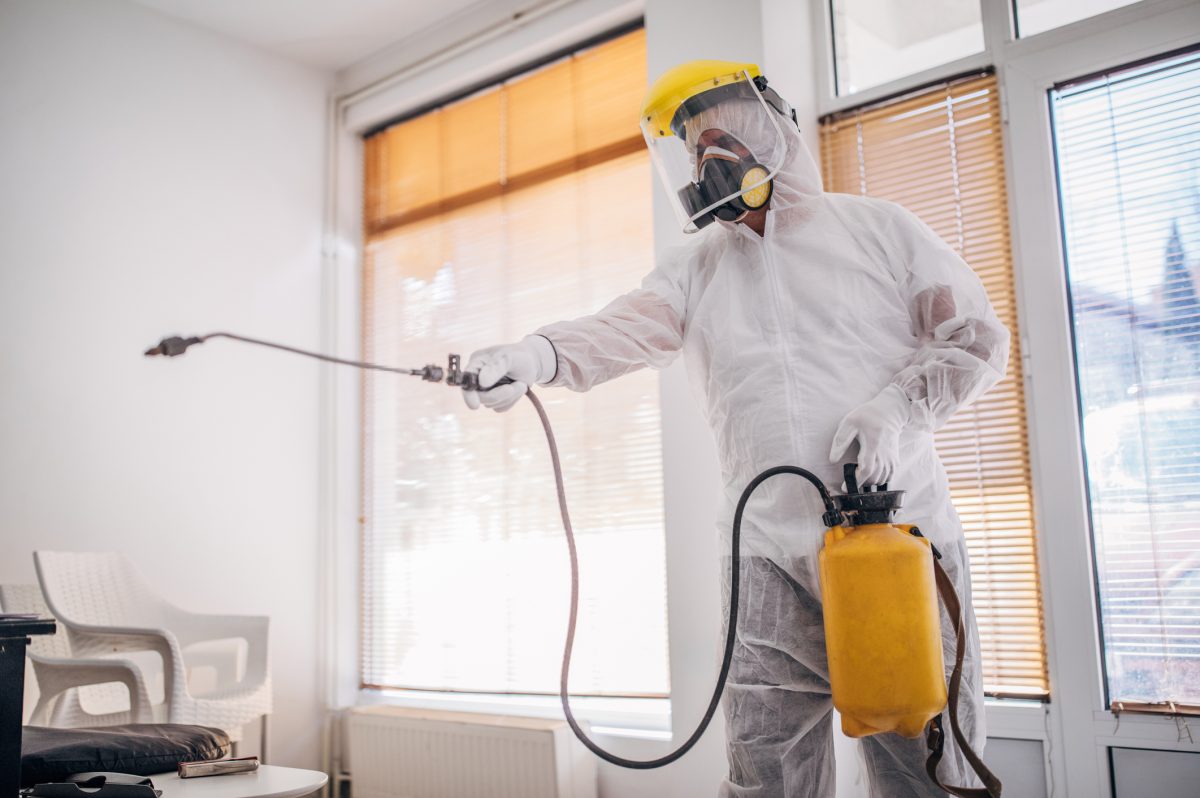
While some workplaces may already use good sanitation practices, the new normal with COVID-19 requires a greater focus on practices to ensure good health and safe practices. Many GMS network partners offer enhanced sanitation, including specialized services such as electrostatic disinfection.

Communication of new workplace rules is critical to help employees learn what is considered safe behavior, and what is not. Use of shared facilities such as a lunch room may require consideration as to occupancy and cleaning requirements. Workplace event coordination may be useful to help welcome employees while sharing about the new workplace and expectations. Motivating employees to become involved and engaged will help them gain a sense of belonging and purpose in their new workplace.

What Should Employers do?

Employers should look into all of the aspects surrounding sanitation as they plan for employees to return to the workplace. Packing, moving, and equipment sanitation should be considered. Also, employers should carefully review workplace configuration and potential storage requirements. The new normal for workplaces has changed significantly in light of the COVID-19 pandemic. A Relocation Management Company (RMC) with knowledge and experience in managing group moves is an ideal resource to help employers who are planning to move groups of employees back to central workplace.

Conclusion

Global Mobility Solutions’ team of corporate relocation experts has helped thousands of our clients understand how to arrange for group moves of offices, employees, and equipment. Our team can help your company understand how identify and address all of the aspects of a group move for your employees returning to the workplace while maintaining new sanitation and cleanliness standards.

GMS was the first relocation company to register as a .com, created the first online interactive tools and calculators, and revolutionized the entire relocation industry. GMS continues to set the industry pace as the pioneer in innovation and technology solutions with its proprietary MyRelocation® technology platform.

Learn best practices from Global Mobility Solutions, the relocation industry and technology experts. Contact our experts online to discuss your company’s need for information about helping employees return to the workplace while ensuring sanitation, or give us a call at 800.617.1904 or 480.922.0700 today.

We're Here to Help! Request a Courtesy Consultation

Are you ready to talk to a Mobility Pro? Learn how GMS can optimize your mobility program, enhance your policies to meet today’s unique challenges, receive an in-depth industry benchmark, or simply ask us a question. Your Mobility Pro will be in touch within 1 business day for a no-pressure, courtesy consultation.

Categories
Buy a Home Domestic Relocation Domestic Relocation Challenges Domestic Relocation Tips Domestic Relocation Trends Home Purchase

Virtual Agent Services: Helping Home Buyers and Sellers During COVID-19

Home buyers and sellers can use a variety of virtual agent services during the current COVID-19 pandemic, if they find the right agent. A few select real estate agents offer a full suite of services to clients that are flexible and effective, meeting the demands of today’s real estate market. These virtual agent services are ideally suited to help ensure proper social distancing and other requirements necessary to protect buyers and sellers from exposure to COVID-19.

What are Virtual Agent Services?

GMS spoke with Erik R. Brown of Compass, Realtor®, TV host, speaker, and author of “One in a Million: Everything You Need to Know to Find the Best Realtor®.” Erik agreed to share his industry knowledge and market expertise on virtual agent services.

Erik notes that buyers are still buying, and homes are still selling, even during COVID-19. Many clients who were in the process of buying and selling prior to the pandemic have turned to virtual agent services. Many of these services had been in place prior to the precautions, often as part of a broader suite of exclusive marketing services. Additionally, newer tools have been created that leverage proven technology already in use in the real estate industry.

Ensuring Health and Safety with Virtual Agent Services

The health and safety of clients and communities is always a priority for the real estate industry. Erik states that these virtual agent services allow him to continue to provide the best-in-industry service that his clients deserve. Most services can be provided through digital, mobile, and social media platforms, enhancing their reach and visibility.

Virtual Agent Services for Buyers

  1. Virtual Neighborhood Walks let buyers explore new neighborhoods and communities, and help them see nearby local features such as parks, schools, and shopping centers
  1. Interactive Video Showings where a real estate agent will take buyers on a virtual journey through a home, noting specific features to enhance desirability and highlight items of interest to buyers
  1. Video Mail (V-mail) provides video directly to interested buyers so they have an immediate experience and memory of their first interaction with the home
  1. Live Virtual Buyer Events helps buyers see homes as they are used for cooking demonstration, game nights, or social events that bring life to the home and highlight unique features

Virtual Agent Services for Sellers

  1. Virtual Open Houses let sellers share their home with a targeted audience while showcasing key features to interested buyers across multiple platforms
  1. Dynamic Digital Listing Brochures helps highlight the most desirable features of a home in an immersive experience to help buyers see virtually everything of interest
  1. Digital Ads for Facebook & Instagram promote the home to a highly targeted audience with expertly designed ads optimized for the highest performance on the social media platform
  1. Real-time Digital Ad Insights capture ad campaign results quickly and easily, and let real estate agents act swiftly to market and sell the home
  1. Enhanced 3D Staging provides an upscale and sophisticated visual experience that increases appeal with high-end design and state-of-the-art visual staging technology

What Does This Mean?

As Erik notes, virtual agent services leverage proven technology to help home buyers and home sellers remain safe and protect their health during the current COVID-19 pandemic. These services also enable real estate agents to provide clients with best-in-industry solutions, valuable information, and superior results.

Conclusion

GMS’ team of global relocation experts has helped thousands of our clients understand how to provide solutions for their new hires and transferees who are looking to buy or sell a home. Our team can help your company understand how to leverage virtual agent services during the current COVID-19 pandemic. This will help employees to conduct successful real estate transactions while focusing on the health and safety of everyone.

GMS was the first relocation company to register as a .com. The company also created the first online interactive tools and calculators, and revolutionized the entire relocation industry. GMS continues to set the industry pace as the pioneer in innovation and technology solutions with its proprietary MyRelocation® technology platform.

Contact our experts online to learn more about virtual agent services, or give us a call at 800.617.1904 or 480.922.0700 today.
We're Here to Help! Request a Courtesy Consultation

Are you ready to talk to a Mobility Pro? Learn how GMS can optimize your mobility program, enhance your policies to meet today’s unique challenges, receive an in-depth industry benchmark, or simply ask us a question. Your Mobility Pro will be in touch within 1 business day for a no-pressure, courtesy consultation.

Categories
Domestic Relocation Challenges Domestic Relocation Tips Household Goods Relocation Challenges

Ensuring a Safe Household Goods Move During COVID-19

If you need to schedule a household goods (HHG) move during COVID-19, you are not alone. Millions of people move every year, and the month of May is often the start of the busy moving season. In fact, May is “National Moving Month,” and the month of June is usually the busiest month for people who want to move. People who have sold their home, purchased a new one, or are moving into a new apartment during this time may not know how the current pandemic will impact their plans.

The American Moving & Storage Association (AMSA) has issued guidance for consumers to ensure safety for all involved in the moving process. Moving companies such as North American Moving Services have issued specific COVID-19 Business Continuity Plans to help everyone to remain safe during this global pandemic.

AMSA Guidance for Consumers who Move During COVID-19

For consumers who will move during COVID-19, the following guidance provides clear direction. It also includes easy steps to take to ensure everyone’s safety throughout the entire process.

  • Communication is important for everyone
    • If anyone in your home is isolating or under quarantine, call immediately to reschedule
  • Avoid the natural tendency to shake hands when you greet the moving team
    • Smile, greet warmly, and then give proper social distancing
  • Provide direct access to sinks, water, soap, paper towels, hand sanitizer, and trash bins
    • Moving teams should have additional supplies if needed
  • Always use fresh supplies of packing materials
    • Rolls of tape, packing papers, shipping and storage boxes, and any other supplies

What Does This Mean for Your Move During COVID-19?

Many GMS clients have employees, new hires, and transferees in various stages of their HHG move during COVID-19. These services are often considered essential, and people may have no other choice but to proceed with their scheduled move.

We Can Get Through This!

GMS knows this is a difficult time for everyone. However, we can and we will all get through this together. We need to focus on doing the right thing every time. Following AMSA guidance to ensure a safe HHG move during COVID-19 will provide peace of mind for the moving team and those who are moving.

What Should Employers do for Employees who Move During COVID-19?

Employers should share as much information with their employees, new hires, and transferees about how they can arrange a safe move during COVID-19 as possible. The AMSA guidance for arranging a safe move should be shared, along with any other information that may be helpful such as how they can create a video survey for their household goods prior to the move.

Conclusion

GMS’ team of global relocation experts has helped thousands of our clients understand how to share helpful information with employees, new hires, and transferees on their HHG moving process. Our team can help your company understand how to incorporate the AMSA guidance on arranging a safe HHG move during COVID-19 into your relocation program.

GMS was the first relocation company to register as a .com. The company also created the first online interactive tools and calculators, and revolutionized the entire relocation industry. GMS continues to set the industry pace as the pioneer in innovation and technology solutions with its proprietary MyRelocation® technology platform.

Contact our experts online to learn more about how your company can communicate the AMSA guidance on arranging a safe HHG move during COVID-19, or give us a call at 800.617.1904 or 480.922.0700 today.

We're Here to Help! Request a Courtesy Consultation

Are you ready to talk to a Mobility Pro? Learn how GMS can optimize your mobility program, enhance your policies to meet today’s unique challenges, receive an in-depth industry benchmark, or simply ask us a question. Your Mobility Pro will be in touch within 1 business day for a no-pressure, courtesy consultation.

Looking for something?