

Categories
Corporate Relocation Corporate relocation tips Global Mobility Global Relocation Visas and International Travel

The Price of Noncompliance

The Price of Noncompliance – When it comes to relocating employees across international borders, not having the right paperwork can turn an exciting opportunity into a nightmare for not only the travelling employee, but for the sponsoring company, too. Besides just having transferees stuck in travel limbo, errors in work permits, visas, passports, and other work/travel/residency documents can result in heavy fines and penalties for companies.


Here is a short list of the punishments doled out by various countries when companies are in noncompliance, such as being caught with non-compliant employees.


GMS-Australia-Banner

Company may be refused permission to sponsor future foreign employees; existing 457 status workers and their dependents may have visas removed.


GMS-Canada-Banner

For hiring a foreign worker without authorization, the employer is subject to $50,000 fine and/or two years imprisonment. For misrepresentation or counseling of misrepresentation: $100,000 and/or five years imprisonment. Employee may be deported and/or barred from future entry to Canada.


GMS-France-Banner

Fine for company of up to €75,000 per noncompliant employee plus additional penalties including debarment from continuing the business for up to five years.


GMS-Germany-Banner

According to Law §17 “OWIG,” the employee may be fined up to €1000. According to Law §30 “OWIG,” the employer may be fined up to €500,000 for an offense of negligence, or up to €1 million for an offense with intent.


GMS-Hong-Kong-Banner

Fines for company of up to 60,000 HKD. The authorities can order the closure of the company for up to five years.


GMS-Japan-Banner

For employer, a fine of up to 3 million yen and/or incarceration for up to three years for illegal entry, overstaying and hiring foreign workers without authorization. For engaging in activities outside those authorized, an employee is subject to a fine of up to 2 million yen and/or incarceration for up to one year, plus barred from future entry to Japan.


GMS-Korea-Banner

Fines for company of up to 20 million won or two-year incarceration.


GMS-Spain-Banner

Fines for company of up to €60,000. The authorities can order the closure of the company for up to five years.


GMS-United-Kingdom-Banner

Fines for company of up to £10,000 per noncompliant employee.


GMS-USA-Banner

The employer is subject to a fine of $110 to $1,100 per employee for technical paperwork violations. The employer may be fined from $375 to $3,200 per employee for an employer’s first intentional violation, and up to $16,000 per employee for repeat offenses, in addition to criminal charges and penalties.


Global Mobility Solutions (GMS) will provide organization and collaboration of client documentation and manage the entire visa and immigration process. Upon request, we can track and obtain visa renewals, extensions, and cancellations, as well as assist the employee and family members in obtaining and/or canceling work permits, residency cards, visas, and registrations at appropriate consulates, to ensure there are no issues with noncompliance.


Learn more about the myriad of GMS programs designed to ensure that your global relocation efforts go smoothly, with as little stress and costs as possible. Talk with a relocation expert at Global Mobility solutions now: 1-800-617-1904.

Categories
Corporate Relocation Global Relocation

5 Ways to Avoid an International Faux Pas

5 Ways to Avoid an International Faux Pas – Whether it’s writing in red ink in Korea or stabbing food with a chopstick in Japan, violations of cultural norms and traditions, no matter how unintentional, can lead to stares, anger, and even the loss of business. Here are 5 Ways to Avoid an International Faux Pas to help you avoid being the bane of your host country.

  1. Silence Your Steins in Hungary
    Clinking of beer glasses has been frowned upon in Hungary for over 160 years. The ban was established after Austria defeated Hungary in the 1849 war and Austrian generals celebrated by clinking their glasses and drinking beer. Upset Hungarians pledged to not clink their glasses for 150 years. Although the vow has expired, Hungarians, who really enjoy their beer, still refrain from clinking glasses.
  2. Giving Yellow Flowers in Russia Can Leave You Blue
    Certain colored flowers have different meanings in Russia, so be careful when presenting a bouquet to a friend or business associate. Unlike in the United States in which it signifies friendship, yellow flowers stand for deceit or the end of a relationship in Russia. Avoid giving red carnations, too, as Russians typically use these flowers on graves.
  3. Using Salt is Worse Than a Mummy’s Curse in Egypt
    One of the fastest ways to insult your Egyptian host is to dash your food with salt. Egyptians believe that if you need to season your meal, you think the food tastes bad.
  4. You’ll Receive No Good Fortune Giving These Gifts in China
    All associated with death and funerals, the Chinese consider the giving of clocks, handkerchiefs, straw sandals, and flowers to be morbid and highly inappropriate.
  5. Punctuality is Not Valued in Venezuela
    When invited to someone’s home in Venezuela, do not show up on time. Early is worse! It is customary to arrive 10 to 15 minutes after the requested time. Those who come early – or even on time – are typically viewed as being too eager and greedy.

Do you want your transferees to avoid other international social disasters? Global Mobility Solutions (GMS) offers a myriad of Intercultural Training and Development programs designed to help your transferees and their families understand and quickly adjust to the cultural nuances of their new host countries. Our flexible, customizable training will reduce the anxiety associated with moving to a foreign region and increase your transferees’ readiness to perform and interact with the businesspeople in their new locations. GMS also has youth and teen cultural training so that the children of your transferees can assimilate easily into their new schools. At Global Mobility Solutions, we don’t just specialize in moving your employees all around the world, we ensure that they are prepared to perform when they arrive at their destinations, and they will know 5 Ways to Avoid an International Faux Pas.

Categories
Corporate Relocation Domestic Relocation Global Relocation Relocation Technology

Innovative Relocation Mobile Apps: Powerful Tools for Those on the Move

Innovative Relocation Mobile Apps – The odds are high that you are reading this post on your phone. While desktop computer user activity has remained relatively stagnant for the past eight years, time spent on mobile devices has more than doubled since 2008. Currently, mobile internet usage has surpassed desktop as the most used digital platform. Just look around. Observe the crowds at train stations, sporting events, restaurants, and, unfortunately, theatres, and you will witness the multitudes of people with their faces glued to the glowing screens of their mobile devices. As a society, we have come to rely on our phones for news, weather, directions, entertainment, and, yes, communication. Now phones can play an important role in corporate relocation.

Through the innovative mobile app for myrelocation.com, transferees have an array of decision-making, tracking, and expense management tools at their fingertips. Transferees have anywhere, anytime access to tools like:

MyRelocation.com mobile apps innovative relocation mobile apps
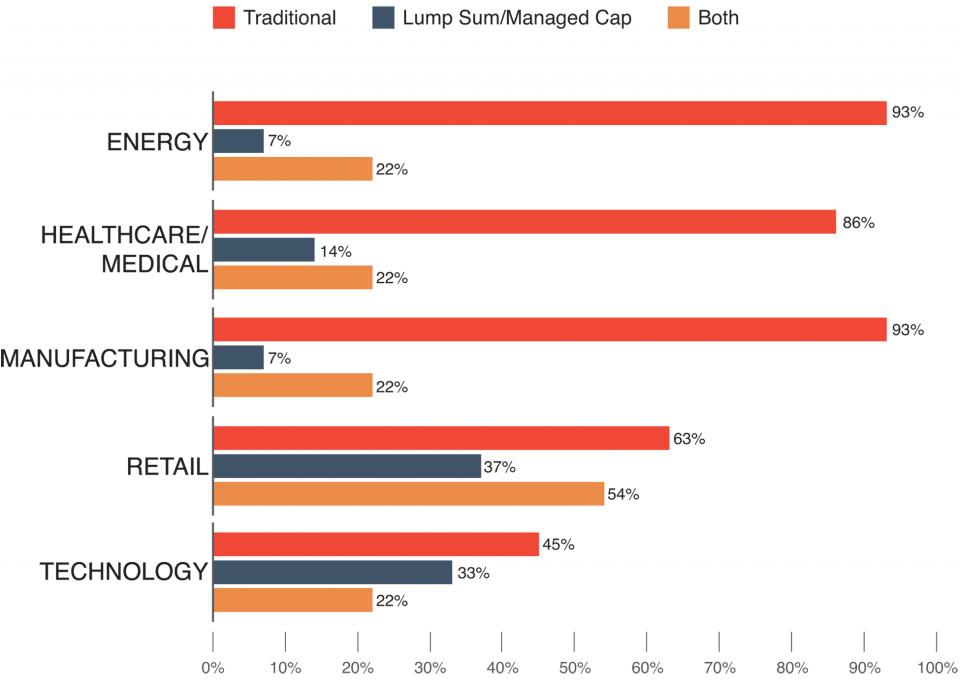
Moving Cost Estimator – A quick and easy tool that can aid a transferee in anticipating what his or her moving costs will be. This is especially helpful if a transferee has a capped or lump sum policy.

Buy vs. Rent Calculator – This simple to use, dual calculator illustrates what a transferee can expect to pay, over a given period of time when renting a home versus buying a home (spoiler alert: buying wins in almost every scenario). Users don’t even have to type anything in! They can just move the slider to view multiple scenarios.

My Initiated Services – Gives the transferee a snapshot of all of the services and contact information associated with his or her relocation. This at-a-glance feature answers the questions, “Which company is going to ship my household goods?”  “What’s my realtor’s phone number?” “Where is the place I’m staying for my corporate housing?” and more. It’s all on one page – in one place – in an easy copy/paste format.

Innovative relocation mobile apps such as the myrelocation.com mobile app put the power of managing a move in the palm of your transferees’ hands. To learn more about how myrelocation.com can not only guide your transferees, but help you better manage the logistics and expenses involved with relocation, please visit https://gmsmobility.com/relocation-technology for details and demos.

Categories
Corporate Relocation Domestic Relocation Challenges Global Relocation Challenges

Overcoming a Reluctance to Move

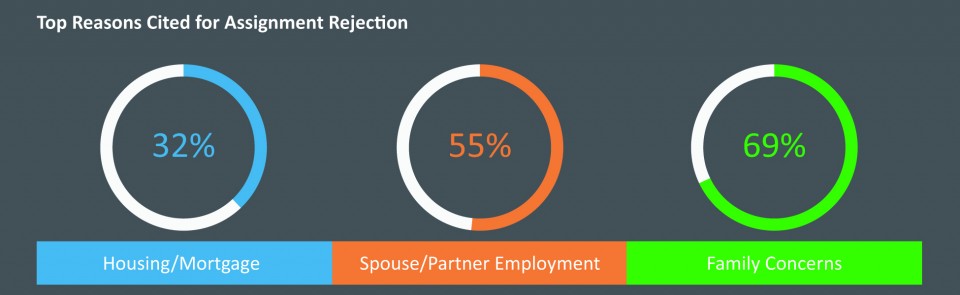
Relocating one’s self – and in some cases one’s family – to a new, unfamiliar location can be a stressful, frightening experience, regardless the financial opportunity. A recent Worldwide ERC study evidenced that “Family resistance to move” was cited as the overwhelming reason why candidates were reluctant to relocate.

How can a human resources department, that has already spent a lot of time and money searching for the right candidate, ensure that an offer that includes relocation is accepted? How can they take the anxiety out of moving?

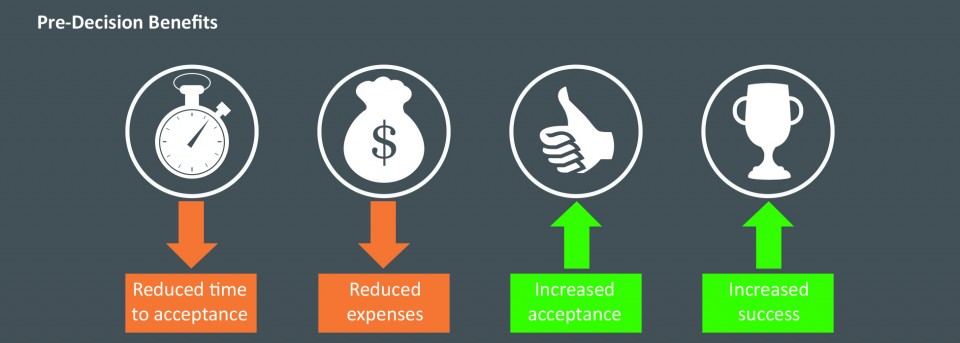
Pre-decision solutions are designed to assist both the employee and the company in determining the benefits and challenges of a potential relocation and overcoming reluctance. First, a mobility management company engages the candidate or transferee early in the process. Since mobility management companies are not bound by the same EOC rules that apply to human resource departments, they can ask more specific questions about lifestyle and family. This creates a complete picture of what would make the transferee comfortable in a new setting. This can include information about schools, shopping, activities, desired commute, and much more. Because the process includes questions that go beyond job performance, spouses and families feel more involved with the relocation process. The mobility management company further reduces stress by arranging community tours, housing information, and cost of living analyses. A pre-decision program can remove all the unknowns – generating positive excitement for the transferee and overcoming a family’s resistance to move.

Global-Mobility-Solutions-Pre-Decision-HR-Benefits overcoming reluctance

Global-Mobility-Solutions-Pre-Decision-Transferee-Benefits overcoming reluctance

For the company, pre-decision solutions are proven to increase offer acceptance and decrease time to acceptance. Additionally, because of built-in programs like Candidate Expense Management, the final cost of relocation have been shown to be less when utilizing a pre-decision solution. The Program Manager of Talent Acquisition at Providence Health and Services said of her experience with pre-decision, “By initiating relocations prior to the face-to-face interview, we know that transferees have arrived more quickly, have settled better, and stayed longer.” What more could a human resources department want?

To learn more about mobility pre-decision solutions, please visit www.gmsmobility.com/pre-decision/

Categories
Corporate Relocation Corporate relocation tips Domestic Relocation Global Relocation Relocation Challenges

5 Reasons to Outsource Global Mobility Management

Outsource global mobility management – As companies continue to focus on ways to reduce assignment costs, examining operational effectiveness for improved quality and costs savings has become more relevant, particularly with programs managed in-house and/or partially outsourced.

  1. Cost Management: often times, in house programs do not consider or do not have the processes for tracking and reporting mobility costs, which often results in misrepresentation of mobility costs and government fines.
  2. Cost Savings: Outsourcing mobility will generate cost savings from a variety of sources, including policy recommendations, fees vs. in-house operational costs and direct costs e.g. home sale, shipments, etc.
  3. Courtesy Enhancements: In-house programs typically do not offer “no costs” solutions such as pre-decision, expatriate auto lease programs, expatriate home purchase programs and other value add services companies gain from fully outsourcing.
  4. Core Responsibilities: Outsourcing non-core competencies, allows human resources, compensation and benefits and/or recruiting professionals to focus on their core business duties by eliminating the administrative burden of managing the relocation process.
  5. Compliance: Mobility programs offer significant tax and compliance advantages.

These are the top 5 reasons to outsource global mobility management.

Categories
Corporate Relocation Domestic Relocation Global Relocation

Global Mobility Solutions Wins Relocation Award For Third Consecutive Year

SCOTTSDALE, Ariz., Mar. 10, 2016 – GMS Wins Relocation Award 2016 – For the third year in a row, relocation management provider Global Mobility Solutions (www.gmsmobility.com) has earned top placement on HRO Today’s Baker’s Dozen Customer Satisfaction Survey. In their 2016 survey of the relocation management industry, HRO Today rated Global Mobility Solutions as the second best overall relocation management provider in the industry. As the largest customer survey of its kind, the Baker’s Dozen has become one of the industry’s most trusted talent management resources. You can find the complete survey results here.

“GMS is proud to be named at the top of the relocation management industry for the third year in a row” said Global Mobility Solutions President Steven Wester, CRP, SGMS-T. “This is validation of our consistent performance, the exceptional customer service provided by our employees, the breadth of our global mobility services, and the depth of our client relationships. We are truly honored and deeply grateful to our clients for giving us the opportunity to partner with them.”

According to editors at HRO Today “Rankings are based solely on feedback from buyers of the rated services, we collect feedback annually through online survey which we distribute directly to buyers through our own mailing list.” The annual survey analyzes relocation management providers under three categories: service quality, deal size, and breadth of service. Service quality is given the heaviest weight followed closely by breadth of service and finally size of deals. These results are then averaged together to determine the top overall providers in relocation management.

GMS Wins Relocation Award 2016

GMS clientele gave the company high ratings in service quality and breadth of services, driving the company to a number two overall placement in the industry for the second time in the last 3 years. As the nation’s premier publication on human resource operations and outsourcing, HRO Today’s annual publication of the Baker’s Dozen list is a much-anticipated event. Incorporating sound scientific methodology, the surveys underpinning the list are designed to offer meaningful and actionable feedback on what constitutes true customer satisfaction, making HRO Today’s 2016 survey a must read for both human resources and procurement professionals.

About Global Mobility Solutions
Founded in 1987, Global Mobility Solutions is a relocation management company that specializes in supplier management and relocation program development. The company’s relocation services include global assignment management, domestic relocation management and a range of pre-decision solutions.

Contact:

Thomas Belnap, Marketing Director
800-617-1904 ext. 8832
[email protected]

Categories
Corporate Relocation Domestic Relocation Domestic Relocation Trends Global Relocation Global Relocation Trends

GMS and Partners Donate 50,000 Meals to St. Mary’s Food Bank at 2016 Forum

2016 Global Mobility Solutions Partner Forum and Awards Dinner Features Insightful Discussions, Recognition for Top-performing Suppliers, and Philanthropy

SCOTTSDALE, Ariz., March 02, 2016 – Global Mobility Solutions (https://gmsmobility.com/) recently hosted its annual partner forum, an event recognizing members of its Premier Alliance Network – an elite partnership of transportation and relocation service providers. This year’s forum was branded as #TrendUp; the forum focused on emerging trends within the relocation management industry.

“GMS continues to grow, thanks in large part to its exceptional network of partners,” said President Steven Wester. “The relocation industry as a whole is rapidly evolving and keeping abreast of future trends has never been more important. Our partner forum is an opportunity to deliver practical business insights, honor top-performing suppliers within our network, and extends our support to noble causes in the communities we all serve. This year’s event was a big success on each of those fronts.”

The highlight of this year’s forum was the much-anticipated client panel. Suppliers held a lively Q and A session with human resources management from Fortune 500 companies, as well as one of the largest nonprofit health care providers in the world.

GMS recognizes outstanding contributions to its clientele through Partner of the Year awards. The primary criteria for these annual awards include customer satisfaction and on-time service – key indicators of quality and reliability among relocation providers. Partner of the Year award winners for 2016 included the following:

•    Global Services – Nomad Temporary Housing
•    International HHG – Chipman International
•    Domestic HHG (Silver Tier) – Merchants Moving/Atlas
•    Domestic HHG (Gold Tier) – Hilldrup/United
•    Domestic HHG (Platinum Tier) – Armbruster/Mayflower

GMS President Steven Wester (left) and GMS Transportation Director Ann Knapp (right) Award Armbruster Moving and Storage (center) with Platinum Partner of the Year AwardGMS President Steven Wester (left) and GMS Transportation Director Ann Knapp (right) Award Armbruster Moving and Storage (center) with Platinum Partner of the Year Award at 2016 Forum | #TrendUp.

In addition to the client panel and Partner of the Year awards, a trio of workshop sessions provided an opportunity for participants to gain insight into some fast-emerging trends in the relocation industry, led by experienced subject matter experts.

Chuck Matthews, Chief Executive Officer of WGM Holdings and a member of the FBI’s InfraGard partnership, headed a session on cyber security for small to mid-sized businesses. According to cyber security firm Symantec, 60% of cyber attacks target SMBs, resulting in billions in losses annually. Matthews offered background on the origin of these attacks and their continuously evolving levels of sophistication. The session focused primarily on what managers and owners can do to protect their valuable assets, not to mention their reputations, against digital fraud and hacking. Other sessions included “Standards Please,” in which GMS Vice President of Domestic Services Nancy Kritzer illustrated the importance of consistent standards in communication. Meanwhile, performance analytics as a critical tool for the modern enterprise was the theme of “Measuring What Matters” with GMS Vice President of Global Services John Fernandez.

Every year, the partner forum allows GMS and its Premier Alliance Network an opportunity to demonstrate their shared commitment to philanthropy. For GMS, that commitment has included significant efforts to end childhood hunger in local communities. This year’s forum featured both an online pre-forum raffle and an in-forum raffle that resulted in a donation of over 50,000 meals to St. Mary’s Food Bank in Phoenix to help eliminate hunger.

“We are so thankful for this amazing gift,” remarked Lisa Goin, Chief Development and Communications Officer at St. Mary’s Food Bank. “Here in Arizona, there are nearly 500,000 children who literally do not know if they will have dinner tonight. This gift will help feed 50,000 of them a nutritious meal.”

About Global Mobility Solutions

Founded in 1987, Global Mobility Solutions is a global corporate relocation services company that specializes in workforce mobility. The company’s corporate relocation services include global assignment management, domestic relocation management and a range of pre-decision solutions. Global Mobility Solutions is a back-to-back winner of HRO Today’s 2014 and 2015 client satisfaction survey, and rated number 1 in the relocation management industry for breadth of services.

Contact:

Thomas Belnap, Marketing Director
800-617-1904 ext. 8832
[email protected]

Categories
Corporate Relocation Domestic Relocation Global Relocation Relocation Challenges

Relocation Myths!

Sam Hoey: Relocation services policy consultant at Global Mobility SolutionsSam Hoey
Relocation Policy Consultant
at GMS for over 20 years

The Emmy nominated series MythBusters aims to uncover the truth behind popular myths and legends by mixing science, curiosity and ingenuity to create an experiment. As much as I would love to do an experiment to find out if Diet Coke and Mentos will make your stomach explode or if it is possible to beat a lie detector test, I am actually going to bust some common relocation myths heard in the relocation industry. As a professional relocation policy consultant, I have witnessed how some myths encourage mistakes when creating corporate relocation policies. These myths sometimes negatively impact a host of policy elements, including household goods move, transferee support services, language training limits, and even reimbursement considerations, which commonly stem from generalizations. Let’s uncover the truth behind some of these commonly held generalizations.

[divider line_type=”No Line” custom_height=”40″]

Myth 1: Every company needs a relocation policy.

If you infrequently transfer employees and your transfers are mainly US Domestic an “offer letter” is as effective as a standard policy. When writing the “offer letter”, it’s important to clearly define the benefits offered. However, if you transfer more than a handful of employees annually then a well defined tiered relocation policy is recommended.[divider line_type=”No Line” custom_height=”1″]

Percentage of companies without official relocation policies

[divider line_type=”No Line” custom_height=”25″]

Myth 2: Lump sum programs save the company money.

[clickToTweet tweet=”When given a lump sum employees often cut corners with their relocation and pocket additional funds” quote=”When given a lump sum employees often cut corners with their relocation, pocketing additional funds” theme=”style3″]
Although a lump sum is a perfect solution for the college graduate new hire, it is rarely recommended for a more professional level of employee. The fact is, by cutting a lump sum check the employee often cuts corners with their relocation and then pockets the additional money. There are also tax disadvantages with the lump sum. If the company is not grossing up the lump sum, there are FICA taxes required to be paid by the company. If the company is not offering tax assistance, the amount of taxes that are withheld are significant and the employee is then paying tax on a benefit that is non taxable if the funds are used for the household goods move. There are also liability concerns with the employee choosing to rent a UHAUL and moving themselves. Bottom line is that the employee ends up being more stressed and unable to focus on the job since they are coordinating all aspects of their move.

[divider line_type=”No Line” custom_height=”40″]

Myth 3: Unpacking is a dream come true.

Reality is, unpacking can be a nightmare. Unpacking in the moving industry consists of the crew removing everything out of the boxes and placing it on the closest flat surface. It will be placed in the correct room, but will not be put away in cabinets or closets. Many people prefer to unpack at their leisure, prioritizing the most critical items first, and have it out of sight until they have time to get to it.

A recommended solution is to replace unpacking with debris pick-up which involves having the mover come pick up the boxes and materials when the unpacking is complete.   An additional advantage is that it saves the company between $300 and $1,000 per move.
[divider line_type=”No Line” custom_height=”20″]

Myth 4: Millennials only want self service options. 

[clickToTweet tweet=”While millennials love online resources, we find they lean heavily on relocation coaches.” quote=”While millennials love their online resources, we find they lean heavily on relocation coaches.” theme=”style3″]

I’ve heard time and again that millennials are all about self service, and would rather manage their own relocation via digital resources rather than speaking with a live relocation consultant. While millennials do tend to use more online resources than previous generations, we find this statement to be extremely false. In fact, most Millennials often need even more hand holding than the standard executive transferee since it may be their first time moving, first time buying or selling a home and may be inexperienced with relocation in general. Due to the newness of it all, they may have personal questions about how to navigate through breaking a lease or what neighborhood would best suit their lifestyle, etc.

Millennials will still rely on social networking websites like Facebook and LinkedIn to make virtual friends or connections at their new location even prior to moving there.[divider line_type=”No Line” custom_height=”20″]

Myths 5-12:

We put the industry’s most common assumptions to the test in our latest white paper for 2016.

These 12 Relocation Myths can hinder your relocation program, and even the effective management of your employee's relocation services!


Categories
Corporate Relocation Corporate relocation tips Domestic Relocation Relocation Challenges

Family Matters and Career Support for the Trailing Spouse

Relocating employees often face serious concerns regarding their children’s education, family healthcare, eldercare, and the job market for their accompanying partner or fiancé. Understanding your employee’s needs and concerns can help them make the right decision with regard to relocating. While some candidates may appear perfect for a job opportunity on paper there may be a plethora of unseen obstacles that could result in a candidate declining an assignment, or worse, failing to relocate midway through their move.

Impact Stats:

In Worldwide ERC’s latest 2015 U.S. Transfer Volume and Cost Survey there are 3 statistics that will likely cause considerable stress to any human resources professional:

  • The number 1 reason for an employee’s reluctance to relocate is family resistance to the move. (60% of all relocating employees!)
  • The average cost to relocate a home owning employee comes in at around $72,000.
  • Career concerns for the trailing spouse is a top 10 issue in addition to family resistance to the move.

That’s a lot of risk, and highlights the absolute necessity for comprehensive pre-decision planning and quality family support solutions. Understanding your employee’s concerns can help them make the right mobility decision. The right decision means better return on investment for your organization’s mobility program and a smoother transition for the employee and their family.[divider line_type=”No Line” custom_height=”20″]

Worldwide Executive Relocation Council Statistics, Reluctance to relocate

Put a plan into place:

Organizational planning before the move is crucial to your program’s success. If you can’t remember the last time your organization revisited your relocation policy and process, it may be time for a quick dust off. Start with the family support essentials:

  • Look into your career and family assistance offerings. Every organization and industry has its own idiosyncrasies. How do you determine how much assistance an employee needs? What level of support is too little? How much is too much? There are a lot of moving parts and given the amount of risk involved, reaching out to relocation management experts should be a part of any comprehensive plan.
  • Provide a single point of contact. According to HRO Today’s 2015 provider report, a single point of contact is a hallmark of quality service at relocation management companies. A relocation manager or “coach” is the employee’s confidant and adviser if concerns arise before or during their relocation. Depending on the organization, policies can be complex and difficult for an employee to navigate. A relocation manager can help explain and coordinate career and family assistance benefits for the employee and their family. Without a single point of contact that understands the big picture some needs may inevitably fall through the cracks.
  • Ensure your organization offers core services. Every relocation program should include a family pre-decision evaluation, career assistance, lifestyle and family support programs. Do your employees fully understand the impact the move will have on their partner’s career or their family’s lifestyle? Is a suburban family moving to a big city? What does the job market at destination look like for the employee’s spouse? Quality pre-decision screening and family support benefits help uncover underlying issues, and address them before they become problematic.
  • Pre-decision screening should be proactive. The core elements of any pre-decision program includes: needs assessments to identify top concerns and potential red flags, general overview of the local job market and community, general information about companies that may fit the partner’s career goals, cost of living assessment and general salary information, and an in depth career assessment such as the Hiring Edge DISC.
  • Be Better Than A Google Search. Some programs have website portals that simply list online resources for job searches. While sending an employee’s spouse to job boards like Career Builder or Jobing is a good start, but such services hardly offer anything more than a simple Google Search would. Comprehensive career assistance should review a candidate’s experience, identify personality type, discuss the importance of corporate culture, develop an application schedule and goals, offer resumé critique, provide networking and interview preparation and assist candidates in navigating the sea of job listings and online resources available today.
  • Leverage your recruiting network. Possibly one of the best resources a company can offer up is their network of recruiters. Most organizations employ 3rd party recruiting companies to meet the demands of their own staffing needs. Providing a warm hand-off to these networks can make a world of difference. This is where some relocation management companies have an edge over in house relocation programs, as well as a key differentiator when comparing RMC’s.
  • Support for the entrepreneur. Some spouses may have a small business and will have unique needs and guidance when relocating their business. Guidance and resources for spouses looking to start a new business or relocating an existing business may include market analysis, networking assistance, and introductions to the startup community in the new area.
  • Understand the stressors of the relocating family. When employees and families relocate they undergo a massive amount of change. The biggest tasks such as finding living accommodations or working with moving companies, require a great deal of attention and leave little time to deal with other needs. This time crunch plus the stress that accompanies relocation can make it difficult for the employee and the family to adjust to the new location, emotionally and physically.
  • Culture shock can happen anywhere. While traditionally thought of as an issue exclusively impacting employee on global assignment, domestic culture shock is a common occurrence. Any drastic change in lifestyle can have an unnerving effect such as: suburban life vs. inner city bustle, west coast laissez-faire style work environments vs. hard nosed New York hustle, even climate and geography play a significant role in a families ability to settle into a new location. Due to these factors, benefit packages should include services that assist the family after the move is completed. (These are sometimes called settling-in or acclimation services.)
  • Get connected to the community. Moving to a new location often means employees and families must recreate their lifestyle without the help of the support network they traditionally relied on. An organization’s relocation program should fill in the gaps of a families support network during the transition with services that identify relevant community networks, activities, medical specialists, secondary and higher educational resources as well as licensed preschools and/or day cares.

While there are a lot of moving parts and face value costs to providing a comprehensive family support plan, the benefits pay dividends. With over 60% of employees confirming that family issues presented major challenges to their relocation, family support services deserve healthy attention. Given a price tag of 72,000 per relocation, organizations can’t likely afford policy missteps. While this article provides a quality overview of the topic, organizational needs are unique and may depend on program type, industry, company size, and geographic location. If you have questions on how your program’s family support benefits measure up, reach out to a family support consultant at Global Mobility Solutions today for a free comprehensive program review.

Categories
Corporate Relocation Global Relocation Global Relocation Challenges

European Court of Justice Rejects Safe Harbor

European Court Rejects Safe Harbor: On October 6th, the European Court of Justice declared the US – EU Safe Harbor Framework invalid on several grounds which may create complications with cross Atlantic transfers of personal information. As a brief overview, the ECJ found that while the Safe Harbor framework did meet requirements in holding US companies accountable for the privacy of personal data transmission, it could not ensure or protect the privacy rights of EU citizens from public US institutions.

server-room European Court Rejects Safe Harbor

“The ECJ found Safe Harbor Framework insufficient in privacy protections.”
[divider line_type=”No Line” custom_height=”30″]
What was the EU SafeHarbor Framework?

Up until October 6th EU Safe Harbor provided U.S. companies the ability to transfer personal data from the EU to the US while complying with privacy rights provided to European Citizens under the EU Data Protection Directive. Companies would “self-certify” or confirm that they met the EU’s minimum requirements for data protection with the Department of Commerce and provide a public copy of their company’s privacy policy (accessible on company websites). The Federal Trade Commission acted as the enforcement arm of the agreement, investigating complaints and ensuring that companies kept the promises made during self certification.

The Max Schrems Complaint
The Schrems case came about when an Austrian law student brought concerns to the ECJ that his private Facebook data, in transfer from Ireland to the United States, did not comply with EU privacy rights. Schrems claimed that Public US institutions (such as the NSA) frequently mined data from US companies without oversight essentially violating his right to privacy as a citizen of the EU. After reviewing Schrems complaint, the ECJ came to the same conclusion and ruled the self certified approach invalid.

European Court Rejects Safe Harbor – Impact and Solutions
If your company transfers employee data from the EU to the US and used Safe Harbor to self certify, your company is no longer in compliance with EU regulations. However… don’t panic! Keep calm and consider implementing Model Contract Clauses or MCCs. There are 3 sets of model contract clauses provided by the EU to help corporations comply with EU privacy laws. Whether some or all clauses should be implemented at your organization depends on how your organization handles private information. For your convenience we’ve added the links to the 3 standard clauses recommended by the European Commission:

  1. EU controller to Non-EU controller Set 1
  2. EU controller to Non-EU controller Set 2
  3. EU controller to Non-EU processor

Depending on your organization’s international structure, you may also consider implementing “Binding Corporate Rules” which according to the European Commission are:

“internal rules (such as a Code of Conduct) adopted by multinational group of companies which define its global policy with regard to the international transfers of personal data within the same corporate group to entities located in countries which do not provide an adequate level of protection.

Final Thoughts and Necessary Disclaimer
While the information we’ve provided is accurate and sourced from the European Commission, we advise all organizations to consult with their legal team and/or representatives before taking any action. This article is intended to provide a leg up on the history and research currently available on the topic of European Court Rejects Safe Harbor consolidated into a single article and should be used for informational purposes only.

[divider line_type=”No Line” custom_height=””]Brought to you by Global Mobility Solutions, a trusted partner in global talent management.[divider line_type=”No Line” custom_height=””]

Looking for something?