

Categories
Corporate Relocation Domestic Relocation Global Mobility

Seven Tips to Help Your Company’s New Human Resource Mobility Manager Get Up To Speed

Strong economic growth helps companies increase sales, meet corporate objectives, and expand their operations. As companies grow, their need for employees with exceptional skills and talent increases. New hires, transferees, and promotions impact all departments, including Human Resources (HR) and the HR Mobility Manager.

However, growing companies cannot easily provide employees with a lot of time for long learning curves. The speed of business, as well as expanding competition, mean new hires, transferees, and employees new to their positions must hit the ground running. Your company’s future depends on a robust, well-functioning, and highly productive talent acquisition program.

Companies with successful talent acquisition programs understand their relocation policies are critically important to attracting and retaining those with the highest level of skills and experience. How can a new HR Mobility Manager get up to speed quickly and efficiently so talent acquisition programs and relocation policies are fully effective?

Global Mobility Solutions’ team of global relocation experts believes these seven tips are the most helpful for new HR Mobility Managers:

1. Set up a meeting with your Relocation Management Company (RMC).

The first thing a new HR Mobility Manager should do is meet with their RMC’s Account Manager and Relocation Coach responsible for servicing their account. The relocation experts servicing their account will have in-depth knowledge of the company’s relocation policies. They will also be able to speak to what is working best for the company, and share helpful recommendations that will benefit the company’s talent acquisition program and relocation policies.

2. Examine past annual reviews and become familiar with reports.

Annual reviews and reports from their RMC provide a quick summary of important measurements, including:

  • Annual Spend
  • Volume of Relocations
  • Relocation Policy Tiers
  • Policy Exceptions
  • Industry Trends

3. Review customer satisfaction ratings.

Every relocation should have input from the transferee as to their level of satisfaction. Ratings may provide insight regarding relocation policy issues; transportation including packing, move, and unloading; and satisfaction with elements of the relocation process such as expense reimbursement processes and community tours. Information should also provide insight into the resolution of any service challenges, which in turn may help guide future relocation policy development.

4. Set up training for the online portal so you can access relocation tools.

Your company’s RMC should have a robust and industry-leading relocation technology solution. The technology should be fully secure, with simple processes and easy to use tools for both employees and transferees. The training should include:

  • How to Initiate a Relocation
  • How Transferees Submit for Reimbursement
  • Viewing Transferee’s Status
  • Running Custom Reports

5. Learn the history of your company’s relocation policy.

Your RMC Account Manager understands the details and nuances of your company’s relocation policy. They can help you understand the history of your policy, including what the most recent revision was, and why the revision was necessary. Your RMC may also have specific policy suggestions that are helpful to your company. They have knowledge about your company and the industry it is in, as well as experience in the relocation industry. They understand what works best for your company’s relocation policy, especially as it relates to your talent acquisition program.

6. Interview your HR Department to learn which improvements should be made to the policy.

Other members of your HR Department may be good sources to learn which improvements are necessary for your company’s relocation policy. They may have experience working with transferees and issues such as policy exceptions. Ask the other employees in your department these questions:

  • What Works?
  • What is Not Working?
  • Is the Relocation Budget Sufficient?
  • Do the Relocation Packages Include Enough Benefits to Draw New Hires?
  • What is the Expense Management Turnaround Time?
  • How Does the Invoicing Process Work?
  • What Other Ideas Would They Suggest?

7. Be sure your RMC shares industry updates and trends on a consistent basis, and consider joining Worldwide ERC.

Your RMC should share industry updates and trends on a consistent basis. As experts in the relocation industry, you should be able to rely on your RMC’s knowledge and experience. Your RMC should help design your company’s relocation policies using best practices to promote successful relocations. Another helpful resource for relocation industry information is Worldwide ERC. Consider joining this leading industry association to gain access to useful information and expand your networking opportunities.

Conclusion

Global Mobility Solutions’ team of global relocation experts has helped thousands of our clients when new HR Mobility Managers come on board to work with our team. We can help your company’s new HR Mobility Manager get up to speed quickly and efficiently, so talent acquisition programs and relocation policies are fully effective. Learn best practices from Global Mobility Solutions, the relocation industry and technology experts who are dedicated to keeping you informed and connected. Contact our experts online or give us a call at 800.617.1904 or 480.922.0700 today.


Request your complimentary relocation policy review

Categories
Choosing a Relocation Company Corporate Relocation Domestic Relocation Global Relocation Relocation Policy Review Relocation Programs

Advantages of an Expedited Bidding Process

More companies are using an expedited bidding process when it comes to outsourcing their relocation program to a Relocation Management Company (RMC). This fundamental shift in a company’s approach to outsourcing relocation has many benefits, including significant cost and time savings. As the pace of business continues to increase, expedited bidding has proven to be a boon for companies that are looking to enhance the management of their relocation program.

Global Mobility Solutions’ team of global relocation experts benchmarked 48 companies that have utilized this process to determine the reasons why this approach has risen in prominence in today’s relocation market. Our team has identified five distinct reasons for the increased utilization of expedited bidding.

Five Reasons Why Companies Prefer an Expedited Bidding Process:

1. Companies Buy Solutions, Not Parts

Purchasing relocation management is a much different process than sourcing parts or equipment. Companies understand that ensuring the right fit for the right reasons is the most important factor when sourcing employee-facing services.

2. Complimentary Mobility Consulting

Policy reviews, program design and recommendations, and policy development and revisions can easily be part of this process. This also allows companies to evaluate an RMC’s experience, knowledge of the relocation process, and the quality of their consulting work.

3. Faster Relocation Program Implementation With an Expedited Bidding Process

Over 90% of companies that utilize an expedited process are able to complete their implementation within 22 days. The speed of this approach allows companies to achieve immediate efficiencies in their programs.

4. Avoiding Formal Requests

Utilizing an expedited bidding process helps companies avoid the administrative burdens and resource-intensive approach typical of the more formal Requests for Information and Requests for Proposals.

5. Immediate Cost Savings

Competition inherent in this process often results in cost savings. Improved fee structures and reduced direct costs result in up-front savings for the client. Savings allow clients to increase their focus on strategic business initiatives while the RMC manages their relocation program.

What Should Employers do to Utilize an Expedited Bidding Process?

Employers should utilize an expedited bidding process as they consider outsourcing their relocation management. A Relocation Management Company with extensive knowledge of the global relocation market and the experience of moving hundreds of thousands of employees will provide the best resources for expedited bidding processes. An experienced RMC can also easily guide companies through the process and achieve highly successful results.

Conclusion

Global Mobility Solutions’ team of global relocation experts has helped thousands of our clients with their relocation programs. We can help your company understand how to gain the most benefits from utilizing an expedited bidding process. Learn how to choose the best Relocation Management Company from Global Mobility Solutions, the relocation industry and technology experts who are dedicated to keeping you informed and connected. Contact our experts online or give us a call at 800.617.1904 or 480.922.0700 today.

Request your complimentary relocation policy review

Categories
Corporate Relocation

Electronic Logging Devices and the Impact on the Household Goods Moving Industry

Beginning in December of 2017, all drivers with applicable tractors had to install and operate Electronic Logging Devices (ELDs). These devices replace the outdated and cumbersome log-book that drivers had been using for several years.

The ELD offers many benefits for both drivers and their respective carriers

Benefits of Electronic Logging Devices

  • Limits the hours a driver can be behind the wheel, which should reduce the number of Tractor Trailer accidents.
  • The device does all of the work and drivers no longer need to keep a log.
  • The Federal Motor Carrier Safety Administration (FMCSA) will be able to track and report on driver trends and statistics with greater accuracy.

However, despite the many benefits that ELDs provide, there are several disadvantages which have negative impacts on the household goods moving industry.

Disadvantages of Electronic Logging Devices

  • Drivers may not drive/work for more than 11 hours in a 24 hour period. There is also mandatory rest time per week. These new restrictions will lengthen the time it takes for the driver to make it to destination, which may increase other costs such as per diems, corporate housing, and rental cars.
  • ELDs start tracking with the pre-trip inspection, which had not typically been included in log books. This will reduce the length of time a driver will be on the road.
  • When the ELD notifies the driver that they are done for the day, they must stop immediately or be subject to fines from not just FMCSA, but also their own van lines.
  • Routes with heavy motor vehicle traffic will be greatly impacted because ELDs measure total time on the road whether the driver is moving or at a stand-still on the freeway. Traffic jams will cause drivers to time out faster.

What should employers with relocating employees expect with ELDs?

Employers who have plans relocate employees should prepare for longer times related to their relocating employee’s household goods move. This may impact employee starting times at their new location, as well as lead to higher costs for the relocation.

What else should employers be aware of?

Driver and Labor Shortage: An additional challenge facing the Household Goods Moving Industry is the driver and labor shortage. Over 40% of drivers are over 50 years old, and are aging out of the business at a very high rate due to the physical demands of the job. The industry has been facing this problem for the past 10 years, and attracting more talent continues to be challenging. According to the American Transportation Research Institute (ATRI), only 4.4% of drivers are in the 20-24 year age range. This could impact the availability of drivers to move household goods for relocating employees, possibly lengthening the time needed to reach the final destination and delay positon start times.

Tax Rule Impact: Also, employers should be aware of the tax rule change impact on moving costs. Employers who choose to gross up moving costs for relocating employees will face higher costs as this benefit is now taxable. IRS Code Section 217 no longer creates a tax payer deduction for the Qualified Moving Expenses of household goods moving costs and final move expenses. These formerly non-taxable employee reimbursements and payments to third party vendors are now taxable income to the employee. If employers choose not to gross up, then going forward these expenses should be treated just like other taxable relocation expenses – reported as earnings to the employees, subject to income and payroll taxes, and reported on their annual W-2 as wages.

What should employers do?

Employers should review their hiring and relocation plans and timelines to account for possible delays related to any household goods moving processes, and the cost impact of the tax rule change eliminating the tax payer deduction for Qualified Moving Expenses.

Conclusion

Global Mobility Solutions’ team of global relocation experts have helped thousands of our clients with household goods moves and everything a relocating employee and their family need during the process. We can help your company understand how to plan for the impact of ELDs as it relates to your relocation program, and the cost impact of tax rule changes. Contact our experts online or give us a call at 800.617.1904 or 480.922.0700 today.

Request your complimentary relocation policy review

Categories
Corporate Relocation Domestic Relocation Domestic Relocation Tips Global Relocation Global Relocation Tips Relocation Programs

What are the Benefits of Outsourcing Relocation Programs?

What are the benefits of outsourcing relocation programs? Companies that want to stay ahead of their competitors and attract highly qualified employees offer a well-designed corporate relocation program. Employees are looking for relocation programs to provide a wide range of benefits and services to ensure they have an easy and smooth relocation process. Companies that offer a relocation program that is managed entirely in-house face several challenges in trying to meet the demands and expectations of a widespread workforce. There are many benefits to  outsourcing relocation programs that companies should consider as they review their offerings.

There are five key in-house relocation program challenges, and five crucial benefits that outsourcing provides to help company relocation programs be successful:

1. Program Managed by Various Locations or Individuals

Local HR teams may have different interpretations of programs and policies, so variations may impact the benefits transferees receive.

Outsourcing Benefit: When choosing to outsource, company relocation programs benefit from central program management with local support. At all times, a consistent and coherent program is administered and fully supported in all locations, with no variations by locale or individual interpretation.

2. Employees or Local HR Assume Additional Responsibilities

A company choosing to offer an in-house relocation program must rely on current employees and local HR teams to assume additional responsibilities. Some current employees may not have experience with relocation programs, so there may be a learning curve requiring additional time and training.

Outsourcing Benefit: Teams of fully trained relocation experts handle the interpretation and delivery of policies, ensuring employees receive the same benefits across the board.

3. Frequent Exception of “Special Deals”

In-house relocation programs are susceptible to frequent exceptions of “special deals” when employees try to find ways to help transferees and their families with unique challenges. Companies often do not have the resources to understand the unique challenges posed with relocation and how they have been addressed by other companies, likely resulting in unforeseen and unbudgeted obligations.

Outsourcing Benefit: Relocation experts with significant industry experience can use their knowledge to help companies understand how best to manage exceptions, minimizing expenses and process disruptions.

4. Relocation Costs not Effectively Tracked

Over 70% of companies that manage relocation in-house are not aware of their program’s internal operating costs. Without effective relocation program expense tracking, the true costs are hidden and thus cannot be effectively controlled or minimized.

Outsourcing Benefit: “Best of the Best” providers are utilized so transferees and their families receive exceptional services while costs can be fully identified, tracked, and reviewed for budgetary impact and program performance.

5. Increased Likelihood of Assignment Failures

Companies offering a relocation program hope their transferees have a successful relocation. However, the likelihood of assignment failure is high due to the in-house team’s lack of experience and knowledge when helping transferees and their families understand and address the unique challenges they face during the relocation process.

Outsourcing Benefit: Companies can benefit from an outsourced solution that specializes in unique relocation needs including tax issues, visa applications, and compliance reporting. Working with relocation experts who have extensive experience in these and other areas can help a company avoid risk related to transferee’s requests for guidance and advice.

Conclusion

The most successful companies outsource their relocation programs so employees and their families have access to industry-leading resources and expert guidance. The corporate relocation experts at Global Mobility Solutions (GMS) help our clients understand how to create and administer a relocation program that gives them a competitive advantage and provides the highest level of relocation benefits and services for their employees.

To learn more about the many benefits outsourcing your corporate relocation program can provide for your company and employees, contact our team of experts online, or call us at 800.617.1904 or 480.922.0700 today.

Request your complimentary relocation policy review

Categories
Corporate Relocation

What Does the UK Economy Look Like for 2018?

While BREXIT (the departure of the United Kingdom from the European Union) consumed nearly all of 2017’s economic headlines for the UK, what does it portend for the 2018 UK Economy? Employers with plans to relocate employees to the UK, and those transferees currently in the process of relocation, should be aware of economic implications that might impact their plans.

UK Economy and Manufacturers Benefit from Eurozone and Global Growth

Despite predictions, there was no post-BREXIT referendum recession. Global growth and a vibrant Eurozone continue to benefit British manufacturing companies. However, the Organisation for Economic Co-operation and Development (OECD) predicts a further drop in UK economic activity, from 1.5 percent in 2017 to 1.2 percent in 2018. The OECD also predicts another drop to just 1.1 percent in 2019 when the UK is expected to leave the EU.

British Pound Weakness Benefits Exports for 2018

A recovering global economy helps sustain UK exports since the British Pound lost value after the referendum. This growth in UK exports will lead to a stronger British Pound for 2018.

British Pound Weakness Hurt Citizens But May Temper in 2018

The weak British Pound led to higher inflation for imports, while wages did not keep pace. However, the low level of unemployment and lower immigration rates may lead to higher wages across the board. Also, as the government’s position is looking more secure, this supports the value of the currency.

UK Employers are Optimistic about UK Economy Job Growth

Surveys indicate UK employers are optimistic about generating jobs in 2018, with over half of all firms planning to increase employment. Employers in the North East UK are reporting a four-point increase in the Manpower Employment Outlook Survey.

UK Employers Worry About Skills Gap

A majority of UK employers note a skills gap is a major threat to the UK’s market competitiveness. Lower immigration rates will further hamper the skills gap. The Institution of Engineering and Technology (IET) 2017 Survey of 800 UK employers with technology and engineering staff report a lack of skills in the market. The IET also reports a shortage of engineering and technical skills among professionals presenting a major challenge.

Conclusion

The global relocation experts at Global Mobility Solutions (GMS) have helped thousands of our clients manage relocation to the UK. We have the knowledge and expertise to help your company determine the best plan forward as the UK Economy continues to evolve with BREXIT issues, currency fluctuations, and global economic challenges.

Contact our team of experts online to discuss how we can help your company’s global relocation plans for the UK, or call us directly at 800.617.1904 or 480.922.0700 today.

Request your complimentary Visa Program Assessment

Categories
Corporate Relocation Domestic Relocation Global Mobility Relocation Management

What is Employee Relocation or Workforce Mobility?

Employee relocation or workforce mobility refers to the processes or relocation services involved in the transfer of employees or potential employees from one location to another. Additional terms that refer to these processes may include:

Some of these terms may be used interchangeably. However, the terms global relocation and North America relocation may differ in the range of services commonly required for relocating an employee. Reference to global relocation is usually as an umbrella term, and includes North America relocation processes. Reference to North America relocation usually excludes processes commonly needed for international employee relocation such as visa acquisition, repatriation, and language training.

Generally, a company’s management of workforce mobility accounts for ongoing employee support services, supplier management, candidate selection, relocation benefits, and expense management. Corporate relocation programs vary between companies due to size, need, or destination.

The overall process of employee relocation is usually divided into one of four service brackets including:

Pre-Decision Services:

According to Worldwide ERC data, the average cost to relocate an executive level home-owning employee is approximately $97,000. For this reason, companies seek assurances that an employee is a good fit for relocation. Pre-decision services aim to uncover any potential issues that may arise prior to the employee’s relocation. As a result, these services reduce the risk of a failed relocation. Some of the most common reasons for failed relocations according to Worldwide ERC include:

  • Negative home equity
  • Slow real estate housing market
  • Family resistance to move
  • Spousal employment
  • High costs of housing

Examples of a few common pre-decision services include:

Candidate Assessment – Services that assess candidate expectation, skills, personal qualities, family circumstance, and financial preparedness.

Cost of Living Analysis – Cost of living comparison of origin and destination cities to help determine acceptable or competitive salary range.

Market Analysis – Determines the likely home sale timeline and identifies potential home sale challenges such as negative equity.

School Reports – Public and Private School reports provided to the relocating employee to aid community selection.

Moving Cost Estimates – Cost estimates on household goods transportation, helps budget for relocation costs.

Community Search and Tours – Coordinates community orientation tours to familiarize relocating employees to their new location, and assist in selecting an area that fits their particular interests.

Origin Services for Employee Relocation

Origin services account for all services necessary at the transferring employee’s origin location. Some of these services include:

Expense Management – Establishment of expense reporting and management services for both the company and employee. Also, this is designed to track and contain costs during the relocation process. Utilized throughout the entire relocation process*

Home Sale Assistance – May include connecting employees with real estate agents, home marketing assistance, and home buying programs.

Household Goods Management – Management of household goods transport from origin to destination. May include procurement of van line services, replacement insurance, and guaranteed “not to exceed” estimates for goods transportation.

Visa and Immigration Services – For international relocations, visa and immigration services organize company and employee documents required for visa acquisition.

Property Management – For employees not selling their home. May include rental marketing assistance, tenant management, vacant property management, landlord consulting, and property maintenance.

Destination Services for Employee Relocation

Destination services account for all services necessary at the transferring employee’s destination location. The range of destination services sometimes includes a further segmentation of “settling in services.” These services are aimed at helping the employee and their family acclimate to their new location. Some of these services may include:

Home Finding Services – Services include connecting employees with real estate agents at destination, home buying assistance, corporate housing, temporary housing, rental assistance, and home finding tours.

Settling in Services – Services that aid employee acclimation to their new location including access to online resources, attaining local driver’s license, child care, connecting utilities, and locating a primary care physician.

Vehicle Lease or Purchase – Services that assist relocating employees acquire a vehicle including loan support, and lease negotiation.

Family Assistance – Services that assist the relocating employee’s family, including spousal employment support, counseling services, and stress management assistance.

Return or Repatriation Services

In most cases, employee relocation services for individuals returning from temporary North America assignments are equivalent to services provided at departure. While there are some short term North America relocation programs among companies, the majority of return services handle an employee’s return from international assignment. International assignments are usually classified into one of four categories:

  1. Extended Business Travel (EBT): an assignment of 3 months or less.
  2. Short Term: An assignment lasting 6 months to a year (range may go up to 2 years).
  3. Long Term: An assignment lasting 2-3 years.
  4. Permanent: An assignment lasting 3 years or more.

For EBT, short term, and long term assignments, repatriation plans have become an industry recognized necessity for effective employee retention. According to Atlas surveys, around 40% of expatriate employees leave their sponsoring company after assignment. Repatriation services seek to close this gap. They also help organizations maximize their workforce investment. As a result, they retain employees that have acquired substantial knowledge capital. Repatriation is a dynamic service area that has wide variation. For example, repatriation counseling helps employees returning from international assignment manage cultural differences, and re-acclimate to North America life. Additional services may include:

  • Lease termination assistance
  • Home services termination (includes utilities)
  • Tax equalization

Workforce mobility seeks to analyze, manage, execute and optimize the processes involved in transferring an employee from one location to another. For more detailed descriptions of relocation services, please visit the following pages:

Global Relocation
North America Relocation

Conclusion

The corporate relocation experts at Global Mobility Solutions (GMS) have the knowledge and expertise to help your company remain competitive, reduce costs, and offer your employees the best relocation experience.

GMS was the first relocation company to register as a .com. The company also created the first online interactive tools and calculators, and revolutionized the entire relocation industry. GMS continues to set the industry pace as the pioneer in innovation and technology solutions with its proprietary MyRelocation® technology platform.

Global Mobility Solutions is proud to be named and ranked #1 Overall, and #1 in Quality of Service by HRO Today’s 2019 Baker’s Dozen Customer Satisfaction Survey.

Contact our team of experts to discuss how we can help improve your company’s corporate relocation program, or call us at 800.617.1904 or 480.922.0700 today.

Request your complimentary relocation policy review

Categories
Corporate Relocation

Top 5 Points for Creating Your 2018 Corporate Relocation Program Budget

It’s that time of year when you might receive a meeting notice titled “2018 Budget Planning Meeting”, or a link to a data entry program, or a spreadsheet with line items for you to reconcile. Where do you start when creating a budget for your company’s corporate relocation program?

Corporate relocation programs often include several activities, all of which can impact your budget. Careful budgeting for 2018 will provide peace of mind over the upcoming year as you anticipate and account for the major points of your company’s workforce mobility requirements.

Be sure to consider these top 5 points as you create your 2018 corporate relocation budget:

Review Historical Data

Closely examine the past few year’s expenses and reports to identify areas that consistently exceed budget, or areas where you can reduce budget. The dynamic nature of the relocation process may result in additional costs related to employee documentation or tax obligations. Be careful to research trends in the data so you can identify areas where your policies might need to adjust, or where a competitive analysis would be helpful. Note specific areas generating out-of-policy costs and be sure to include contingencies in your 2018 budget.

Policy Review

You should review your corporate relocation policy to examine areas that should be adjusted to keep your company competitive with your industry peers. Consider process improvements and new technologies for expense reporting and program management for additional savings and procedural enhancements. Compliance to new or revised regulations might result in additional costs to include in your budget.

Accrual Accounting Requirements

Business expenses are often tracked through several reporting systems. Many companies account for business expenses that occur in one period by setting aside amounts known as accruals against which future expenses are allocated. As you prepare your budget, review the prior year’s accruals and note if you should budget for similar amounts to ensure a smoother expense tracking and recording process, especially in light of cash management requirements.

Large Cost Drivers

Most relocation costs are driven by large cost drivers. Examine the following activities in detail for inclusion in your 2018 budget. Be sure to compare and account for cost differences between global relocation and domestic relocation:

  • Temporary Housing Costs
  • Home Selling and Purchasing Costs
  • Household Good Shipments
  • Tax Implications for the Company and Employee

2018 Workforce Mobility Plans

Has the company announced any strategic initiatives that might result in additional employee relocations? Look for information related to facility planning, sales location development, and company expansion plans. A strategic partnership with another firm might result in temporary or permanent employee relocations. Today’s workforce is more responsive than ever before to changing company requirements, so be sure to plan for contingencies.

Conclusion

Global Mobility Solutions is the corporate relocation industry leader. Our mobility consulting team understands how to create budgets that accurately reflect the corporate relocation market. We have helped thousands of companies determine their budgeting needs, and our team is always ready to assist you in your budgeting process.

For expert guidance on your 2018 budget and corporate relocation policy, contact us online or call us at 800.617.1904 or 480.922.0700 today.

Categories
Corporate Relocation

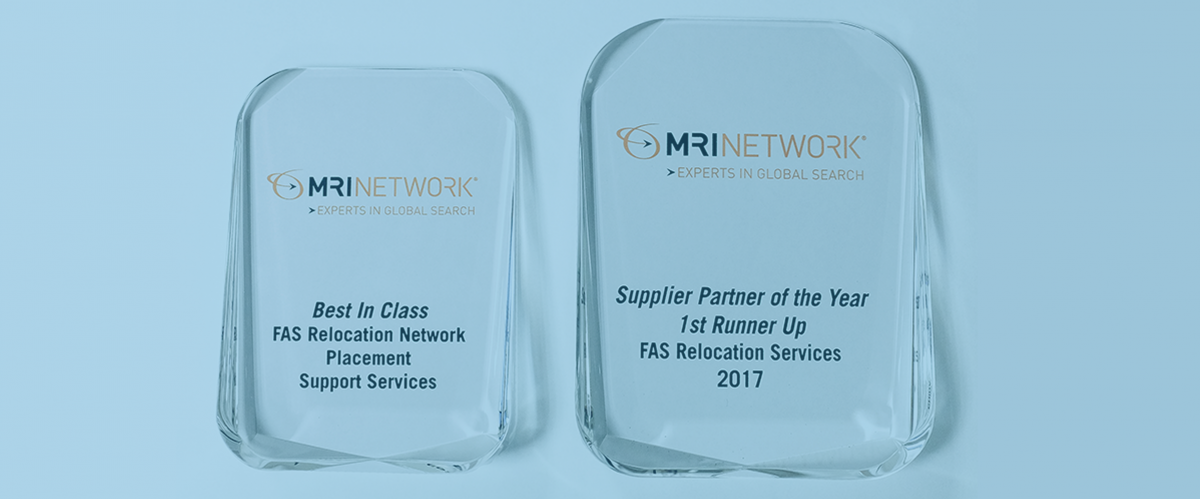
Global Mobility Solutions Wins Two MRINetwork Awards

SCOTTSDALE, AZ, USA, November 30, 2017 – Global Mobility Solutions, the industry leader in corporate relocation services and technology, is pleased to announce it has won two MRINetwork Awards for 2017 Best in Class Supplier Partner and 1st Runner Up for 2017 Supplier Partner of the Year.

MRINetwork franchise owners rate vendors in a survey and the scores are used to determine award winners. Global Mobility Solutions received the awards at MRINework’s 2017 General Session Annual Vendor Partner Awards Ceremony, held this year in Schaumburg, IL on October 27, 2017.

“We are honored to receive these two awards from our customers and industry colleagues,” stated Steven Wester, President of Global Mobility Solutions. “Our team’s commitment to providing superior service and technology shows in the exceptionally high level of satisfaction across all areas of our performance, and as recognized by MRINetwork this year and for the past 12 years.”

For more information about Global Mobility Solutions, please visit gmsmobility.com.

About MRINetwork (http://mrinetwork.com):

Founded in 1965, MRINetwork has grown into one of the largest and most successful recruitment organizations in the world. With a full range of Permanent Placement options ranging from retained or contingency search to contract staffing and large scale project solutions, it gives the flexibility you want at the pace you demand. MRINetwork is a division of CDI Corp.

About Global Mobility Solutions (https://gmsmobility.com):

Founded in 1987, Global Mobility Solutions is a global corporate relocation services company that specializes in workforce mobility. The company’s corporate relocation programs include global assignment management, domestic relocation management, and a range of pre-decision services. Global Mobility Solutions is a perennial winner of the HRO Today “Baker’s Dozen” customer satisfaction survey, being recognized as a top relocation company for the last four consecutive years.

Global Mobility Solutions™ and the Global Mobility Solutions logo are trademarks of Global Mobility Solutions, Scottsdale, AZ, USA.

Press Contact:
Garrett Zucker
[email protected]

Categories
Choosing a Relocation Company Corporate Relocation Corporate relocation tips Domestic Relocation Domestic Relocation Tips Global Relocation Relocation Best Practices Relocation Management

Top 5 Reasons for Expedited Bidding

What is Expedited Bidding?

The Expedited Bidding Process (EBP) is not an abbreviated approach. It is a request for proposal (RFP) that, like a traditional RFP, demands complete and detailed answers from relocation management companies (RMC). However, through expedited bidding, a company’s purchasing department only sends RFPs to a small, select group of key RMCs.

The trend in utilizing an EBP for the outsourcing of relocation management is at an all-time high. Global Mobility Solutions consulting team’s recent study shows that EBP utilization is up more than 200% over the last year. Why are so many companies turning to expedited bidding when looking for a mobility management solution?

Buying Solutions, Not Widgets
Purchasing relocation management is not like sourcing for parts. Ensuring the right fit for the right reasons is key when purchasing employee-facing services.

Courtesy Mobility Consulting
Policy reviews, recommendations, program design, and policy development can be part of the process. This allows for an evaluation of the RMC experience, knowledge, and quality of consulting work.

Immediate Cost Savings
Competition often equates to implicit cost savings through no fee implementation, less administrative burden and time investment, improved fee structures, and reduced direct costs.

Quicker Program Implementation
90% of EBP implementations are completed within 22 days, allowing for immediate efficiencies and realized savings.

Full RFP Avoidance
Eliminates the administrative burden for the purchasing department and reduces the need for extensive resources when compared to a formal Request for Proposal method.

Modern Mobility Made Easy™

What this means for you and your relocating employees

The Global Mobility Solutions benchmarking study shows that companies utilizing an expedited bidding process achieve savings up to 61% over typical RFP costs. Expedited bidding is one of many ways that Global Mobility Solutions recommends to make choosing an RMC fast, easy, and cost-effective. Before you send your next RFP, Download the 28 Critical Questions to ask an RMC. For more information on EBPs, and to learn more about Global Mobility Solutions’ corporate relocation programs, contact us online or give us a call at 800.617.1904 today.

Download the 28 Critical Questions to ask an RMC when submitting an RFP

Categories
Corporate Relocation Relocation Best Practices Relocation Challenges Relocation Management Relocation Technology

Top 5 Considerations When Choosing Relocation Technology

How to get better relocation technology and mobility management at your fingertips

In all aspects of life, technology has made things faster, easier, and more cost-effective. The same is true regarding relocation. Here are some benefits of relocation technology to consider when upgrading your mobility management.

  1. Is it safe, secure, and compliant?
  2. How can it help make my life easier?
  3. How can it help my relocating employees?
  4. Will it integrate with other systems I use?
  5. Is it customizable and scalable?

Safety. To ensure the privacy and protection of your transferees’ personal information, you will want to ensure that your relocation technology has the appropriate level(s) of Privacy Compliance and Service Organization Controls.

Making your life easier. A robust single-platform technology solution should provide human resources, recruiting, and other administrative stakeholders with the tools needed to efficiently oversee relocation, such as:

  • Pre-hire and decision analytics and tools
  • Customizable online relocation initiation and approval process
  • Customizable “at-a-glance” dashboards to easily display the data you want
  • Online relocation cost estimating
  • Detailed and comprehensive performance analytics (SLAs and Metrics)
  • Fully-customizable and robust service and financial reporting suites on demand
  • Online tools and resources to plan and manage your mobility program

With a look at your screen and the touch of a button, you can easily track the progress of transferees, expenses, manage any exceptions, and more.

Helping your relocating employees. Today’s relocation technology should be accessible on any device, including tablets and smartphones. This technology should be available to anyone relocating with your company, including candidates who can benefit from the full scope of pre-employment features offered. Your workforce will move with ease using features like:

  • Virtual Destination and Guides
  • Access relocation benefit details
  • Relocation tools like mortgage vs. rent calculators
  • Online expense submission and tracking
  • Simplified travel booking
  • Real-time expense submissions and reimbursements
  • Language and cultural tools
  • Text and email alerts

It needs to work with what you already have. A good relocation technology solution should integrate with your existing human resources, payroll, and other critical systems and seamlessly enhance your work flow, not complicate it.

You want your solution to grow with your company. As evidenced by many of the preceding bullets, the ability to customize is a key factor when choosing relocation technology. From how you view information on the screen, to the data included on reports, you need a technology solution that gives you what you want, when you want it.

Modern Mobility Made Easy™
What this means for you and your relocating employees

Global Mobility Solutions believes in the use of technology to complement our high touch service model to provide a seamless relocation experience for you and your transferring employees.

MyRelocation™ is our single-platform, online relocation management suite that provides our clients and their transferees an array of decision-making, tracking, and expense management tools – right at their fingertips – anywhere, anytime. To see what MyRelocation™ can do for you, request a quick demo.

Request a relocation technology demo

TAKE THE NEXT STEP IN YOUR CAREER