

Categories
Buy a Home Domestic Relocation Challenges Domestic Relocation Tips Domestic Relocation Trends

Changes in Rules for Home Tax Deductions

Homeowners in the United States should be aware of changes to home tax deductions. These changes are important to understand for when they prepare their 2018 tax returns during the 2019 tax preparation season. They stem from the federal Tax Cuts and Jobs Act of 2017. Changes to home tax deductions were implemented to reduce the ability of homeowners to deduct interest on Home Equity Lines of Credit (HELOC) Loans. When HELOC loans are not used for home purchases, building, or substantial improvements, the interest on these loans will no longer be deductible. There are also dollar limits on the total qualified residential loan balances allowable for deductions, an increase in the standard deduction, and a $10,000 limit on the federal deduction of state and local taxes.

What is Home Equity?

Home Equity is the portion of a home that the owner actually “owns” either through paying down their mortgage or growth in the property value of the home. Homeowners who build equity in their home can help increase their net worth. As a result, home equity may offer homeowners a useful source of funds to borrow from in times of need, such as during a home renovation.

Internal Revenue Service (IRS) Issues Clarification for HELOC Loans

The IRS issued a clarification on February 21 of this year in response to several questions from taxpayers and tax professions. IR-2018-32: Interest on Home Equity Loans Often Still Deductible under New Law describes several examples to demonstrate the effects of the new rule. Important points of clarification include the following:

  • Interest on a home equity loan used to build an addition to an existing home is typically deductible
  • Interest on a home equity loan used to pay personal living expenses, such as credit card debts, is not deductible
  • The loan must be secured by the taxpayer’s main home or second home (known as a qualified residence)
  • The loan must not exceed the cost of the home and meet other requirements

Additionally, the new tax reform law imposes lower dollar limits on mortgages in order to qualify for the home mortgage interest deduction. The IRS notes that starting in 2018:

  • Taxpayers may deduct interest on $750,000 of qualified residence loans, down from the previous $1 million limit
  • There is a limit of $375,000 for a married taxpayer who files a separate return. This is down from the previous $500,000 limit
  • The new limits apply to the combined amount of all loans used to buy, build, or substantially improve the taxpayer’s main home and second home

Itemizations Must Exceed New Standard Deduction

To itemize for 2018 taxes, taxpayers must understand the impact of the new standard deduction. The tax reform law states that total home tax deductions must exceed the new standard deduction. The new standard deduction amounts are:

  • $12,000 for singles
  • $18,000 for heads of household
  • $24,000 for married couples who file jointly
  • $1,600 additional deduction for singles 65 and older
  • $2,600 additional deduction for married couples both 65 and older

Limit on State and Local Tax Deductions

The tax reform law places a limit on the federal deduction of state and local taxes to only $10.000. Homeowners in areas of the United States which experience high taxes include those in the Northeast and the West Coast. As a result, these homeowners may experience an increase in their tax liability.

What Should Homeowners Do?

Homeowners planning to file for home tax deductions on their 2018 tax returns should be aware of the changes to allowable deductions on their HELOC loans. They should also be aware of the new lower dollar limits on qualifying mortgages imposed by the tax reform law. Homeowners should be aware of the requirement that deductions must exceed the new standard deduction if they plan to itemize. Homeowners in states with high taxes should be aware of the new $10,000 limit on federal deduction of state and local taxes. In all cases, homeowners should consult a qualified tax professional for guidance on this issue.

Conclusion

Global Mobility Solutions’ team of corporate relocation experts has helped thousands of our clients understand the importance of obtaining professional guidance when it comes to changing tax regulations. We can help your company understand how to communicate the potential impact of these changes to your new hires and transferees. This will ensure they have relevant information as it applies to their relocations.

Learn best practices from Global Mobility Solutions, the relocation industry and technology experts who are dedicated to keeping you informed and connected. Contact our experts online or give us a call at 800.617.1904 or 480.922.0700 today.

GMS is not a tax advisor and is only disseminating public information.  You should always consult your own tax professional prior to making any decisions.

Request your complimentary relocation policy review

Categories
Buy a Home Domestic Relocation Domestic Relocation Tips Global Relocation Tips

New Construction Loan for Relocation

What is a New Construction Loan for Relocation?

Many of Global Mobility Solutions’ clients have transferees who want to build a new home as part of their relocation and need a new construction loan. GMS spoke with two experts at TIAA Bank who agreed to share their advice and guidance on this topic:

Matt Canfield, Senior Vice President, Relocation and Affinity Lending

Tim Hofmann, Vice President, Construction Lending Administration Manager

New Construction Loan

A new construction loan for a transferee who will be relocating is not the same as a traditional home loan, or mortgage. These are two different lending vehicles that are used for very different purposes.

Mortgage versus New Construction Loan

A mortgage generally features the following:

  1. Finances the purchase of an existing home.
  2. Length may be 15, 20, or 30 years.
  3. Interest rate may be fixed or variable.
  4. Borrower makes principle and interest payments for the life of the mortgage.
  5. Lenders may sell mortgages to investors in the bond market.

A new construction loan generally features the following:

  1. Length is the time it takes to build a home (usually 12 months).
  2. Is similar to a line of credit for a specific amount.
  3. Borrowers/builders submit draw requests to lenders.
  4. Interest is paid only on what is drawn starting at the time of the draw.
  5. Loan remains in the lender’s portfolio and is not sold to investors.
  6. At completion, a mortgage is granted for the new home.
  7. New mortgage pays off the balance of the construction loan.

How Should a Transferee Start the Construction Loan Process?

According to Tim Hofmann at TIAA Bank, transferees should:

  1. Obtain preliminary approval from their lender.
  2. Submit an application for a construction loan.
  3. Transferees should determine if they want to lock their rate in.
    1. TIAA offers an extended rate lock option.
    2. This may be helpful if interest rates are expected to rise.
  4. Choose a contractor and a building plan

What does a Transferee Need to Obtain Approval for a New Construction Loan?

Tim shared the following three items required for approval:

  1. The contractor must be acceptable to the lender. They should have the requisite experience to build a home according to the plans.
  2. The lender will review the contractor and the budget. The budget must:
    1. Be reasonable for the proposed project.
    2. The home’s square footage/size is normal for the area.
    3. Construction costs are reasonable for the quality, size of the home, and the general area.
  3. Lenders approve credit files for the amount of the loan.
    1. If transferee will rent their former home, what is the rental?
    2. For the transferee who will carry both mortgages for the former and the new home, can they carry that debt?
    3. If transferee plans to sell the former home to help finance construction, what is the viability of having the sale occur in the necessary time?

Tim notes that there are a lot of factors to consider for new home construction. Important areas that may impact the process and the timing include:

  1. Will the new home require tearing down an older structure?
  2. Is the building lot included in the cost of the new home?
  3. Will the construction be an extensive renovation of an older structure such as a center-city townhouse?
  4. Are there specific architectural guidelines the project must follow?

Do Transferees Need to Sell Their Current Home Before Applying for a New Construction Loan?

Transferees who are relocating and who currently own a home may want to build a new home. They may want to keep living in their current home until their new home is ready for occupation. Everyone’s situation is different, and what is possible depends on a number of factors:

  1. Is there a mortgage on the current home?
  2. If yes, what is the amount of the current home mortgage?
  3. Will the transferee also be buying the land, or do they already own the land?
  4. What are the amount and terms of the new construction loan?
  5. Can the transferee receive approval for the total debt load of their current mortgage and the new construction loan?

TIAA Bank offers a unique product for new construction loans: OTC. OTC is TIAA Bank’s “One-Time Close” new construction mortgage loan (available only in AZ, CA, CO, CT, DC, DE, FL, IA, IL, IN, MA, MD, MI, MO, MT, NC, NJ, NV, NY, OH,OR, PA, SC, UT, VA, and WA.; other restrictions and limitations may apply).

With OTC from TIAA Bank, the customer only goes through one closing process. During construction, the customer and builder request draws to fund the project. At completion of the home, TIAA Bank only requires a two-page conversion. The customer is able to quickly move into their new home without having to wait for a second closing process. If the customer requires an extension, the two-page extension only requires notarization. TIAA Bank’s OTC new construction mortgage loan speeds the process for customers, and keeps them from having to go through a second, time-consuming closing.

What does this mean?

Transferees who want to obtain a new construction loan to build a home should review their current financial arrangements with a qualified lender. Transferees who have a mortgage on their current home may be able to obtain a new construction loan. However, this depends on their financial circumstances. Importantly, transferees should understand that they must receive approval for the total amount of current mortgage debt and new construction loan amount.

What should employers do?

Employers with transferees looking to build a new home as part of their relocation should direct them to speak with qualified lenders and financial advisors for guidance. They should also direct them to speak with a qualified Realtor® who can assist the employee in determining where they want to live in the new location. Employers should also review their relocation policies to determine if enhancements can be made to allow for exceptions that may arise from transferees who want to obtain a new construction loan.

Conclusion

Global Mobility Solutions’ team of corporate relocation experts has helped thousands of our clients understand how to communicate issues related to obtaining a new construction loan and various alternatives that might be up for consideration. Our team can help your company understand how best to proceed by providing guidance to transferees on obtaining information from qualified lenders and financial advisors.

Global Mobility Solutions is proud to be named and ranked #1 Overall, and #1 in Quality of Service by HRO Today’s 2019 Baker’s Dozen Customer Satisfaction Survey.

Contact our experts online to discuss your company’s relocation program needs, or give us a call at 800.617.1904 or 480.922.0700 today.

GMS is sharing public knowledge and can help companies more clearly understand new construction loans for relocations. However, GMS is not a CPA firm or a lender, and is not giving financial advice. Everyone’s financial situation is different; individuals and employers should consult their lenders and financial advisors prior to making any decisions.
Request your complimentary relocation policy review

Categories
Domestic Relocation Domestic Relocation Tips Relocation Best Practices Relocation Management

What are the Top 3 Business Relocation Budget Tips?

With today’s digitally-driven business landscape, your business relocation budget might include relocating an operational arm or corporate headquarters to a different region. For some companies, it makes economic sense to move employees to other parts of the country or globe. However, although these moves often have the intention of boosting bottom-line revenue, relocation costs can add up quickly.

Keeping that in mind, here are the top three business relocation tips you can use to help save on corporate relocation budgets:

Get Estimates from Multiple Providers

Assuming that a business has already chosen a new market and a new office space, the logistical aspects of moving now come into play. Moving offices and employees is a massive undertaking, and it is important for a business to get the most value from the relocation. Obtain multiple estimates from reputable firms and determine the best option that fits your business relocation budget. Rates can often be negotiable; a Relocation Management Company that has experts in group move coordination on staff can leverage volume for better rates with van lines.

Understand Your Rights

The U.S. Department of Transportation’s Federal Motor Carrier Safety Administration outlines a number of rights and responsibilities that businesses are entitled to before, during and after their relocation. For instance, a van line must move a client’s belongings in a timely manner. The moving company must provide a written record called a reasonable dispatch service, and if there is a delay, the company must then prepare a written record of its amended date for delivery. Since your business relocation budget requires adherence to cost guidelines, it is important for companies to ensure the entire logistical process runs smoothly.

Work with a Relocation Management Company

Choose a Relocation Management Company that has expert knowledge and extensive experience in corporate relocation services. Corporate relocation programs provide companies and employees all of the resources and tools they need to ensure a smooth and successful relocation process, and to keep your business relocation budget within guidelines. Look for a company that provides ongoing employee support services, supplier management, relocation benefits, and expense management. Since your employees will be moving to the new location, you should be sure to provide a wealth of resources for them and their families so they feel confident in accepting their new assignments and enthusiastic about the company’s relocation.

Conclusion

The corporate relocation experts at Global Mobility Solutions (GMS) have the knowledge and expertise to help your company manage its business relocation budget and offer your employees the best relocation experience. Contact our team of experts to discuss how we can help your company’s business relocation budget stay within company guidelines, or call us directly at 800.617.1904 or 480.922.0700 today.

Categories
Corporate Relocation Domestic Relocation Domestic Relocation Tips

Reduce Relocation Expenses by Eliminating Gross-Ups

BVO Savings

The Buyer Value Option (BVO) program avoids the costly process of “grossing up” dollars used to pay for the commissions and closing costs on the sale of a transferee’s home, enabling a company to reduce relocation expenses.

Typically, the commissions and closing costs associated with the sale of a transferee’s home represent the majority of the total costs incurred during a relocation. Reimbursement to a transferee of these expenses is considered taxable compensation by federal and state authorities.

Most corporations use a form of tax assistance, known as gross-up, to help offset the tax impact felt by the transferee receiving reimbursement. The gross-up expense can add substantial costs.

Example:

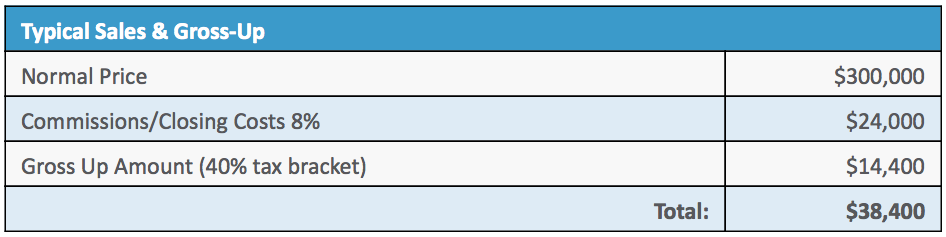
A transferee in the 40% tax bracket receiving a $24,000 home sale expense reimbursement will require around $39,900 in order to approximately cover the impact of income taxes being withheld and still net the $24,000 needed to cover the actual expenses.

Typical home sale with gross-up

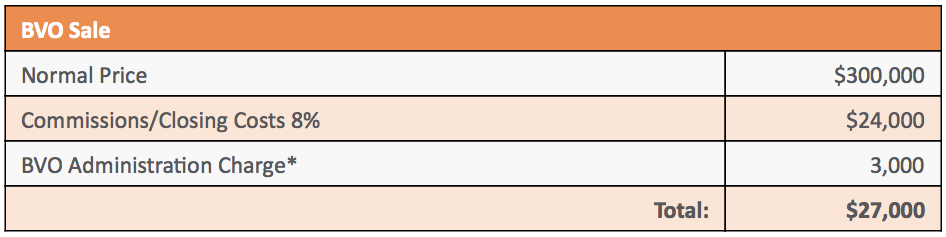
Home sale with BVO cost savings

Total Savings:                           $11,400

*Commissions and closing costs shown reflect a 6% commission and 2% closing costs. Actual costs, including BVO fee, may vary.

Once a transferee receives a valid offer to purchase from a 3rd party buyer, and after the relocation management company (RMC) has been able to verify that all contractual terms are customary, the transferee turns the sale of the home over to the RMC.

The RMC then purchases the home from the transferee and subsequently transfers the home to the 3rd party purchaser. All closing costs and realtor commissions are paid by the RMC and billed directly to the employer. Since the transferee never incurs any home sale expense, normal reimbursement of these expenses is not required.

Fast, Easy, and Economical

Once the origin home is turned over to the RMC, the transferee relinquishes all obligations including attending the actual closing. The RMC manages the entire sale and closing process on behalf of the transferee. The BVO program allows the transferee to move quickly, and focus on his or her new job and community. This is one more way of reducing both the stress and expenses associated with workforce mobility.

To learn more about BVOs or other relocation programs, please visit our contact page and an experienced Global Mobility Solutions relocation consultant will answer all of your questions.

Categories
Domestic Relocation Domestic Relocation Challenges Domestic Relocation Tips

7 Reasons Your Home Is Still On The Market

Your home is still on the market: Your house is still on the market, and it doesn’t look like it’s going to budge anytime soon. According to Jonathan Smoke, Chief Economist of Realtor.com, “the median age of inventory is now 80 days”, and its a smear that nobody wants on their listing. That figure is up 6.7% from August, and depending on your reason for moving, timing seems to be everything. You’ve planned carefully and cleaned up your home before trying to show it, so where did you go wrong?

You’re Charging Way Too Much

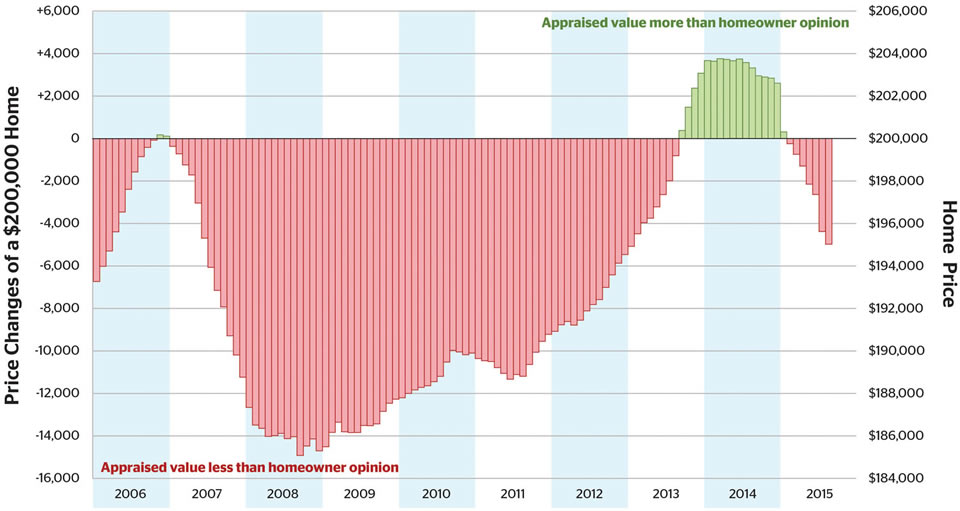
When setting the price of your property, you can’t just set a price without conducting thorough research. According to the experts, every single house can sell, for the right price, of course. If you want to sell your house quickly, it is wiser to lower its price early on, than to wait for another few months then lower it according to market restraints. Zillow suggests, “estimates are intended as a useful starting point to help you determine an independent and unbiased assessment of what your home might be worth in today’s market. Comparing your home to recently sold properties can also help you understand what your home is approximately worth. Ultimately, your real estate agent or appraiser will be able to inspect your home physically and take into account special features, location and market conditions for the right price.” This highlights the absolute necessity of finding a quality agent. Think your home is worth more than its appraised value? You’re not alone. Quicken Loans data shows homeowner perceptions commonly exceed appraiser opinion, illustrated in the graph below.

Home Sellers Usually overvalue their homes. your home is still on the market

You Have A Bad Real Estate Agent

Lack of communication, resources and leadership are signs of a bad real estate agent. While over 90% of transactions involve a real estate agent, an inexperienced real estate agent can’t even compare to one that abides to NAR’s code of ethics. Many agents will not spend more than a couple of hours a week trying to sell your property. If your agent falls into these categories, start contacting him regularly to remind him that you need to sell your house as soon as possible. Teresa Mears reported, Michael McGrew, (CEO of McGrew Real Estate in Lawrence, Kansas) treasurer of the National Association of Realtors stated, “it’s about communication. Tell your agent what isn’t working and ask them to fix it.”  Open communication with your real estate agent can save you literally hundreds of dollars at closing, by closing sooner. The best way to ensure you’re working with a quality agent, is to use vetted and reviewed agent networks. If you’re relocating for work, your company likely provides some real estate assistance through a relocation management company like Global Mobility Solutions, and has access to hundreds of experienced and talented agents.
bad-agent your home is still on the market

Your House Doesn’t Look Appealing

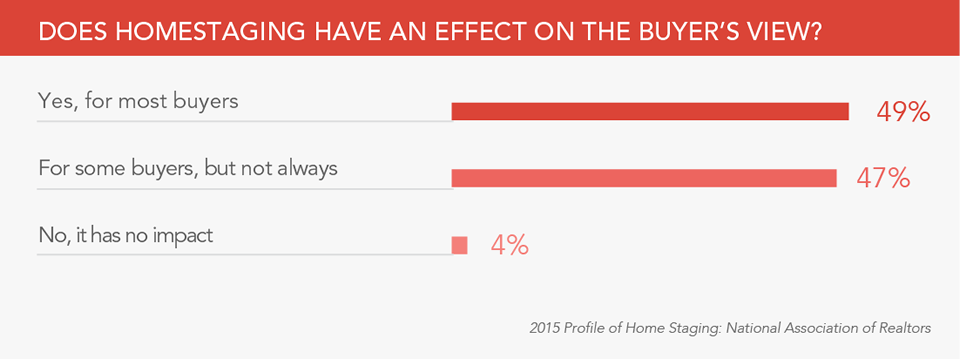
Most homeowners live with the impression that their house is the best home in the universe. Don’t live under the same illusion. You need to realize that your clients do not see the things the way you see them. People’s perception of your house is not influenced by feelings or strong emotional connections. They only look at it from an objective point of view. Staging your home is critical to selling your home fast. According to National Association of Realtors, “the median dollar value to stage a home is $675 and the majority of buyers’ and sellers’ agents believe staged homes also increase the dollar value buyers are willing to offer by one percent to five percent at closing. While only 4 percent of Realtors said staging has no impact on buyer perceptions.” To solve this problem, hire a third party for a free staging consultation to get an edge on your competition.

Real Estate Home Staging Importance your home is still on the market

Withholding Important Information

Never do this, even though it’s tempting sometimes, it could cost you dearly in the end. Misrepresentation can lead buyers and especially agents to go onto the next home. While all houses have warts, refrain from engaging in colorful coverups. Now, you don’t need to go the other way around and list only its drawbacks either. Promote your property using plain language, without exaggerating or hiding important aspects. Real estate agents have many resources at their disposal i.e. memberships, marketing companies, brokerages and associations to draw on. Relying on their associations can save you time and money as well. Again, herein lies the importance of selecting a quality real estate agent.exaggerating your home is still on the market

You’re Still Working On It

If you are engaged in some minor or major work on your property, don’t even think to sell it. Modern buyers are only looking to buy houses that are fully remodeled or renovated in todays competitive market. First of all finish the renovations or major repairs before placing your house on the market. In addition, curb appeal is and always will be the most important. That explains why the NAR and their members, once again, “rated exterior projects as some of the most attractive and valuable home improvements for homeowners.”

renovating your home can help it sell quicker as long as you complete improvements prior to listing your home is still on the market

Your House is not listed Online

More and more buyers are now looking for houses online. Make sure your property is listed on all major real estate sites, including but not limited to Zillow, Trulia and Homefinder. There are over 250 real estate websites that can be easily accessed using the internet today. Additionally, list your house on sites that are mobile optimized. This is crucial to todays Millinium and Gen Y consumers. These tech savvy, busy customers will always prefer their smart phones or tablets over their laptops to navigate online. The top 20 major real estate brokerages have relationships with these sites, and it is automatic once it becomes active in the local Multiple Listing Service. However, every once in a while the listing doesn’t make it in. Have your agent check these sites in the first week to assure your online presence.

Real Estate Apartments Mortgages Home Values Zillow your home is still on the market

You Launched in the Wrong Season

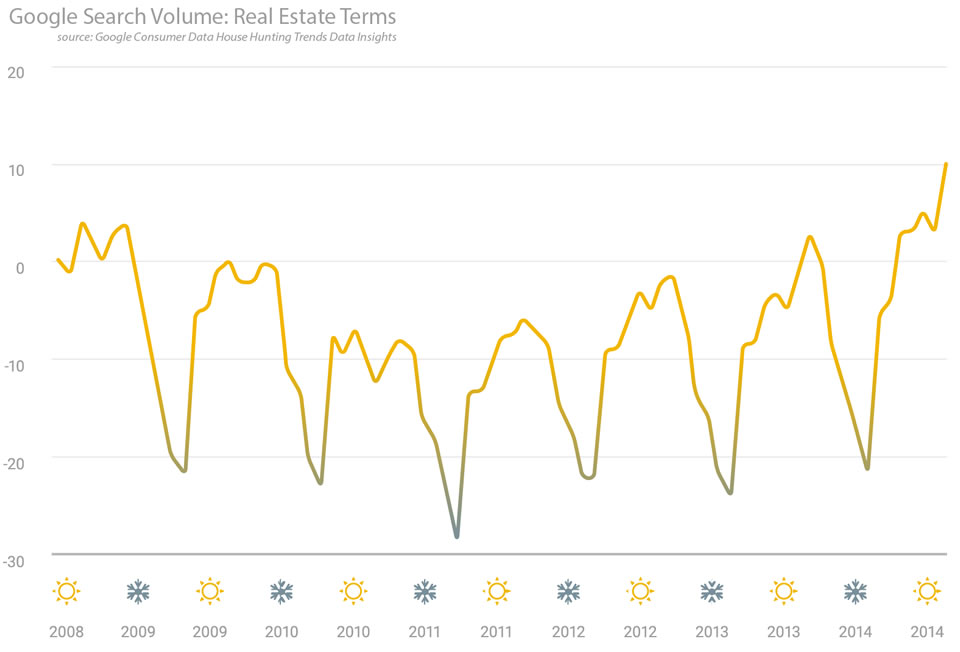
If you want to sell your house to a certain group of people, you need to know exactly when it’s the best time to put your house on the market. For instance, retirees usually tend to buy during the hot season, while young families move in spring or late fall. Nela Richardson, Redfin’s chief economist says, “just as buyer demand follows a seasonal pattern, so do home prices, in addition, over the past five years prices have increased by an average of 3 percent month over month in the spring and ticked down by about 1 percent each month during the fall. To get the best of both worlds, sellers need be informed on both local buyer demand and recent sale prices in their neighborhoods before deciding when to list their homes and for what price.” While your home still sits on the market, timing can be everything, depending on where you live and the buyer you’re trying to reach. Seasons don’t appear to be a huge advantage or disadvantage to listing in any season, since the variance in prices is only by a few percentage points however they do vary on the time it takes on selling a home.” A recent Google Consumer Survey of real estate search terms illustrates the seasonal interest in property perfectly. Almost like clockwork!

seasonal homes Google search volume your home is still on the market

Home is Still on the Market – Insider Tip From GMS Director Of Real Estate Services

“It’s in your best interest to interview more than 1 real estate agent. Find out what each agent thinks about your area and your home’s potential pricing. It doesn’t cost you a dime to have it done. If you’re relocating for work, check to see what benefits are made available to you and use your company resources! If they work with a relocation management company like Global Mobility Solutions, then they’ll have access to hundreds of reviewed, vetted and experienced real estate agents. Following these simple steps can drastically reduce your home’s time on the the market and improve your chances of selling your home at a fair but beneficial price.”

Julie Schultz
Director of Real Estate Services
Global Mobility Solutions

Categories
Domestic Relocation Domestic Relocation Challenges Relocation Challenges

Navigating Silicon Valley’s Housing Market

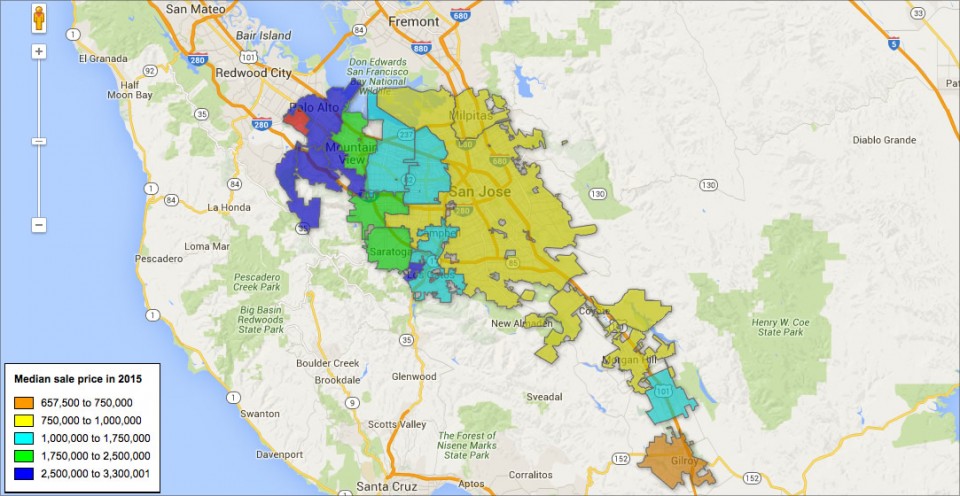
Imagine having to relocate to the most expensive metropolitan area in America. An area that stretches from the southern banks of San Francisco to San Jose County, better known as Silicon Valley. A place where “only 44 percent of Santa Clara County households could afford to purchase an entry-level home — defined as costing $833,850, or 85 percent of the county’s median sale price.”  The housing sector has seen an explosion in population “reaching three million people just last quarter at a rate of one person for every sixteen seconds”. As the world’s leader for thousands of startup companies and high tech corporations, it has hit an all-time high in housing cost; forcing workers farther away from their place of employment and schools.

The combination of high-income industry leaders, a rising population and shortage of land is the perfect storm for the future rising cost in real estate. It is important to note that sales data mentioned is not adjusted and accounted for seasonal factors that can influence home sales. Movements in sales prices should not be interpreted as changes in the cost of a standard home, but rather by the price per square foot. Which is determined by how much space a buyer is willing to pay for the property. So when shopping for a home, by focusing on off-peak seasons, i.e., November through February, will help save time and money.

silicon valley housing market“Click Map to Navigate Housing Market in Silicon Valley.” – Powered by Google Maps

Prior to looking for a home without sacrificing your other needs, you may have to consider driving a few extra hours to save money. According to the Silicon Valley Leadership Group and the Silicon Valley Community Foundation in 2015, the average commute time of workers rose by 8 percent in which 1 in 6 commuters travel two or more hours each day to work and growing. It could be difficult to make price comparisons, regarding commute times by having too many locations. So it’s best to limit yourself to two or three locations. By choosing the right real estate agent, they will be able to determine a cost comparison on price per square foot. As well as discovering several resources in the different areas by saving precious contract time and money in the end. Without these vital factors this will cost the winning the offer on the home. If the buyer is not ready to buy they should wait. Only if one has a strong stomach, nerves and able to take strong suggestions from their Realtor.

Currently, housing is being underpriced in hopes of getting an overbid. The strategy works bringing in offers over a $1000/square foot. Looking for the needle in a haystack can be time-consuming, but possible. If there is no time to wait and have a weak stomach, then cash is your quickest answer. While choosing to rent, remember it is always more expensive in the long run. Plan carefully. Renters are being priced out of the areas as prices are increasing, less than 25 percent of workers and just 40 percent of households in metro San Jose can rent or buy average-priced housing.” While Justin Fichelson, stated that “We’re slowing down. Instead of seeing 30 percent appreciation, homeowners may see 10 to 15 percent appreciation, echoing Zillow’s assessment last week that the pace of appreciation is slowing. Redfin had a different take on the strength of the Bay Area housing market. Such debates are common as some perceive shifts in the housing market.” However, housing markets fluctuate during seasons, and while going into the holiday season, we are going to see a slight change in the market.

Ever since Zuckerberg, founder of Facebook, moved to Palo Alto – prices have increased dramatically. Along with the idea of buying multiple lots and rebuilding, brokers are calling Silicon Valley a tear-down market. Anything in the $4 million and below range will likely be demolished, or they will need to rent and place their money in another investment. However on the other side of the spectrum, lower to middle-income housing plans are being implemented by city, state and federal officials. San Jose affordable housing law was upheld earlier this year by state Supreme Court. The California Building Industry Association and the Pacific Legal Foundation announced on Tuesday, and they have asked the U.S. Supreme Court to review a June decision by California’s highest court. Clearing the way for San Jose to implement a long-planned “inclusionary” housing ordinance. Lawyers for the industry argue that San Jose’s law and others like it across California violate federal constitutional protections against the “taking” of private property. Requiring developers of new, for-sale homes to set aside 15 percent of units as affordable housing, or pay a fee.

Instead of using the term “housing bubble”, which is widely used and less understood, a correction in the housing price index will continue into 2016. While San Jose and San Francisco “are projected to have yearly growth rates of around 3%, entering winter 2015-2016 on the downside is of great concern. What started as ‘red hot’ at the start of 2014 may end as ‘in the red’ come 2016,” stated by Alex Villacorta from Clear Capital. As 2015 begins, eight years after the peak and six years after the crash, real estate markets across the country are transitioning from the recovery phase to the expansion phase. For many areas, like Silicon Valley, the expansion phase is well under way. According to Glen Mueller (Full report Author of The Cycle Monitor) Boston, New York, Denver, and San Francisco, are already experiencing incredibly tight rental markets and robust new construction in apartments. Between now and then, aside from the occasional slowdown, the real estate industry is likely to enjoy a long period of expansion.

Brought to you by Global Mobility Solutions, a trusted partner in global talent management.

Categories
Corporate Relocation Global Relocation Relocation Challenges

The Yuan Effect on Global Real Estate

The recent devaluation of Chinese yuan could prompt China’s real estate investors to look towards the global real estate market to protect their investments. Capital is expected to move far from developing markets to be safe from increasing currency risks. There are expectations however that extreme wealthy Chinese real estate investors and developers will invest heavily in an established economy like the US before further yuan devaluation. Thomas Lam, a Senior Director and Head of Valuation & Consultancy with Knight Frank states, “mainlanders mostly buy overseas homes for immigration, for their children who are studying abroad or as holiday homes. They will be unlikely to sell in haste unless significant problems arise with that country’s property market such as political unrest.” Decisions to invest in the United States housing market will rest on how the Xi markets hedge the Renminbi against their currency or the industrial sector.

The Yuan's Progressive Decline

Although the yuan is projected to slip further, wealthy Chinese investors and developers will likely convert their money into other currencies or purchase properties in different countries with higher yields as an approach to fence hazard. David Crowe, NAHB Chief Economist, assures our economy to be healthy, “since the affordability had edged slightly lower in the second quarter. The Housing Opportunity Index (HOI) will remain well above 50. And where half the households can afford half the homes sold, low mortgage rates, pent-up demand and continued job growth should contribute to a gradual, steady rise in housing throughout the year.”

Countries such as Korea, Russia, Portugal and as of late New Zealand will continue to witness investment influx from mid-level Chinese investors as properties in developed economy like the United States may prove to be a greater expense. Some market experts say, more Chinese investors will invest in other countries as they seek diversification. It’s likely to witness a slight drop in the reported investment flow from China when reported in US dollars; one of the effects of yuan devaluation.


Records also show that “China is the largest investor in the American real estate sector over the last year”.  According to Michael Cole, an editor with Mingtiandi, “Chinese investors have already put $13.4 billion into overseas real estate this year, with over $3 billion heading to the US.” This confirms Chinese real estate developers today are experienced when it comes to foreign investment and their decision to invest in any country. However, the level of investiture will depend chiefly on the availability of properties and good exchange rates.

Categories
Corporate Relocation Domestic Relocation Domestic Relocation Tips

2 Mandatory Mortgage Changes Starting This Fall

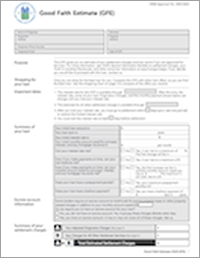
Two key changes set by the Consumer Financial Protection Bureau (CFPB) in 2013 are set to effect mortgage lending practices October 2015. Pushed back from the original implementation date of August. More on why this date was pushed back can be found on the CFPB blog The CFPB rule change will replace the Good Faith Estimate, Early Truth in Lending Disclosure, Final Truth in Lending Disclosure and HUD-1.

One-quarter of uninsured respondents cited good health as the primary reason for a lack of coverage. Newly implemented forms are easier for consumers to use and understand than existing forms according to the Bureau.

According to the CFPB these newly designed forms, “highlight the information that has proven to be most important to consumers. On the new forms, the interest rate, monthly payments, and the total closing costs will be clearly presented on the first page. This will make it easier for consumers to compare mortgage loans and choose the one that is right for them”. The rule’s impact on the relocation industry and implementation background can be found in this related article. Here’s what you need to know in preparation for these pending changes:

Implementation: 

October 3rd, 2015

Scope:
Majority of closed end mortgage loans submitted on or after October 1st, 2015. Not applicable to reverse mortgages, home equity credit lines, or mobile and unattached units.

The Loan Estimate Form:
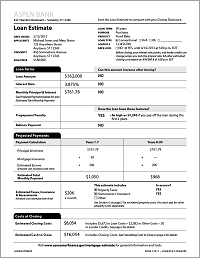
The new Loan Estimate form replaces the Good Faith Estimate and the “early” Truth in Lending Disclosure. This form must be provided to the home buyer within three business days of their mortgage application submission. All written estimates provided to the would-be home buyer must have a clear disclaimer noting that it is not the official Loan Estimate Form.

Replaced Forms New Form

GFE and Initial TiL
View PDF
New CFPB Document
Loan Estimate
View PDF

The Closing Disclosure Form
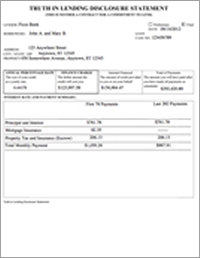
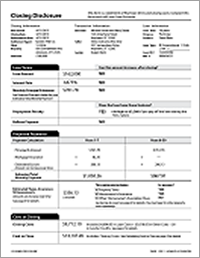
The Closing Disclosure form replaces the HUD-1 and the Truth in Lending Disclosure. Lenders must provide the Closing Disclosure form to the would-be homebuyer at least 3 business days prior to closing. If any significant changes are made to the loan (interest rates, pre-payment penalties, etc.) during the 3 day waiting period the lender must provide a new Closing Disclosure form along with another 3 day waiting period before closing.

Replaced Forms New Form

Final TiL and HUD-1
View PDF
closing disclosure form from the Consumer Financial Protection Bureau
Closing Disclosure
View PDF

Detailed information from the CFPB:
Rule change details for consumers
Detailed CFPB Rule Change Information

Brought to you by Global Mobility Solutions, a trusted partner in global talent management.

Categories
Domestic Relocation Domestic Relocation Trends

Pending changes in real estate laws

Pending Changes Real Estate Laws: Six federal agencies recently adopted new rules requiring mortgage bankers to keep a certain percentage of risk for every loan they provide. As a result, corporate relocation could be affected for the better.

Citing the Associated Press, RISMedia said the agencies are adopting a new, more relaxed approach to mortgage lending. The new stance is one that eliminates the 20 percent down payment if a lender doesn’t hold at least 5 percent of the mortgage securities tied to those loans on its books – or what most consider a high-quality mortgage. In essence, borrowers may soon be able to carry greater debt relative to their income than before, which is good news for prospective homebuyers.

Relaxed regulations in mortgage lending are making it easier to obtain a loan, pending changes real estate laws
Relaxed regulations in mortgage lending are making it easier to obtain a loan.

Talent mobility and refined mortgage lending
The news of the easing mortgage lending practices comes at a particularly interesting time, especially when looked at from a talent mobility perspective. Relocating employees can breathe a sigh of relief when it comes to finding a home in their new location, and renters may be more inclined to purchase.

In fact, The Wall Street Journal reported that Mel Watt, director of the Federal Housing Finance Agency, said both Fannie Mae and Freddie Mac are planning on offering some loans with down payments as small as 3 percent. An agreement was also reached with lenders that outlines what types of mistakes on loans could result in penalties after they’re issued, which could ultimately lower restrictions and ease the loan acquisition process for borrowers with weak credit.

Real estate industry leaders and mortgage bankers have been aggressively lobbying against the 20 percent down payment requirement, noting that it could stifle access to mortgage financing for low- to middle-income borrowers – an integral aspect of the continuing national housing recovery. The new rules come shortly after the real estate market has shown signs of weakening.

Who benefits from the new rules?
That said, it seems as if those on Capital Hill are trying to inject life back into the real estate market. Shortly before the 20 percent down payment regulation was nixed, regulators softened agreements that help protect taxpayers from losses on bad mortgages, The New York Times reported. They also relaxed a regulation that aimed to set safe standards for home loans.

Relocating employees across all industries will likely reap the benefits of the relaxed regulations and pending changes real estate laws recently rolled out by federal regulators. Industry experts feel the new rules are long overdue and that qualified, prospective homeowners couldn’t obtain a line of credit to finance a new home purchase. However, the relaxed regulations, albeit calculated and controlled, will likely help the everyday home buyer secure a mortgage.

Future policy changes could be on their way as well, pending changes real estate laws, The Wall Street Journal added. The Federal Housing Administration is currently under pressure from mortgage lenders to lower the premiums it charges to lenders because it doesn’t offer loans to low- and middle-income borrowers.

Brought to you by Global Mobility Solutions, a trusted partner in global talent management.

Looking for something?