

Categories
Domestic Relocation Trends Job Market Job Seekers Labor Force United States Economy

Which U.S. Cities Add Jobs at the Highest Rates?

With the U.S. economy continuing its pattern of growth, many job seekers want to know which cities add jobs at the highest rates. The U.S. Department of Commerce Bureau of Economic Analysis cites three factors leading to recent upward revisions of Gross Domestic Product (GDP) for the Third Quarter 2019:

  1. Non-residential fixed investment
  2. Personal consumption expenditures
  3. Private inventory investment

All three of these factors drive business growth, and this in turn leads to higher job creation. Also, the end of year holiday season often leads employers to hire additional staff. Companies often start their holiday season hiring efforts in August. The holiday season helps cities add jobs even as other industries may enter a slowing period of job growth.

States Where Cities Add Jobs at the Highest Rates

Only a few of the 50 states and the District of Columbia are represented in the top 20 list of where cities add jobs at the highest rates. These states include:

  1. Arizona
  2. Arkansas
  3. Colorado
  4. Florida
  5. Georgia
  6. Idaho
  7. Louisiana
  8. Nevada
  9. North Carolina
  10. Oregon
  11. Tennessee
  12. Texas
  13. Utah
  14. Washington

Cities add jobs at higher rates mostly in the southern and western portions of the United States. There may be several factors that contribute to this pattern, including costs, tax rates, economic incentives, weather, and amenities. Many of the states where cities add jobs are home to some of the most visited national parks and tourist destinations. Outdoor enthusiasts are often drawn to locations that provide a wealth of activities such as skiing, hiking, climbing, boating, and sight-seeing.

Which Top 5 Cities Add Jobs at the Highest Rate?

Throughout all of the U.S. the top 5 locations where cities add jobs at the highest rate are:

  1. St. George, UT
  2. Bend-Redmond, OR
  3. Reno, NV
  4. Nashville-Davidson-Murfreesboro-Franklin, TN
  5. Provo-Orem, UT

Depending on methodology, other lists might note different cities. “America’s Biggest Boomtowns” according to MagnifyMoney.com, the top 5 boomtowns where cities add jobs are:

  1. Austin, TX
  2. Provo, UT
  3. Raleigh, NC
  4. Charleston, SC
  5. Nashville, TN

Some of the cities are consistent from list to list. However, all of the states are similarly represented. Recent economic patterns show the southern and western portions of the United States reflect the greatest growth where cities add jobs at the highest rates.

What Should Job Seekers do?

Job seekers should consider looking into the locations where cities add jobs at the highest rates for their future opportunities. A number of resources are available to learn about jobs in St. George, Utah, or Austin, Texas. Professional networks such as Linkedin often provide a wealth of information on companies and contacts.

Job seekers may want to focus on a specific state where cities add jobs such as Utah or Texas, and then focus their search to a specific city or metropolitan area and job type. Job seekers should utilize professional career services to enhance their job search and achieve success in their career objectives.

What Should Employers do in Locations Where Cities Add Jobs at the Highest Rates?

Employers located where cities add jobs at the highest rates should examine their employment needs as economic growth fosters competition for job seekers with requisite skills and training. They should review their relocation program to determine if it benefits their talent acquisition goals and corporate objectives. Employers should work with a Relocation Management Company that has the knowledge and expertise to help them design a relocation program that promotes global talent acquisition.

Thriving locations such as St. George, Utah with its access to several national parks and recreation areas, and Austin, Texas with its renowned live-music scene also draw many visitors and tourists. These cities also need to fill local employment opportunities in tourism-related and service industries.

Conclusion

GMS’ team of domestic relocation experts has helped thousands of our clients develop hiring and recruiting programs to attract highly skilled job seekers to places where cities add jobs at the highest rates. Our team can help your company determine how to attract job seekers looking for employment opportunities in these growing cities.

GMS was the first relocation company to register as a .com. The company also created the first online interactive tools and calculators, and revolutionized the entire relocation industry. GMS continues to set the industry pace as the pioneer in innovation and technology solutions with its proprietary MyRelocation® technology platform.

Global Mobility Solutions is proud to be named and ranked #1 Overall, and #1 in Quality of Service by HRO Today’s 2019 Baker’s Dozen Customer Satisfaction Survey.

Contact our experts online to discuss your company’s recruiting, hiring, and relocation program needs in locations where cities add jobs at the highest rates, or give us a call at 800.617.1904 or 480.922.0700 today.


Request your complimentary relocation policy review

Categories
Job Market Job Seekers Labor Force United States Economy

How Does the Sharing Economy Impact the Relocation Industry?

Many Global Mobility Solutions clients have transferees who are comfortable with the sharing economy. As a result, these transferees may have different expectations for the services they use during their relocation. The impact of the sharing economy on the relocation industry may initially seem to be wholly transformative. However, the industry’s response should be focused on ensuring best practices are recommended to clients.

What is the Sharing Economy?

The sharing economy is an outgrowth of broad online connectivity. Individuals can directly purchase, offer, or share access to a variety of goods and services. These goods and services are acquired, offered, or shared directly with other individuals. Often an online platform facilitates these economic transactions, and there is no third-party interaction.

As a result, businesses, firms, and incorporated entities are bypassed. In some cases, sharing economy transactions encroach on established business models. By adopting a peer-to-peer (P2P) business model, individuals also bypass existing regulations. Also, some of the established business models require licensing and other government oversight activities that arose as part of consumer protection initiatives. P2P business models may not offer the same level of consumer protection.

Relocation Program Goals

A company’s relocation program may focus on a variety of specific topics and corporate goals to ensure the best possible results. These topics may include:

Is the Sharing Economy Part of the Relocation Industry?

Certain aspects of the sharing economy might be thought of as an integral part of the relocation industry. For example, housing for transferees may include some form of rental agreement. With the sharing economy, new ways to rent space might be under consideration.

GMS spoke with Mandy Tancak, Senior Global Account Manager at GO Destination Services who agreed to share her knowledge and expertise on this topic.

How Does the Sharing Economy Impact the Relocation Industry?

According to Mandy Tancak, the rise of companies and platforms such as Uber, Lyft, ZipCar, and AirBnB has led to a change in the view of traditional industries such as ground transportation and temporary accommodations. Although Millennials were early adopters of the sharing economy, Gen Z is poised to push it further into the marketplace. Also, many other generational cohorts such as Baby Boomers are beginning to embrace the flexibility, ease, and level of service that these new companies and platforms provide. As a result, transferees’ acceptance of the sharing economy is directly impacting the relocation industry.

Example: Pre-Assignment Trips

Traditional Model

On pre-assignment trips, transferees would take a town car or taxi from the airport to a hotel where they would stay for a few nights. Both the town car provider and hotel would have had corporate accounts with the employer or Relocation Management Company (RMC). Corporate discounts may have been applicable, and costs would have been billed directly to the employer.

Sharing Economy Model

In the sharing economy, transferees may book and pay directly for a ride from the airport through Uber. The quality of the vehicle is at least comparable and in some cases superior to the taxi that would traditionally have been used. Uber’s introduction of greater in-app security features may help this option be seen as more secure than a taxi.

Rather than staying at a hotel, transferees on pre-assignment trips may book an apartment in the city through AirBnB. They may feel this provides a more authentic experience, and may also offer the opportunity for them to stay in and get a better feel for an area that they are actually considering for a long term rental, as well as the type of apartment that they may eventually end up leasing.

Example: Temporary Housing

Traditional Model

Traditional temporary housing through an RMC receives evaluations on several criteria and must meet specific cleanliness and quality standards. There are full move-in inspections to verify the state of the unit. Providers must undergo background checks and building security arrangements are assessed. Maintenance and emergencies are handled through a specifically defined process, and major equipment is serviced by professionals on a regular schedule. The transferee’s experience is of the utmost importance in order to ensure greater employee satisfaction and promote talent retention.

Sharing Economy Model

AirBnB offers solutions for temporary housing that traditionally would have been provided by a hotel or corporate housing provider. An AirBnB apartment can offer a more comfortable option than a hotel, and expands the options available to those otherwise considering corporate housing.

Some transferees looking for accommodations in higher rent markets might be willing to consider house sharing options. There are more options available to explore such as SpareRoom or Craigslist. Relocation providers may however feel less comfortable recommending specific house shares due to not having knowledge of, nor being able to provide assurance of future housemates.

Sharing Economy Risks

Transportation Risks

Uber’s surge pricing during inclement weather, or other high demand periods, can cause costs to exceed traditional transportation providers. Some Uber passengers have reported receiving fines of up to $150 for a mandatory “cleaning fee.” These fines are reportedly due to Uber drivers falsely claiming the passengers vomited inside their vehicles, in a scam called “vomit fraud.”

Housing Risks

Renting an AirBnB does come with added risks. Quality cannot be assured, and there is not always someone on hand when one arrives to check in, or when assistance is required, as there would be in a hotel or traditional temporary housing. Security considerations can also be a problem. Not knowing who the host is, nor having around the clock presence at the entrance are factors employers need to take into consideration when determining whether transferees should be allowed to utilize the services of sharing economy companies and platforms.

When the total cost of an AirBnB stay is taken into consideration, including cleaning and service fees, these costs can often be more expensive than a traditional hotel for shorter stays. For shared accommodation requests, RMCs may not be comfortable recommending specific house shares. RMCs may not have direct knowledge of the house share, nor can they provide assurance of future roommates.

What Should Employers do About the Sharing Economy?

Employers should be aware of the potential for increased costs and other concerns when approving transferees’ use of sharing economy companies and platforms. When it comes to securing longer term rental accommodations, transferees typically prefer traditional housing providers. While commission-free and rental by owner sites do exist, working with a Realtor® through the Multiple Listing Service (MLS) is still often viewed as the preferred solution.

Conclusion

GMS’ team of corporate relocation experts has helped thousands of our clients understand how to leverage industry best practices when it comes to the sharing economy. Our team can help your company design a relocation program that allows for ease of use and flexibility, while delivering the best experience for transferees to ensure employee satisfaction and retention.

GMS was the first relocation company to register as a .com. The company also created the first online interactive tools and calculators, and revolutionized the entire relocation industry. GMS continues to set the industry pace as the pioneer in innovation and technology solutions with its proprietary MyRelocation® technology platform.

Global Mobility Solutions is proud to be named and ranked #1 Overall, and #1 in Quality of Service by HRO Today’s 2019 Baker’s Dozen Customer Satisfaction Survey.

Contact our experts online to learn how to leverage the best aspects of sharing economy companies and platforms for your company’s relocation program, or give us a call at 800.617.1904 or 480.922.0700 today.
We're Here to Help! Request a Courtesy Consultation

Are you ready to talk to a Mobility Pro? Learn how GMS can optimize your mobility program, enhance your policies to meet today’s unique challenges, receive an in-depth industry benchmark, or simply ask us a question. Your Mobility Pro will be in touch within 1 business day for a no-pressure, courtesy consultation.

Categories
Job Market Job Seekers United States Economy

What are the 2019 Fastest Growing Industries in the US?

What are the 2019 fastest growing industries in the US? US economic growth continues its strong pace, with 3rd Quarter 2019 Gross Domestic Product (GDP) increasing by 1.9%. This follows the 2nd Quarter GDP growth of 2.0%. The United States Department of Commerce Bureau of Economic Analysis attributes this growth to several factors, including:

  • Exports
  • Federal Government Spending
  • Personal Consumption/Consumer Spending
  • Residential Fixed Investment
  • State and Local Government Spending

Several industries act as growth engines for the US economy. The 2019 fastest growing industries in the US reflect the impact of technology as well as broad social trends. IbisWorld reports that the top 10 as measured by revenue growth include:

Consumer Market

  • Massage Business Franchises
  • Social Networking Platforms

Energy

  • Solar Power Installation and Production
  • Wind Turbine Installation

Finance

  • Online Mortgage Brokers
  • Peer-to-Peer Lending Platforms

Manufacturing

  • Automated Guided Vehicle Manufacturing

Medical

  • Medical and Recreational Marijuana Farms
  • Recreational and Medical Marijuana Retail Stores
  • Telehealth Services

What Trends Drive the 2019 Fastest Growing Industries?

Several trends drive the 2019 fastest growing industries. The “Fourth Industrial Revolution” reflects the impact on systems of a digital transformation. As a result, this transformation is changing work, jobs, and economies at an increasing pace. This revolution fuses technologies across biological, digital, and physical spheres.

Highlight on Automated Guided Vehicle Manufacturing

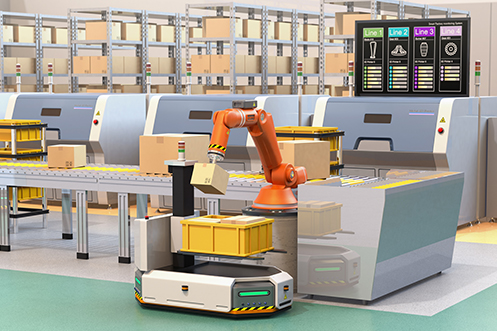
Automated guided vehicles (AGVs) are vehicles used in industrial settings to move materials or perform tasks. Computers guide these autonomous vehicles, not humans, and they derive power from a battery or electric motor. Typical applications include carrying heavy loads, towing loads across warehouse floors, and fork lifting materials or pallets.

The top 20 AGV manufacturers include several with US locations, such as:

Dematic (Atlanta, GA)

Hyster & Yale (Cleveland, OH)

JBT (Chicago, IL)

Konecranes (Springfield, OH)

Kuka Assembly and Test Corporation (Saginaw, MI)

Transbotics – A Scott Company (Charlotte, NC)

Universal Robots (Boston, MA-US HQ)

What Should Job Seekers do About the 2019 Fastest Growing Industries?

Job seekers should investigate the 2019 fastest growing industries opportunities. A number of resources are available to learn about jobs in the AGV Industry. Professional networks such as Linkedin often have helpful information on companies and contacts. Job seekers may want to focus on a specific location such as Charlotte or Cleveland, and then identify specific employers to target their job preferences. Job seekers should utilize professional career services to enhance their job search and achieve success in their career objectives.

What Should Employers in the 2019 Fastest Growing Industries do?

Employers in the 2019 fastest growing industries should examine their employment needs as economic growth fosters competition for job seekers with requisite skills and training. They should review their relocation program to determine if it benefits their talent acquisition goals and corporate objectives. Employers should work with a Relocation Management Company that has the knowledge and expertise to help them design a relocation program that promotes talent acquisition.

GMS has recently published several Industry Benchmarking Studies that will help employers in the 2019 fastest growing industries learn whether their company’s relocation program is designed following industry-specific best practices. There are many benefits to a corporate relocation policy benchmarking. For example, employers can learn how they can ensure their competitiveness in their industry to attract and retain talent with the highest level of skills and experience.

Industry best practice is to schedule a relocation program and policy review every 12 to 18 months to ensure your company maintains its competitive position. This review will also help your company learn about how the relocation industry is evolving to meet increased employee demands, especially with regard to the 2019 fastest growing industries.

Conclusion

GMS’ team of corporate relocation experts has helped thousands of our clients develop hiring and recruiting programs to attract highly skilled job seekers. Our team can help your company determine how to attract job seekers looking for employment opportunities in any of the 2019 fastest growing industries.

GMS was the first relocation company to register as a .com. The company also created the first online interactive tools and calculators, and revolutionized the entire relocation industry. GMS continues to set the industry pace as the pioneer in innovation and technology solutions with its proprietary MyRelocation™ technology platform.

Global Mobility Solutions is proud to be named and ranked #1 Overall, and #1 in Quality of Service by HRO Today’s 2019 Baker’s Dozen Customer Satisfaction Survey.

Contact our experts online to discuss your company’s recruiting, hiring, and relocation program needs as they relate to the 2019 fastest growing industries, or give us a call at 800.617.1904 or 480.922.0700 today.

Request your complimentary relocation policy review

Categories
Job Market Job Seekers Labor Force Talent Mobility

Manufacturing Industry Opportunities for Gen Z Job Seekers

Generation Z (Gen Z) job seekers should consider manufacturing industry opportunities in their search. This industry is facing a growing wave of retirements in its current workforce. Currently, manufacturing is experiencing significant growth, adding over 264,000 new jobs in 2018. Also, manufacturing rose as a percentage of the US total workforce over the past year. With job opportunities rising and companies positioning for growth, the manufacturing industry offers significant advantages for Gen Z job seekers.

Gen Z employees are those born between the mid-1990s through the 2010s. They exhibit different characteristics than other groups such as Baby Boomers and Millennials. Often, Gen Z employees are adept with newer technologies and comfortable with communication platforms. Gen Z employees are often aggressively courted by companies seeking to enter new markets.

Technology Increases Manufacturing Industry Opportunities

Industries such as finance and technology grow with use of technology. As a result, the types of jobs in these industries now offer a greater degree of flexibility, variety, and growth trajectories. The manufacturing industry has seen the same transformation as technology changes jobs, functions, and processes. Technology attracts job seekers, as it provides a high level of learning experiences and opportunities for global mobility.

Fourth Industrial Revolution

The “Fourth Industrial Revolution” reflects the rate of change, breadth across industries, and impact on technology systems of a digital transformation that is changing jobs and work processes. This revolution is a melding of new technologies across a variety of interacting elements including physical, digital, biological, and conceptual. The manufacturing industry is rapidly evolving due to enhancements including:

The Internet of Things Generates Even More Manufacturing Industry Opportunities

New jobs that require skills applicable to the digital revolution’s requirements will provide a number of opportunities for Gen Z job seekers. For example, IOT generates a significant amount of data. Gen Z job seekers may have skills that can turn this data into actionable information.

Using networks, devices, and data, Gen Z workers can add value to help manufacturers understand the value of what all this data collection provides. Improvements in quality and efficiency can be quickly and easily attained with IOT, but there is much more IOT can do. Businesses can utilize IOT data to personalize their customer’s experiences. As a result, customer satisfaction may increase, and customer loyalty to the company should rise.

What Should Employers do to Highlight Manufacturing Industry Opportunities?

Manufacturing industry employers should continue communication and outreach efforts to schools, counselors, and job creation networks. By working to highlight opportunities in their industry, manufacturers can generate interest from Gen Z job seekers.

Gen Z job seekers are already more likely to consider manufacturing industry opportunities. Part of this awareness is the result of concerted efforts by manufacturers to engage with teachers, mentors, and school counselors. These efforts have led to over a third of Gen Z having had manufacturing suggested to them as a career option.

Leading2Lean’s Manufacturing Index study notes that Advanced Manufacturing jobs exhibit several desirable employment characteristics, including:

  • Strong Focus on Careers and Leadership Development
  • Requires use of Advanced Technologies
  • Offers Higher Wages than Other Industries
  • Provides Diverse Work Experiences
  • Promotes Continual Change and Evolution
  • Requires Technological Training

Leverage Relocation Programs for Manufacturing Industry Opportunities

Manufacturing industry employers that continue to find difficulties in hiring and recruiting should consider highlighting their relocation program’s benefits in their recruiting materials for Gen Z job seekers. In our Case Study on Manufacturing Industry Relocation Programs, we show how a large manufacturing company with multiple locations was able to improve their talent acquisition and retention. The company’s relocation program features and benefits were put in the best light and to the client’s best advantage during the hiring and negotiation process.

By comparison, the healthcare industry has been facing a critical talent shortage for several years. Healthcare employers have responded in several ways, including:

  • Providing Superior Candidate Experiences
  • Using Data to Enhance Their Recruiting Efforts
  • Recruiting for Cultural Fit
  • Creating an Industry-Leading Employer Brand
  • Speeding the Process so Candidates Remain Engaged

Relocation Management Companies (RMCs) are ideal sources for information on global candidate recruitment and relocation. Pre-Decision Services are critical for manufacturing industry employers as they provide valuable information about a candidate’s ability to accept a position and be successful. Pre-Hire Assessment data can be paired with structured interview questions to better understand the Gen Z candidate’s interests, goals, and motivations.

Conclusion

GMS’ team of global relocation experts has helped thousands of our clients understand how to design programs that promote talent acquisition and retention. Our team can help your company learn how to leverage manufacturing industry opportunities to help increase Gen Z employment in your workforce.

GMS was the first relocation company to register as a .com, created the first online interactive tools and calculators, and revolutionized the entire relocation industry. GMS continues to set the industry pace as the pioneer in innovation and technology solutions with its proprietary MyRelocation™ technology platform.

Global Mobility Solutions is proud to be named and ranked #1 Overall, and #1 in Quality of Service by HRO Today’s 2019 Baker’s Dozen Customer Satisfaction Survey.

Contact our experts online to discuss your company’s interest in leveraging manufacturing industry opportunities for Gen Z job seekers, or give us a call at 800.617.1904 or 480.922.0700 today.

Request your complimentary relocation policy review

Categories
Job Market Job Seekers Labor Force United States Economy

What are the Top 5 Companies Creating Jobs in the US?

As 2019 continues to be a period of economic expansion in the US, there are a number of companies creating jobs. Growth in employment is robust across several industries. Demand for employees is high throughout much of the nation.

The Bureau of Labor Statistics Employment Situation-March 2019 news release issued on April 5, 2019 shows the following:

  • Total Nonfarm Payroll Employment increased by 196,000
  • US Unemployment Rate remained unchanged at 3.8%
  • Job gains were significant in two segments: health care, professional, and technical services

Additionally, the news release also noted that:

  • Total Nonfarm Payroll Employment for January was revised upward from +311,000 to +312,000
  • Total Nonfarm Payroll Employment for February was revised upward from +20,000 to +33,000

US Economic Expansion Helps Companies Creating Jobs

Significantly, the longest US economic expansion on record occurred from March 1991 through March 2001. The current expansionary period is set to exceed this record by the end of July 2019 if it continues growing. While there may be significant risks to the US economy, it also has room for growth. The US economic outlook is strong according to several indicators including the Gross Domestic Product (GDP), unemployment, and inflation.

Top 5 Companies Creating Jobs in the US

What are the top 5 companies that are significant job creators in the US? Several of these companies have been in the news for their corporate growth initiatives. They also benefit from advances in technology, changing industry dynamics, and pro-growth US economic policies:

  1. Apple

Apple Inc. is an American multinational technology company with headquarters in Cupertino, California, that designs, develops, and sells consumer electronics, computer software, and online services. The company had previously announced plans to create up to 20,000 new jobs.

  1. Amazon

Amazon.com, Inc., is an American multinational technology company based in Seattle, Washington that focuses in e-commerce, cloud computing, and artificial intelligence. Amazon is the largest e-commerce marketplace and cloud computing platform in the world. Among its many investments is a plan to create 800 new jobs as it expands its technology hub in Austin, Texas.

  1. Progressive

The Progressive Corporation is an American insurance company with headquarters in Mayfield, Ohio. It is one of the largest providers of car insurance in America. The company insures motorcycles, boats, recreational vehicles (RVs), commercial vehicles, and provides home insurance. Progressive plans to hire over 10,000 new employees in 2019 at several campuses throughout the US. This company is a leader among insurance companies creating jobs.

  1. Google

Google LLC is an American multinational technology company with headquarters in Mountain View, California. It specializes in Internet-related services and products, including online advertising technologies, search engine, cloud computing, software, and hardware. Google will create tens of thousands of new jobs as it expands operations in several US states.

  1. Fiat Chrysler

Fiat Chrysler Automobiles N.V. is an Italian and American multinational corporation and is the world’s eighth largest auto maker, with main headquarters in the Netherlands, and financial headquarters in London, UK for tax purposes. The group was established in October 2014 by merging Fiat and Chrysler into a new holding company. In February 2019, Fiat Chrysler announced its intent to invest $4.5 Billion in manufacturing in Michigan. The plant is estimated to create nearly 6,500 jobs. Plans include $1.6 billion to build a Jeep factory in Detroit.

What Should Job Seekers do to Find Companies Creating Jobs?

Job seekers should investigate the top 5 companies creating jobs for opportunities. One of the largest and most successful online job listing companies, Indeed, offers a wealth of links and resources for job seekers. Professional networks such as Linkedin provide information on companies and contacts. Job seekers may want to focus on a specific location such as Detroit or Austin depending on the type of job they hope to find. Job seekers should utilize professional career services to enhance their job search and achieve success in their career objectives.

What Should Companies Creating Jobs do?

Employers should examine their employment needs as economic growth fosters competition for job seekers with requisite skills and training. They should review their relocation program to determine if it benefits their talent acquisition goals and corporate objectives during a tight labor market. Employers should work with a Relocation Management Company that has the knowledge and expertise to help them design a relocation that promotes global talent acquisition.

Conclusion

GMS’ team of global relocation experts has helped thousands of our clients develop hiring and recruiting programs to attract highly skilled job seekers. Our team can help your company determine how to attract job seekers looking for employment opportunities at any of the top 5 companies creating jobs, or any other location around the world.

GMS was the first relocation company to register as a .com. The company also created the first online interactive tools and calculators, and revolutionized the entire relocation industry. GMS continues to set the industry pace as the pioneer in innovation and technology solutions with its proprietary MyRelocation™ technology platform.

Global Mobility Solutions is proud to be named and ranked #1 Overall, and #1 in Quality of Service by HRO Today’s 2019 Baker’s Dozen Customer Satisfaction Survey.

Contact our experts online to discuss your recruiting, hiring, and relocation program needs at companies creating jobs, or give us a call at 800.617.1904 or 480.922.0700 today.

Request your complimentary relocation policy review

Categories
Job Market Job Seekers

What are the US States with the Lowest 2019 Unemployment?

The Unites States Bureau of Labor Statistics (BLS) regularly publishes a treasure trove of valuable 2019 unemployment statistics. One of the statistics most examined is the national unemployment rate. Government agencies and departments often tout this figure as an indicator of the nation’s economic health, or as an indicator of administration policy effectiveness. However, unemployment data varies dramatically by industry, city, region, and state. This data is usually also adjusted for seasonality factors, and is published as “seasonally adjusted” to reduce the impact of these factors.

February 2019 Unemployment for US States

On March 22, the BLS published the preliminary February 2019 unemployment rates for US states. As noted in the publication, the US States with the lowest 2019 unemployment, tying for first position, are:

  • Iowa
  • New Hampshire
  • North Dakota
  • Vermont

What is it about these four states that is keeping their 2019 unemployment rates so low?

Iowa 2019 Unemployment

While Iowa is centered in the US agricultural heartland, its economy is highly diverse. Ranked as the #1 producer of eggs, corn, and pork, its second largest industry is finance and insurance. It also was ranked as the best state to find a job according to Zippia (a platform dedicated to providing people with information for their career options).

Iowa has two major growing job markets: Ames and Des Moines. Ames is home to Iowa State University. ISU is a leader in agricultural technology and animal health research. Des Moines is the state capital and its largest city. It is also a leader in the insurance industry and hosts a growing technology community.

New Hampshire 2019 Unemployment

For such a small state both in geographic size as well as population, New Hampshire’s economy is defined by a few industries. Smart Manufacturing/High Technology (SMHT) is the largest sector of the state’s economy. Much of this sector uses high-tech equipment for electronic component production. The state’s tourism industry remains robust, as its natural resources are abundant and areas such as the White Mountains draw a significant number of tourists.

Biotech and medical research is another large sector for New Hampshire’s economy, especially around Dartmouth-Hitchcock Medical Center. Dartmouth College in Hanover is a private Ivy League research university that consistently ranks among the world’s greatest academic institutions.

North Dakota 2019 Unemployment

Much of North Dakota’s economic success is tied to expansion of shale oil and natural gas production in the Bakken Formation. A large portion of northwest North Dakota lies above this formation. The Bakken is one of the largest deposits of oil and natural gas in the United States. Due to the Bakken, growth in the energy industry has driven the state’s 2019 unemployment to historically low levels. The University of North Dakota offers the only Petroleum Engineering Degree in the state.

The boom in North Dakota’s energy sector has been surging for several years. The state’s economic output more than doubled from 2002 to 2013. Following a lull during recessionary times, the industry’s pace has continued to rise. While the energy sector takes center stage, North Dakota also has a vibrant agricultural sector. The state’s top five agricultural products are wheat, cattle, soybeans, corn for grain, and sugar beets.

Vermont 2019 Unemployment

The state of Vermont has the smallest economy in the United States, estimated at $34 billion. However it has a very diverse economy, with significant sectors in agriculture, technology, energy, and manufacturing.

Vermont’s agricultural sector produces 47% of the nation’s maple crop and 67% of all milk in New England. The Vermont Higher Education Food Systems Consortium includes the University of Vermont, Vermont Technical College, Sterling College, Green Mountain College, Vermont Law School, Middlebury College, and the New England Culinary Institute. The consortium produces several skilled graduates annually, with programming and certificates in almost two dozen core areas of food systems study.

Vermont leads in clean energy initiatives. The state hosts many companies that are leaders in the green economy, including companies focusing on wind, solar, and hydroelectric systems. As a result, Vermont has more solar energy sector jobs per capita than any other state.

What do These 4 State Economies Share?

While these four states have economies that are different in many respects, they do share some commonalities.

First is the significant involvement of universities, colleges, and institutions of higher education. Several of the following schools are instrumental to their state’e economic success and low 2019 unemployment:

Iowa

  • University of Iowa
  • Iowa State University
  • University of Northern Iowa
  • Kirkwood Community College
  • Des Moines Area Community College
  • Western Iowa Technical Community College

New Hampshire

  • Dartmouth College
  • Keene State College
  • New England College
  • Plymouth State University
  • University of New Hampshire
  • Southern New Hampshire University

North Dakota

  • Minot State University
  • Bismarck State College
  • Dickinson State University
  • University of North Dakota
  • North Dakota State University
  • North Dakota State College of Science

Vermont

  • Sterling College
  • Middlebury College
  • Vermont Law School
  • University of Vermont
  • Green Mountain College
  • Vermont Technical College

Second, each of the four states benefit from high technology that leads to low 2019 unemployment. However, this technology is not solely relegated to dot-com companies, apps for phones, or software development. Much of the high technology is in applied sciences, where it is used to advance manufacturing capabilities and production in sectors as diverse as:

  • Agricultural and Animal Production
  • Food Products and Processing
  • Traditional Energy Sources
  • Insurance and Financial Services
  • Renewable, Clean, and Green Energy Sources
  • Biotechnology and Medical Research

Third, these four states have all made significant investments in economic diversification.

  • Iowa is creating success for insurance and financial services. Iowa has no state corporate income tax on out-of-state sales, federal tax deductibility on in-state sales, and a premium tax of just 1 percent.
  • New Hampshire has become a destination for several new industries, including the Advanced Regenerative Manufacturing Institute (ARMI), a manufacturer of human organs on a mass basis. The state has also used significant incentives to lure companies such as BAE Systems, one of the world’s largest defense contractors.
  • North Dakota is investing in value-added agriculture productions, energy sector, autonomous systems, health care initiatives, and advanced computing.
  • Vermont’s Economic Development Authority is actively involved in financing a wide range of initiatives. Several projects also promote diversification on farms to help farmers expand their product offerings.

What Does This Mean for 2019 Unemployment?

Companies in Iowa, New Hampshire, North Dakota, and Vermont may be facing challenges in their talent acquisition programs. Some of these states rank high in several metrics and are desirable places to live and work. Employers should examine the best way to recruit talent in a tight job market. Often, companies facing a skills gap can mitigate this with global relocation. Companies in these and other states facing low 2019 unemployment can overcome challenges in their relocation programs in a number of ways.

What Should Employers do?

Companies looking to expand or hire in one of these four states should review their relocation programs. A qualified Relocation Management Company (RMC) with knowledge and experience can provide a number of helpful resources to counteract the effects of a tight job market and low 2019 unemployment. As a result, companies will maintain a strong competitive advantage for new hires and transferees. Also, a global relocation program that provides the highest level of relocation benefits and services for employees will help companies attract highly skilled and talented candidates.

Conclusion

GMS’ team of global relocation experts has helped thousands of our clients understand how they can use global relocation to find and hire skilled employees. As a result, our team can help your company understand how leverage its relocation program to attract new hires and transferees for its locations in Iowa, New Hampshire, North Dakota, and Vermont.

GMS was the first relocation company to register as a .com. The company also created the first online interactive tools and calculators, and revolutionized the entire relocation industry. GMS continues to set the industry pace as the pioneer in innovation and technology solutions with its proprietary MyRelocation™ technology platform.

Global Mobility Solutions is proud to be named and ranked #1 Overall, and #1 in Quality of Service by HRO Today’s 2019 Baker’s Dozen Customer Satisfaction Survey.

Learn best practices from Global Mobility Solutions, the relocation industry and technology experts who are dedicated to keeping you informed and connected. Contact our experts online to discuss your company’s relocation program and how it can be leveraged to counteract low 2019 unemployment in Iowa, New Hampshire, North Dakota, and Vermont, or give us a call at 800.617.1904 or 480.922.0700 today.

Request your complimentary relocation policy review


Categories
Career Services Employee Development Job Seekers Labor Force Talent Management

How Job Seekers Can Accelerate Their Search With GMS Global Career Services

Global Mobility Solutions has previously reported on the growing skills gap in the United States that may benefit job seekers. Examining the skills gap provides people looking for jobs with an understanding of where they might focus their efforts for best results. There are several factors influencing this expanding skills gap, including:

As a result, job seekers have a wide range of opportunities to explore to find a new position. However, many people do not have a solid plan in place to determine how to approach their search. If a job seeker has the requisite skills for a new position, they should conduct their search efforts using powerful tools.

What Resources are Available to Job Seekers?

GMS Global Career Services merges traditional search strategies with today’s online networking tools. By using new technology to approach their search, job seekers can easily rise to the top of a recruiter’s list of qualified candidates. The coaching GMS provides will help job seekers develop their search strategy. Also, it will help them identify their goals and provide assistance throughout the search process.

GMS Global Career Services

GMS Global Career Services available for job seekers can include a number of helpful resources, depending on needs identified during a Career Services Intake. The Career Services Intake will identify the job seeker’s needs, questions, and goals. As a result, GMS Global Career Services will be able to create a unique plan. This plan will determine the assignment of the most qualified Career Advisor for the client.

There are five main segments of career services that job seekers can utilize:

  1. Quick Start Job Search Preparation
  2. Job Search Assistance
  3. Personal Branding
  4. Partnering Services
  5. Resume Writing Services

Quick Start Job Search Preparation can include a DiSC® Assessment, coaching on job skills and techniques, and creation of marketing tools for the job seeker. Job Search Assistance can provide introductions to contacts for networking, access to online portal for local and searchable information, and additional coaching. Personal Branding can include online profile evaluations, personal blog development, and personal video creation. Partnering Services can include subscriptions and access to job search dashboards and a video library of online courses. Resume Writing Services can include assistance with resumes, cover letters, Linkedin profiles, and personal commercial creation.

What are the Key Benefits for Job Seekers?

To be successful, people looking for jobs need specific plans, cutting-edge technology, and determination. They also need a commitment to execute their personal plan utilizing the latest job search tools. GMS Global Career Services brings all of this together. As a result, clients receive a custom package specifically designed to help them reach their goals.

Some global job seekers looking for spousal career support services may not be eligible to work in the United States depending on their visa status. They should develop a plan to maintain their skills. This plan may include certifications, job training requirements, and continuing education in their chosen field. GMS Global Career Services can identify specific actions and helpful resources. As a result, global job seekers will be able to remain competitive in their field upon their return to their home country.

GMS Global Career Services Offers Three Key Benefits for Job Seekers:

  1. Solutions are customized based on each client’s specific needs.
  2. Expert, locally-based Career Advisors deliver in-person support in major markets or remotely.
  3. Advisors have diverse professional backgrounds and qualifications including degrees and work experience in areas where clients are searching for jobs.

GMS Global Career Services show job seekers how they can leverage the internet to develop a strong online presence that supports their personal brand.

What Should Job Seekers do?

Job seekers should consider reviewing the growing skills gap in the United States to determine areas offering potential for their searches. They should also consider utilizing robust career services. These services will also help them leverage online tools to enhance their personal brand and increase their success in the job market.

Conclusion

GMS’ team of global relocation experts has helped thousands of our clients develop hiring and recruiting programs to mitigate the impact of a skills gap. As a result, our team can use GMS Global Career Services to help job seekers find and access these programs in the markets and industries that match their goals.

GMS was the first relocation company to register as a .com. The company also created the first online interactive tools and calculators, and revolutionized the entire relocation industry. GMS continues to set the industry pace as the pioneer in innovation and technology solutions with its proprietary MyRelocation™ technology platform.

Contact our experts online to discuss your job search needs, or give us a call at 800.617.1904 or 480.922.0700 today.

Looking for something?