Categories
Domestic Relocation Domestic Relocation Trends Talent Management Talent Mobility

What are the 2018 North America Relocation Trends?

What are the major 2018 North America relocation trends shaping the industry? Employee relocation and workforce mobility continue to rise in importance for companies looking for growth. Technology allows employees to work anytime, anywhere, whether traveling for business, or from a remote work location.

Our team of North America relocation experts have identified four key trends that are shaping 2018 North America Relocation.

2018 North America Relocation Trends

Employee Expectations

Many companies respond to employee expectations for relocation assignments. New assignments can provide career opportunities, learning, and growth. Some companies proactively offer incoming employees incentives to locate in other areas that best meets their needs and wants. For companies to grow and succeed, challenging and rewarding relocation assignments are necessary and provide great incentives for employees whether it be global or North America relocation.

Reasons for Moving

Simply Self Storage’s survey notes several moving industry statistics, with 10.8% of respondents indicating “new job/transfer” as their main reason for moving. However, other employment-related reasons for moving include “easier commute” and “other job-related reasons”. These three reasons combine to account for 18% of the reasons for moving. Companies recognize this impact on employees and respond with various programs to promote employee satisfaction and increase home-work-life balance.

Costs

Relocation often is in response to several factors. Of the factors that are location-specific, housing costs and taxes are often cited as both the reason for employees to move away from one area and to move to another area. Companies are responding to cost pressures in their relocation programs as well. Companies understand their ability to draw talent is dependent on providing opportunities for good quality of life for employees.

Talent Mobility Management

Companies in North America compete in a global marketplace. Greater opportunities are available, but include greater challenges in deploying talent to succeed. Mobilizing employees who know the business and understand its future drives relocation trends. Political considerations are another factor for companies looking to open a facility and in turn relocate employees to open and run the new facility. Building a company that provides career growth and professional development opportunities will allow companies to attract and retain top talent.

Conclusion

Thoroughly reviewing your North America relocation policy and benchmarking to industry best practices is imperative. This keeps your company at the forefront of your industry peers, reinforces employee satisfaction, and promotes successful relocations. The North America relocation experts at Global Mobility Solutions (GMS) have the knowledge and expertise to help your company remain at the forefront of 2018 North America relocation trends, and offer your employees the best relocation experience.

Contact our team of experts to discuss your North America relocation policy needs, or call us at 800.617.1904 or 480.922.0700 today.


Request your complimentary relocation policy review

Categories
Employee Development Talent Management

Global Productivity and Employee Development

Companies can maintain a competitive advantage if they develop and utilize their employees. Greater automation across routine jobs means the remaining positions are where employees can help companies compete and succeed. What drives global productivity and employee development? There are three key factors companies must take into consideration to increase global productivity:

Job Engagement

What does it mean for an employee to be engaged in a job? Employee engagement is a key company initiative that continually shapes employee performance and promotes continuous improvement. Companies must create a culture that allows employees to become engaged. They can do this by giving them the training and tools needed to make choices that are good for the business. Employees who choose to engage in their job use their training and tools to accomplish tasks. Also, they drive projects to completion, and learn things during the process that make them more valuable to the company.

Talent Management

Talent management might take the form of competing in an international marketplace for employees with specific skills and experience. It might also take the form of inducing higher performance levels from current employees through the use of effective programs both for the individual employee and for the organization as a whole. Continual development and growth through learning opportunities provides many employees with a pathway toward higher job engagement. Job-related educational opportunities have been shown to increase the bond of an employee to an organization. Especially for younger workers, opportunities to learn provide them with a sense of accomplishment and a feeling of worth to the organization. Many learning opportunities might occur within a job assignment at a global location, requiring employee relocation. Pre-decision services can help companies and employees determine if the opportunity will be successful.

Workplace Culture

Creating a growth-oriented workplace culture requires companies to change their approach to managing employees. Companies that focus on performance development as opposed to performance management are more likely to foster a culture of productivity. Managers must evolve into coaches who focus on an employee’s development for their current position, and the future needs of both the employee and the organization. Looking forward to where the organization wants to be will give managers a view as to training and development opportunities current employees can take advantage of for their growth and for the company’s benefit. Older managerial concepts such as annual performance reviews and allowing seniority to determine who should manage need to change. Managers as coaches need to give continual feedback and be available for employees in a fast-moving environment. Employers should give employees with the best skills relating to and inspiring other employees the opportunity to lead teams and projects.

Conclusion

Three key factors drive global productivity and employee development: job engagement, talent management, and workplace culture. The global relocation experts at Global Mobility Solutions (GMS) have the knowledge and expertise to help your company understand how to improve productivity and promote employee development with a well-designed global relocation program.

Contact our team of experts to discuss your global relocation program needs, or call us at 800.617.1904 or 480.922.0700 today.

Request your complimentary relocation policy review

Categories
Global Mobility Global Relocation Global Relocation Tips Global Relocation Trends Immigration Rules Relocation Challenges Relocation Management Relocation Programs Relocation Technology

What are the 2018 Global Relocation Trends?

What are the major 2018 global relocation trends shaping the industry? As workforce mobility and employee relocation continues to increase, several trends change how clients respond to increasing employee requirements regarding their relocation needs. Also, global changes in how employees are able to accept transferee assignments, such as limits on working visas and work permits, further impact company plans for mobility.

Our team of global relocation experts have identified five key trends that are shaping 2018 Global Relocation.

2018 Global Relocation Trends

Growth in Partner and Spouse Career Support Programs

As companies continue to expand globally, the need for a mobile workforce to accept transferee assignments has increased exponentially. Along with this mobile workforce, services designed specifically for spouses and partners have become increasingly important to employees. Spouses and partners are critical to ensuring transferee success. It is important for clients to provide support and information specifically for spouses and partners to help them with their relocation process. Specifically, pre-decision support, an online job search and assistance portal, and professional career services are important programs and services for spouses and partners. Transferees can be secure in the knowledge that their spouses and partners will receive as much assistance as they need to be successful in their new location.

Flexible and Responsive Global Relocation Programs

Global relocation programs need to provide enough flexibility to anticipate and provide for challenges and opportunities that are unique to specific locations. Many multi-national clients have designed a corporate-level relocation program, which then is further customized for each international headquarter location. Relocation programs designed at the corporate level need to provide for a multitude of options and differences across locations. Our recent Case Study on Implementation Success Factors describes in detail the importance of identifying all stakeholders and engaging them early in the process to ensure implementation success.

Immigration Challenges

Countries are increasingly placing limits on the number and types of working visas and work permits that allow transferees to enter the country legally for work assignments. Some countries such as the United Kingdom have seen the number of applications exceed the monthly quota. Other countries such as China have changed requirements and set up a Working Permits Points System that emphasizes transferees with specialized knowledge. The United States has instituted travel restrictions for specific locations, and has increased enforcement of immigration requirements. As countries around the world respond to migration challenges, the impact on global relocation programs will continue to evolve.

Technology Advances

Global relocation programs continue to respond to evolving technology changes. Increasingly, mobile technology must be responsive to provide transferees with information and solutions during their relocation process when they need it, wherever they are located. Transferees should be able to get information on the go, and upload expenses for quick reimbursement. Mobile enhanced relocation technology solutions such as MyRelocation should be available, as it is platform-responsive and able to be accessed anywhere, making it the most useful solution for a mobile workforce.

Outsourcing Relocation Programs to Industry Experts

Global relocation programs must cover a wide array of specialized issues such as tax, visa applications, and compliance reporting. Furthermore, it is to a client’s best advantage to consult with experts who have knowledge and experience in the specific aspects of these areas as they relate to global relocation programs. Companies can benefit from an outsourced solution that specializes in unique relocation needs. Working with relocation experts who have extensive experience in these and other areas can help a company avoid risks and respond more effectively to transferee’s requests for guidance and advice.

Conclusion

Thoroughly reviewing your global relocation policy and benchmarking to industry best practices keeps your company at the forefront of your industry peers, reinforces employee satisfaction, and promotes successful relocations. The global relocation experts at Global Mobility Solutions (GMS) have the knowledge and expertise to help your company remain at the forefront of 2018 global relocation trends, and offer your employees the best relocation experience.

Contact our team of experts to discuss your global relocation policy needs, or call us at 800.617.1904 or 480.922.0700 today.

Request your complimentary relocation policy review

Categories
Global Relocation Challenges Global Relocation Tips Global Relocation Trends Immigration Rules Visas and International Travel

Slovakia Employment Rules Change for Non-EU Nationals

Slovakia Employment Rules: Slovakia is currently facing a shortage of qualified employees across several industries. To ease this situation, the Slovak government will reduce the restrictive requirements currently in place regarding employment for non-EU nationals starting May 1, 2018.

What are the Slovakia Employment Rules Changes?

Slovakia’s Act on Employment Services will require vacant position notifications to be reported to the Labor Office for twenty business days instead of the current thirty business days. This reduces the overall single permit processing time.

Districts which have average unemployment rates lower than 5% will have a simplified single permit process for occupations with labor shortages. The Labor Office will issue confirmation on filling job vacancies without conducting a local labor market test.

Single permit holders hired without a local labor market test in this simple procedure can only comprise 30% or less of a company’s total employment.

Additionally, new documents must be provided to the Labor Office to support the assignment of a non-EU national from another EU member state. These documents include confirmation of the accommodation for the assignment duration, a copy of Form A1, and a copy of the EU member state’s residence document (if applicable).

What Should Employers Expect?

Employers who have been convicted of illegally hiring foreign nationals in the most recent two year period will not be able to utilize the simple procedure.

Employers should learn about and understand the new simple procedure available in Slovakia. The Employment Rules change may allow employers to hire additional non-EU nationals in a shorter timeframe in order to meet business goals and objectives.

Most companies in Slovakia claim the simple procedures will not result in a massive search for workers outside of EU countries. Currently, the majority of workers in Slovakia who are from countries outside the EU are from Serbia and Ukraine. Half of these employees have a university-level education.

Conclusion

Global Mobility Solutions’ team of global relocation experts have helped thousands of our clients with country-specific employment rule changes and work requirements, and we can help your company understand how to comply with the new Slovakia employment rules change for non-EU nationals. Contact our experts online or give us a call at 800.617.1904 or 480.922.0700 today.

Categories
Corporate relocation tips Global Mobility Global Relocation Challenges Global Relocation Tips Immigration Rules

Nine Tips to Ensure Form I-9 Compliance in Case of a Site Audit

Nine Tips: All U.S. employers must ensure proper completion of Form I-9 for every individual they hire for employment in the United States, including both US citizens and non-citizens, with very few exceptions. Form I-9 is used for verifying the identity and employment authorization of individuals hired for employment. How can you be sure your company is fully compliant in case of a site audit?

Here are nine tips to ensure Form I-9 compliance:

Documentation Tips

  1. Ensure all new employees complete Section 1 of Form I-9 by their first day of employment.

Note that Form I-9 cannot be completed before the individual has received and accepted their job offer.

  1. Employers must use the most recent version of Form I-9 published by the U.S. Citizenship and Immigration Service (USCIS).

The latest edition includes changes to the Form’s instructions and its List of Acceptable Documents. The form was most recently updated on 7/17/2017.

  1. The employer must complete Section 2 of Form I-9 within three business days of the new employee’s first date of employment.

An important point to note is that if an employee is being hired for less than three business days, employers must complete Section 2 on the employee’s first day of employment.

Filing, Reorganization, and Inspection Tips

  1. Keep Form I-9 on file for three years after the hire date or one year after termination, whichever date is later.

In the event of an inspection by U.S. Immigrations and Customs Enforcement (ICE), you must have forms available for all employees within the required maintenance period. Investigating officers will usually ask for a current payroll list to confirm the company’s existing employees.

  1. In the event of a corporate reorganization, change, merger, or acquisition, employers must assess Form I-9 requirements.

Employers who have purchased or merged with another company may either choose to treat employees continuing in employment as “new hires,” meaning that a new Form I-9 must be completed for all employees, or they may choose to treat them as “continuing in employment.” The latter allows the employer to obtain and maintain the previously completed Form I-9s for each employee. Those who choose the “continuing in employment” option assume any risks or liabilities of the previous employer in relation to the I-9s, such as errors or omissions, or missing forms. Employers should audit the documents in the event of any corporate change.

  1. For inspections, ICE will usually arrive and present an I-9 Notice of Inspection (NOI) outlining documents it needs to inspect.

The NOI generally requires the employer to present the requested documentation within 72 hours. The NOI may grant an exception to this requirement on rare occasions. Documents often requested include Form 1-9s, payroll records, Articles of Incorporation, business licenses, names of any contractors or subcontractors, and proof of E-Verify enrollment (if any).

Resource Tips

  1. Your immigration attorney should help you develop a specific plan to prepare your company for an audit.

Industry experts with knowledge and experience in managing site audits are an invaluable resource and can provide guidance on what a site audit entails, including how to utilize technology, conduct internal audits to verify compliance, and educating sponsored and unsponsored employees on how to respond in case of a site visit.

  1. Refer to USCIS Handbook for Employers M-274 if you have questions about Form I-9 compliance.

This handbook includes USCIS guidance on employer best practices for completing, storing, and maintaining Form I-9s. You can find answers to questions such as how to correct a Form I-9. The USCIS updates the handbook semi-regularly, so be sure you are accessing the most recent version.

  1. If you are not sure about the best practices for your global immigration program in general, contact an industry expert.

Industry experts with knowledge and experience in managing Form I-9 compliance and site audits are valuable resources and can help you with your compliance and site audit plan, as well as understanding these nine tips.

Conclusion

Global Mobility Solutions’ team of global relocation experts have helped thousands of our clients with Form I-9 compliance requirements. We can help your company understand how to be in compliance and how to respond to a site audit. Contact our experts online or give us a call at 800.617.1904 or 480.922.0700 today.

Request your complimentary relocation policy review

Categories
Business Services Choosing a Relocation Company Relocation Management

Does Your Relocation Management Company Provide a Customized, Right-Fit Program?

Companies achieve the most success with a customized, right-fit program for relocation that is specifically designed to meet their unique requirements. Employees and their families expect a broad range of services to help them during their relocation process. How can you be sure your company is competitive with your relocation program and able to attract and retain the best talent?

Here are five questions you should ask your Relocation Management Company (RMC) to ensure you receive a customized, right-fit program:

Why You Should Choose Global Mobility Solutions for your right-fit program

Does Your Program Align With Our Needs?

Your RMC should thoroughly review and understand your company’s mobility needs, objectives, move patterns, locations, and any other specific requirements. Ask your RMC how the program they provide will address each of these areas. Ask them how it will be in full alignment with your company’s worldwide mobility needs.

Does Your Program Provide Dedicated Account Management and Mobility Consulting?

You should have dedicated account management for your company so you can be sure your needs are met quickly and efficiently. Ask your RMC if they provide mobility consulting so Human Resources, Procurement, and Recruiting team members can have access to expert advice and guidance.

Is There a Single Point of Coordination?

Ask your RMC if they provide a single point of coordination for your employees and their families. Relocating employees should have a dedicated advocate who understands their specific needs. A single point of coordination allows for ease of communication and provides assistance for employees throughout their relocation process.

Does Your Program Provide Access to a World-Class Partner Network?

Your company should have access to a world-class partner network of providers. Employees and their families should receive the best service during their relocation process as it promotes successful relocations. Ask your RMC how they can assure your company receives the highest levels of quality at the lowest cost on a worldwide basis.

What Global Technology Does Your Program Provide?

Your employees and their families should have access to user-friendly tools and features so their relocation process is smooth and easy. Ask your RMC what technology they provide on a global basis. Your employees should always have access to the tools and resources they need, when and where they need it.

Conclusion

The most successful corporate relocation programs are customized, providing a right-fit that aligns with company objectives and employee’s expectations. Global Mobility Solutions (GMS) provides its clients with a Freedom of Choice™ model that sets the industry standard of excellence. For example, we have no affiliation with any service provider. As a result, we make supplier selections by using performance ratings and guaranteed savings. We provide a customized program that is a “Right-Fit” to our client’s needs and requirements.

Our Team of corporate relocation experts can provide a customized, right-fit program for your company. Contact our team of relocation experts to request a presentation, or give us a call at 800.617.1904 or 480.922.0700 today.

Request your complimentary relocation policy review

Categories
Immigration Rules Visas and International Travel

EU Citizen Rights: Arriving in UK During Post-BREXIT Transition May Not Secure Same Rights

EU citizen rights are not secure for those arriving in the UK during the post-BREXIT transition. Prime Minister Theresa May indicated EU citizens arriving post-BREXIT may not receive the same rights as those who arrived prior to the vote. Prime Minister May said while the details were a matter for negotiation with the EU, she is clear that there is a difference between the EU citizens who were in the UK prior to the vote, and those who arrive afterward, knowing the UK is leaving the EU.

What is the question on EU citizen rights?

Prime Minister May believes the government is doing what the British people asked the government to do, which is to deliver on the promise of BREXIT. As such, complete freedom of movement for EU citizens into the UK post-BREXIT is not supported during the transition period.

Prime Minister May has stated that EU citizens who arrive during the post-BREXIT transition must not have the same rights as those EU citizens within the UK prior to the vote. Prime Minister May has been very appreciative of the contributions EU citizens residing in the UK have made, and has clearly stated that “EU citizens living lawfully in the UK” will be able to stay in the UK post-BREXIT.

Who does this EU citizen rights issue affect?

  • Employers who have EU citizen employees currently residing in the UK.
  • EU citizens who arrive in the UK during the post-BREXIT implementation period and who are seeking residency.

What should employers and citizens expect from this EU citizen rights issue?

There may be an increase in applications for residency in the UK in response to Prime Minister May’s comments. Although the European Parliament believes citizen’s rights during implementation are in full effect and are not negotiable, Prime Minister May’s statements indicate negotiations on this point have not been finalized in her view. EU citizens may want to expedite their applications for residency with the expectation that a firm deadline will be negotiated.

Conclusion

Global Mobility Solutions’ team of global relocation experts have helped thousands of our clients manage relocation to the UK, as well as understand how BREXIT will impact their programs. We can help your company understand the impact of this EU citizen rights issue, and how to submit applications for residency in the UK. Contact our experts online or give us a call at 800.617.1904 or 480.922.0700 today.

Request your complimentary Visa Program Assessment

Categories
Domestic Relocation Domestic Relocation Tips Relocation Best Practices Relocation Management

What are the Top 3 Business Relocation Budget Tips?

With today’s digitally-driven business landscape, your business relocation budget might include relocating an operational arm or corporate headquarters to a different region. For some companies, it makes economic sense to move employees to other parts of the country or globe. However, although these moves often have the intention of boosting bottom-line revenue, relocation costs can add up quickly.

Keeping that in mind, here are the top three business relocation tips you can use to help save on corporate relocation budgets:

Get Estimates from Multiple Providers

Assuming that a business has already chosen a new market and a new office space, the logistical aspects of moving now come into play. Moving offices and employees is a massive undertaking, and it is important for a business to get the most value from the relocation. Obtain multiple estimates from reputable firms and determine the best option that fits your business relocation budget. Rates can often be negotiable; a Relocation Management Company that has experts in group move coordination on staff can leverage volume for better rates with van lines.

Understand Your Rights

The U.S. Department of Transportation’s Federal Motor Carrier Safety Administration outlines a number of rights and responsibilities that businesses are entitled to before, during and after their relocation. For instance, a van line must move a client’s belongings in a timely manner. The moving company must provide a written record called a reasonable dispatch service, and if there is a delay, the company must then prepare a written record of its amended date for delivery. Since your business relocation budget requires adherence to cost guidelines, it is important for companies to ensure the entire logistical process runs smoothly.

Work with a Relocation Management Company

Choose a Relocation Management Company that has expert knowledge and extensive experience in corporate relocation services. Corporate relocation programs provide companies and employees all of the resources and tools they need to ensure a smooth and successful relocation process, and to keep your business relocation budget within guidelines. Look for a company that provides ongoing employee support services, supplier management, relocation benefits, and expense management. Since your employees will be moving to the new location, you should be sure to provide a wealth of resources for them and their families so they feel confident in accepting their new assignments and enthusiastic about the company’s relocation.

Conclusion

The corporate relocation experts at Global Mobility Solutions (GMS) have the knowledge and expertise to help your company manage its business relocation budget and offer your employees the best relocation experience. Contact our team of experts to discuss how we can help your company’s business relocation budget stay within company guidelines, or call us directly at 800.617.1904 or 480.922.0700 today.

Categories
Corporate Relocation Domestic Relocation Domestic Relocation Tips Domestic Relocation Trends Global Mobility Global Relocation Global Relocation Tips Global Relocation Trends Relocation Best Practices

Pre-Decision and Best Practices for Global Mobility

Pre-decision Best Practices: Why do many companies have a 50% rate for assignment rejection? It is primarily because the potential transferees do not have a clear understanding of the destination location and the support available for their families.

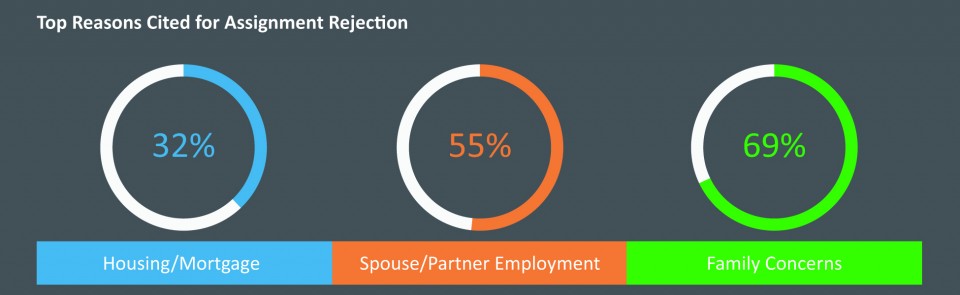
The top 3 reasons cited for rejecting relocation assignments are housing/mortgage concerns, trailing spouse/partner employment concerns, and overall family concerns. Pre-Decision Best Practices

Assignment rejection and failure can be very costly to a company. Firms spend an average of half a year’s salary in recruiting and training when onboarding a new employee. For high-level executives, the expense can be six to nine months of their salaries. However, according to the ERC, it can be as high as three-times an annual salary for international executives. If assignments are rejected, or fail after a move – which adds much more to the financial loss – companies must go through the expense of onboarding and training new staff.


How can companies ensure that they get the right people in the right place at the right time and for the right price?

The answer is to use pre-decision programs. Global Mobility Solutions (GMS) is the pre-decision pioneer and we continue to develop new, innovative features for pre-decision programs.

Although the number is growing, currently only 22 percent of companies around the world are utilizing pre-decision programs. However, when working with an RMC, nearly 60 percent choose to incorporate pre-decision into their mobility management solutions.

Employees decline relocation assignments due to housing, family, and spousal/partner employment concerns. Many firms had a 50% rate for assignment rejection. 32% housing/mortgage, 55% spouse/partner employment, 69% family issues. By using pre-decision, companies increase assignment acceptance, reduce failed relocations, save money, and project a progressive and employee-friendly image.

Going back to the reasons cited for assignment rejection, let’s see how the in-depth questioning and available services of pre-decision can address each of those concerns.


Housing

Candidates are interviewed to learn about community and lifestyle preferences. Candidates are presented with destination spotlights that highlight the cost of living and attractions of the assignment location. Area tours are arranged. Candidates are pre-approved by participating mortgage lenders. Candidates are provided with home selling and home buying assistance.

Spouse/Partner Employment

The pre-decision interview includes an employee’s spouse or partner. Pre-decision best practices programs offer a career assessment to develop an action plan that will help the spouse or partner adjust to the new location. This can include resume services, aggressive job searching, and more.

Family

Through the pre-decision interview process, the specific needs of the family are determined. To help candidates better understand the new location before moving, they are presented with school reports and detailed community information. Community tours are arranged so that transferees and their families can see schools, hospitals, and centers of culture and entertainment prior to moving.


The talent acquisition program manager of a large healthcare company said, “By using pre-decision to initiate relocations prior to the face-to-face interview, we know that transferees have arrived more quickly, have settled better, and stayed longer.”

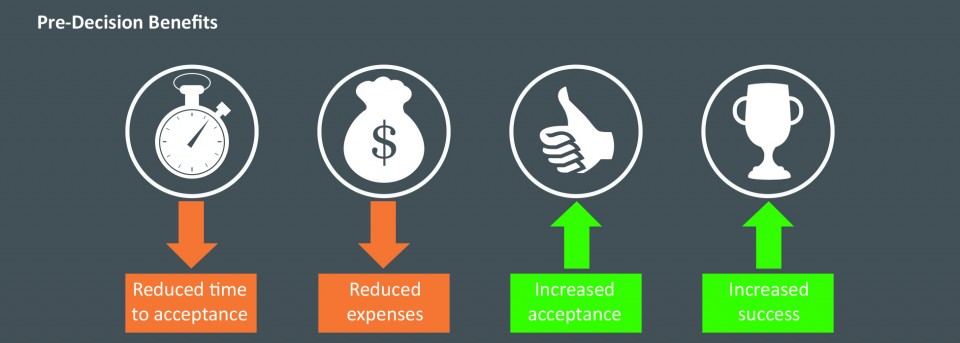
Benefits of utilizing pre-decision programs include reduced time to acceptance, reduced overall costs to the company, an increased acceptance rate, and an increase in successful assignments.

Because of how it engages relocation candidates and their families, increases assignment acceptance and success, and saves companies time and money, pre-decision best practices should be utilized when it comes to mobility management.

Learn more about how pre-decision programs can benefit both you and your transferees.


Categories
Corporate Relocation Global Mobility Global Relocation Global Relocation Tips Relocation Best Practices

Strategic Tax Reimbursement and Best Practices for Global Mobility

There are five steps you should employ when developing a global program for strategic tax reimbursement that balances the needs of both the company and employees with regard to managing tax costs:

  1. Strategically Align Company Objectives and Employee Values
  1. Consider Tax Impacts of Likely Host Locations
  1. Choose a Tax Reimbursement Method that Best Fits, for example:
  1. Tax Reimbursement Policy Design
  1. Tax Reimbursement Policy Launch & Implementation

By following the five-step process outlined, you can develop a global mobility program that keeps your company compliant, reduces tax burdens, and, by saving them money, demonstrates to your relocating employees how much you appreciate them. At Global Mobility Solution (GMS), we like to think that there is a sixth step – contacting an expert for help. Outsourcing your workforce mobility program provides an expert partner in relocation.

Workforce mobility consulting at Global Mobility Solutions means our consultants focus on reducing organizational costs and minimizing relocation timelines in order to increase assignment success. Our in depth consultation includes competitor benchmarking, policy analysis, and relocation evaluations.

Global Mobility Solutions will perform a full review of your existing policies, to ensure the goals of your organization are properly aligned with the policy. If necessary, we will write new or change existing relocation policies and coordinate the implementation of the changes. If no policy currently exists, GMS will work with you to determine what your relocation needs are and develop new policies that best fit them. Your dedicated account manager will advise and counsel you throughout the relationship to ensure your relocation policy is the most cost effective.

In order to reach an experienced relocation policy expert who can help your company plan for strategic tax reimbursement and best practices, please contact us now.

Looking for something?