
Categories
Global Mobility Global Relocation Global Relocation Challenges Talent Mobility Visas and International Travel

Asia Relocation Trends: What Does the Future Hold?

As global economics combine with geo-political forces, Asia relocation trends reflect changing business priorities. Past trends led China to become a major destination for manufacturing, jobs, and relocation. However, recent trends show multinational companies are moving production outside of China. The US-China trade war is often cited anecdotally as a reason for this shift, and there is some evidence to support this claim.

The US-China trade war is only part of the reason for changes in Asia relocation trends. Economic factors in China such as rising costs as well as shifts in company market shares also impact talent mobility. Changing demographics also impact how companies might pursue global expansion. These forces lead companies to find new locations for manufacturing facilities in Asia.

Asia Relocation Beyond China

There are several countries, regions, and zones seen as viable alternatives to China for manufacturing and operating facilities. Several of these countries are members of the Association of Southeast Asian Nations (ASEAN), consisting of ten members:

  1. Brunei
  2. Cambodia
  3. Indonesia
  4. Laos
  5. Malaysia
  6. Myanmar
  7. The Philippines
  8. Singapore
  9. Thailand
  10. Vietnam

Spotlight on Malaysia: Asia Relocation Trends

Kuala Lumpur is the national capital and largest city in Malaysia. The city of Putrajaya is the seat of the federal government. Malaysia has an estimated population of over 30 million people. The country is multi-ethnic and multi-cultural. Approximately 50% of the population is ethnically Malay, and there are large segments of Chinese, Indian, and native populations.

Malaysia Economy and Growth Supports Asia Relocation Trends

Malaysia is a relatively open state-oriented and industrialized market economy. The country has a strong economic record, with Gross Domestic Product (GDP) rising on average 6.5% from 1957-2005 on an annual basis. Malaysia’s economy in 2014–2015 was one of the most competitive in Asia, ranking 6th in Asia and 20th in the world.

In 2014, Malaysia’s economy grew 6%, the second highest growth in ASEAN behind the Philippines’ growth of 6.1%. The economy of Malaysia in terms of gross domestic product (GDP) in April 2019 was estimated to be $999.397 billion, the third largest in ASEAN and the 25th largest in the world. Malaysia is projected to achieve high-income country status by 2024.

Overview: Kuala Lumpur Industrial Sector

Most of Kuala Lumpur’s industrial sector consists of facilities that are comparatively small in size. Larger facilities are located outside of the city, due to the high cost of land and buildings. Costs are often significant drivers of Asia relocation trends. Manufacturing constitutes about two thirds of the city’s industrial establishments, with service industries accounting for the other one thirds.

Kuala Lumpur Manufacturing Industries include:

  • Foundries
  • Metal and fabricated metal products
  • Paper and paper products
  • Plastics and plastic manufacturing
  • Printing and publishing

Kuala Lumpur Service Industries include:

  • Motor vehicle repairs
  • Storage facilities
  • Warehouses

City Plans: Become an International Commercial and Financial Center

Kuala Lumpur has a vision to become a world-class city. To do this, the city is focusing on the knowledge economy, and this will affect Asia relocation trends. As a result, Kuala Lumpur is investing in new technologies, examining building and infrastructure requirements, and developing a highly skilled labor force. Training facilities are noted as available in the Technology Park Malaysia, and other educational venues such as the German-Malaysian Institute. Overall, Kuala Lumpur remains highly competitive in terms of costs as compared to nearby cities such as Singapore and Hong Kong. The city has been following the Kuala Lumpur Structure Plan 2020, and the economy has grown significantly, benefiting from Asia relocation trends.

What Does This Mean?

Kuala Lumpur is one of many dynamic and successful cities in Asia competing for investment, jobs, and technology. As these cities compete with each other, many are investing in the necessary infrastructure to attract knowledge economy firms. Also, skills training and education for the local workforce are increasing. Cities are also focusing on design and amenities to attract workers and firms that will help transform their economies.

What Should Employers Do About Asia Relocation Trends?

Employers pursuing global expansion plans should review Asia relocation trends. Several ASEAN countries may have positive economic aspects and desirable locations for a variety of operations, including manufacturing and services. Cities such as Kuala Lumpur are actively pursuing investments within the knowledge economy. Nations in Asia are increasingly becoming viable alternatives to China for corporate expansion.

Conclusion

GMS’ team of global relocation experts has helped thousands of our clients understand how to determine a number of optimal locations for global corporate expansion. Our team can help your company understand how to leverage Asia relocation trends to support corporate growth initiatives.

GMS was the first relocation company to register as a .com. The company also created the first online interactive tools and calculators, and revolutionized the entire relocation industry. GMS continues to set the industry pace as the pioneer in innovation and technology solutions with its proprietary MyRelocation® technology platform.

Contact our experts online to learn more about Asia relocation trends, or give us a call at 800.617.1904 or 480.922.0700 today.

We're Here to Help! Request a Courtesy Consultation

Are you ready to talk to a Mobility Pro? Learn how GMS can optimize your mobility program, enhance your policies to meet today’s unique challenges, receive an in-depth industry benchmark, or simply ask us a question. Your Mobility Pro will be in touch within 1 business day for a no-pressure, courtesy consultation.

Categories
Global Mobility Global Relocation Global Relocation Challenges Global Relocation Tips Global Relocation Trends Immigration Rules Relocation Challenges United States Economy Visas and International Travel

Skills-Based Immigration Plan in United States on Target for 2020’s FY 2021 H-1B Visa Lottery Process

The Trump administration’s skills-based immigration plan is on target for implementation in 2020 and will impact the FY 2021 H-1B visa lottery process. Acting Director of U.S. Citizenship and Immigration Services (USCIS) Kenneth Cuccinelli II notes the immigration system is for the benefit of the nation. According to Cuccinelli, the approach is to improve the economy and the nation’s overall experience with immigration.

Basic Elements of the Skills-Based Immigration Plan

The Trump administration’s approach is similar to other points-based systems in use by countries such as Australia and Canada. The new merit-based plan provides opportunities for immigrants provided they have:

  • Specific skills sets
  • Current job offers

The administration’s goal is to increase the number of legal immigrants who are selected based on skill from 12% of the total to a much larger 57%. These immigrants must also meet the following requirements:

Of particular note, the administration believes that modernizing the current immigration process will create a fair system. As a result, the new skills-based immigration plan will promote equality and opportunity for all. The administration believes giving preference to skills over family ties increases the country’s competitiveness. Also, the approach gives the needs of employers and the skilled employees they seek higher priority over other immigrants.

H-1B Visa Lottery System Online Registration System Also on Track for 2020 Implementation

Cuccinelli also notes the USCIS’ new online H-1B visa lottery registration system, currently in testing, should be ready for use in 2020 as well. The new online system requires petitioners seeking to file H-1B cap-subject petitions, including any that are eligible for the new advanced degree exemption, to use the online system and register with USCIS. Petitioners must pay a $10 fee for every petition they submit that is subject to the H-1B cap.

What Does the Skills-Based Immigration Plan Mean for Your Company?

HR teams that are looking to hire foreign national employees through the H-1B visa lottery system should investigate and understand the new system’s requirements. The Trump administration’s skills-based immigration plan along with the new online registration tool and fees may present significant challenges without sufficient preparation.

HR teams should start the process of identifying employees that may be subject to the H-1B visa lottery cap as soon as possible. This with help ensure they can submit applications at the start of the lottery through the new online registration system.

Where Should You Start?

Global Mobility Solutions has a team of global relocation experts who can help you with the new FY 2021 H-1B visa lottery process. Our team’s knowledge and access to visa and immigration resources is without match in the relocation industry. As a result, we have helped thousands of companies with the H-1B visa lottery process reach successful results.

Conclusion

GMS’ team of global relocation experts has helped thousands of our clients prepare for the H-1B visa lottery. Our team can help your company understand the new skills-based immigration plan and fully prepare for the new FY 2021 H-1B visa lottery process.

GMS was the first relocation company to register as a .com. The company also created the first online interactive tools and calculators, and revolutionized the entire relocation industry. GMS continues to set the industry pace as the pioneer in innovation and technology solutions with its proprietary MyRelocation® technology platform.

Global Mobility Solutions is proud to be named and ranked #1 Overall, and #1 in Quality of Service by HRO Today’s 2019 Baker’s Dozen Customer Satisfaction Survey.

Contact our experts online to learn more about the new skills-based immigration plan and the FY 2021 H-1B visa lottery process, or give us a call at 800.617.1904 or 480.922.0700 today.

We're Here to Help! Request a Courtesy Visa Program Consultation

Properly managing a visa and immigration program involves meticulous coordination, precise communication, and worldwide interaction with government agencies, corporate personnel, and relocating employees.

At GMS, we provide you with peace of mind in knowing your mobility program is fully compliant and being managed by the best in the industry.

Request a no-pressure, courtesy consultation from a GMS Mobility Pro. We’ll be in touch within 1 business day.


Categories
Domestic Relocation Domestic Relocation Challenges Domestic Relocation Tips Domestic Relocation Trends Global Relocation Global Relocation Challenges Global Relocation Tips Global Relocation Trends

Business Traveler Health Precautions: Best Practice Recommendations

With so many concerns about health issues in the news, organizations should share business traveler health precautions with their employees. Employees who travel for work on a regular basis should have health information that pertains to their specific destinations. Those with health insurance coverage should confirm the processes to follow should a need arise while traveling to international locations.

Current Issues That Require Business Traveler Health Precautions

The Centers for Disease Control and Prevention (CDC) publishes a Current Outbreak List with travel notices for international travelers. CDC also maintains a Travelers’ Health Site with a complete list of notices, watches, and warnings that is easy to use and searchable by destination. The Travel Health Notices site is also searchable, and has an extensive amount of information that can be used for business travel health precautions. CDC may note information as:

  • Watch Level 1 (Practice usual precautions)
  • Alert Level 2 (Practice enhanced precautions)
  • Warning Level 3 (Avoid all non-essential travel)

CDC is often on the forefront of infectious disease outbreaks, and over the past two years has responded to over 750 health threats. As a result, CDC is an extremely valuable resource for information that can be used to define business traveler health precautions.

Coronaviruses and COVID-19 in China, Japan, Hong Kong

News media may highlight only a few medical and health issues at one point in time. For example, the recent coronavirus disease, officially named COVID-19, appears to be a new health phenomenon. However, the World Health Organization (WHO) notes that coronaviruses (CoV) are part of a large group of viruses. These types of viruses can cause illnesses such as:

WHO notes several standard recommendations against spreading CoV infections, including:

  • Avoiding contact with others who are coughing and sneezing
  • Covering mouths when coughing
  • Covering noses and mouths when sneezing
  • Frequent washing of hands
  • Thorough preparation and cooking of foods such as eggs and meats

Organizations should share WHO’s standard recommendations against spreading CoV infection as a best practice for business traveler health precautions.

Specific COVID-19 Recommendations

While these standard recommendations will help prevent the spread of CoV infections, WHO has several specific recommendations regarding COVID-19 that should be part of all business traveler health precautions, including:

Upon coughing or sneezing yourself:

  1. Cover nose and mouth to prevent spread of germs and viruses
  2. Discard used tissues immediately into a closed bin
  3. Clean hands with alcohol-based sanitizer or wash hands with soap and water

When around other people:

  1. Keep distance of 3 feet (1 meter) from others
  2. Take notice of those who are sneezing, coughing, or have a fever
  3. Avoid breathing in virus from people who spread droplets when sneezing and coughing

For your personal hygiene:

  1. Avoid touching mucous parts of your body such as nose, mouth, and eyes
  2. Touching these areas may transmit virus from contaminated hands into your body

If you have symptoms (fever, cough, and difficulty breathing) but did not visit China:

  1. Practice basic respiratory hygiene
  2. Practice basic hand hygiene
  3. Remain home until recovery

If you have symptoms (fever, cough, and difficulty breathing) and did visit China yourself, or have been in close proximity to someone who has been to China:

  1. Seek medical care
  2. Tell your doctor and other health care providers your travel history or that of the person you have been in close proximity to

What Should Employers do About Business Traveler Health Precautions?

Employers should share valuable resources with all employees who travel for business reasons. They should also review corporate plans that might need to change due to illness outbreaks. Companies with facilities located in areas impacted by outbreaks should investigate information and prepare for contingencies.

Best practice is to provide a wealth of information and guidance for employees that travel for business purposes. Employers should communicate business traveler health precautions and provide information on processes to follow should health issues arise.

Conclusion

Global Mobility Solutions’ team of global relocation experts has helped thousands of our clients understand how to plan for business travel and related contingencies. We can help your company understand how to develop business traveler health precautions as part of best practice recommendations in your company’s relocation and business travel programs.

GMS was the first relocation company to register as a .com, created the first online interactive tools and calculators, and revolutionized the entire relocation industry. GMS continues to set the industry pace as the pioneer in innovation and technology solutions with its proprietary MyRelocation® technology platform.

Global Mobility Solutions is proud to be named and ranked #1 Overall, and #1 in Quality of Service by HRO Today’s 2019 Baker’s Dozen Customer Satisfaction Survey.

Learn best practice recommendations for business traveler health precautions from Global Mobility Solutions, the relocation industry and technology experts who are dedicated to keeping you informed and connected. Contact our experts online or give us a call at 800.617.1904 or 480.922.0700 today.

We're Here to Help! Request a Courtesy Consultation

Are you ready to talk to a Mobility Pro? Learn how GMS can optimize your mobility program, enhance your policies to meet today’s unique challenges, receive an in-depth industry benchmark, or simply ask us a question. Your Mobility Pro will be in touch within 1 business day for a no-pressure, courtesy consultation.

Categories
Global Mobility Global Relocation Global Relocation Challenges Global Relocation Tips Global Relocation Trends Visas and International Travel

United Nations Report Show How Aging Impacts Country Demographics

The United Nations Department of Economic and Social Affairs/Population Dynamics report on World Population Prospects shows how aging impacts country demographics. The 2019 revision is the 26th round of official UN population estimates. Many countries will experience a dramatic shift in the proportion of people aged 65 and older. As a result, this shift will impact each country’s economy, politics, budget, immigration, and a number of other areas.

Aging Impacts Country Demographics in Japan More Than Any Other Country

The country of Japan will remain the world’s oldest country by demographics for several decades. In fact, the population of Japan that is 65 years and older will rise to 38% by the year 2050. Another trend during this timeframe is a decline in Japan’s total population. The report indicates the country of Japan’s total population will decline by 20%. Japan’s National Institute of Population and Social Security Research confirms these trends.

These two trends in Japan will lead to significant changes throughout the nation. The country’s aging population will increase the demand for nursing, health care, and products and services unique to this demographic. The declining population will impact the nation’s economic output and hamper employers’ ability to find qualified workers for open positions. Areas that face significant changes include:

  • Medical Care
  • Long Term Care
  • Nursing Care
  • Pensions
  • Social Services

Working-Age Population in Japan Also Projected to Decline

Along with the increase in Japan’s population of people aged 65 and older comes another significant population shift. Japan projects its working-age population to decline from 60% of the population as of 2017 to just 51.4% of the population by 2065. As a result, a smaller share of Japan’s population will support a larger share of elderly residents.

Japan Working to Mitigate How Aging Impacts Country Demographics

Japan has been working to increase immigration into the country by introducing a new work permit and two new visa categories for qualified foreign workers. Currently, foreign residents make up approximately 1.5% of Japan’s total population. The country’s amended Immigration Act in 2019 is expected to increase the nation’s pool of qualified workers.

However, Japan does not currently have structures in place to support a significant influx of workers from other countries. The Immigration Services Agency is considering a new Japan Public Certification System to support a rising number of foreign workers. Through June 2019, a record number of foreign people were registered in Japan as residents. The newly arriving foreign people in Japan have been entering the country on visas for engineers and international services, highly skilled professionals, and technical trainees.

Global Relocation can Help Employers in Japan Recruit Foreign Workers

Employers in Japan should consider highlighting their relocation program’s benefits in their recruiting materials. In the same way that aging impacts country demographics, aging also impacts industries. The healthcare industry has been responding effectively to mitigate critical talent shortages in several ways, including:

  • Defining a Superior Brand That Clearly Identifies the Employer
  • Focusing on Cultural Fit During Recruitment
  • Delivering Exceptional Candidate Experiences
  • Leveraging Data to Increase Recruiting Effectiveness
  • Keeping Candidates Engaged with Quick Processes

Relocation Management Companies (RMCs) are ideal sources for information on global candidate recruitment and relocation. Pre-Decision Services are critical for employers as they provide valuable information about a candidate’s ability to accept a position and be successful. Data gathered with Pre-Hire Assessment tools can be paired with structured interview questions to better understand the candidate’s interests, goals, and motivations.

Conclusion

GMS’ team of global relocation experts has helped thousands of our clients develop relocation programs that attract and retain qualified employees. Our team can help your company mitigate the effect of how aging impacts country demographics. Our experts will use industry best practices to design your relocation program. As a result, this will increase your company’s ability to attract and retain new employees.

GMS was the first relocation company to register as a .com, created the first online interactive tools and calculators, and revolutionized the entire relocation industry. GMS continues to set the industry pace as the pioneer in innovation and technology solutions with its proprietary MyRelocation® technology platform.

Global Mobility Solutions is proud to be named and ranked #1 Overall, and #1 in Quality of Service by HRO Today’s 2019 Baker’s Dozen Customer Satisfaction Survey.

Contact our experts online to learn more about how global relocation can be used to mitigate how aging impacts country demographics, or give us a call at 800.617.1904 or 480.922.0700 today.

Request your complimentary Visa Program Assessment

Categories
Global Mobility Global Relocation Global Relocation Tips Global Relocation Trends Visas and International Travel

Israel Hi-Tech Sector Rises to Over 300,000 Workers

The Israel hi-tech sector has been growing in size and as a percentage of the nation’s economy. For the first time in the nation’s history, employment in this industry now exceeds 300,000 workers, representing 8.7% of the country’s workforce. Job growth continues to be strong, with surging demand for talent outpacing the supply of qualified workers.

What Companies Lead the Israel Hi-Tech Sector?

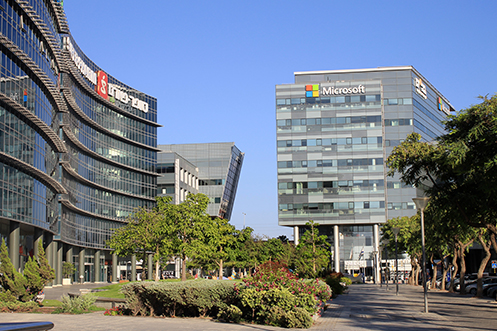
The Israel hi-tech sector is known as “Silicon Wadi” and is filled with a large number of multinational companies. Many of these companies have established research and development centers in and near the city of Tel Aviv. These companies have helped to propel Israel to become the tech hub of the Middle East. The nation receives a significant share of venture capital investment.

Large multinational companies that lead the Israel hi-tech sector include:

Apple

Cisco

IBM

Intel

Microsoft

In addition to these large companies, this sector has many other employers. In Israel, hi-tech includes many mature mid-size companies as well as young start-up enterprises.

What Jobs are Companies in the Israel Hi-Tech Sector Seeking to Fill?

The Israel Innovation Authority and Start-Up National Central published a joint study noting that the Israel hi-tech sector is growing faster than the supply of workers in the country. As a result, the nation is facing a shortage of about 15,000 skilled workers just to fill open positions.

Jobs that the industry is seeking to fill include:

Focus on Artificial Intelligence Start-Ups

Artificial intelligence is a branch of computer science that focuses on creating “smart machines” that can do tasks that humans usually perform. Artificial intelligence start-ups in the Israel hi-tech sector account for a significant portion of the industry’s employment growth. Several of these companies have received venture capital funding to continue their growth and development. Applications cover a wide range of processes in medical, industrial, and business settings.

The top 3 artificial intelligence start-ups in Israel as measured by their level of funding are:

Airobotics: automated industrial drones for gathering aerial data and developing insights

OrCam: artificial vision in an intuitive portable device

Cortica: simulation of the mammal cortex (largest component of the brain) for use in autonomous vehicles, drones, robotics

What Should Job Seekers do About the Israel Hi-Tech Sector?

Job seekers should investigate the Israel hi-tech sector for opportunities. A number of resources are available to learn about jobs in this sector. Professional networks such as Linkedin often have helpful information on companies and contacts, as does the Israel Job Board and the Jewish Agency for Israel. Job seekers may want to focus on a specific location such as Tel Aviv or Haifa and then identify specific employers to target their job preferences.

Job seekers in the Israel hi-tech sector should utilize professional career services to enhance their job search and achieve success in their career objectives.

What Should Employers in the Israel Hi-Tech Sector do?

Employers in Israel should review their employment needs and corporate growth objectives. This will help define their need for employees with requisite skills and training. They should review their relocation program to determine if it benefits their talent acquisition goals and corporate objectives. Employers should work with a Relocation Management Company that has the knowledge and expertise to help them design a relocation program that promotes talent acquisition.

GMS has recently published several Industry Benchmarking Studies that will help employers in the Israel hi-tech sector learn whether their company’s relocation program is designed following industry-specific best practices. There are many benefits to a corporate relocation policy benchmarking. For example, employers can learn how they can ensure their competitiveness in their industry to attract and retain talent with the highest level of skills and experience.

Industry best practice is to schedule a relocation program and policy review every 12 to 18 months to ensure your company maintains its competitive position. This review will help your company learn about how the relocation industry is evolving to meet the needs of the Israel hi-tech sector. It will also reveal increasing employee demands as they relate to their relocation process.

Conclusion

GMS’ team of global relocation experts has helped thousands of our clients develop hiring and recruiting programs to attract highly skilled job seekers. Our team can help your company determine how to attract job seekers looking for employment opportunities in the Israel hi-tech sector.

GMS was the first relocation company to register as a .com. The company also created the first online interactive tools and calculators, and revolutionized the entire relocation industry. GMS continues to set the industry pace as the pioneer in innovation and technology solutions with its proprietary MyRelocation® technology platform.

Global Mobility Solutions is proud to be named and ranked #1 Overall, and #1 in Quality of Service by HRO Today’s 2019 Baker’s Dozen Customer Satisfaction Survey.

Contact our experts online to discuss how we can help your company’s talent acquisition program in the Israel hi-tech sector, or give us a call at 800.617.1904 or 480.922.0700 today.

Request your complimentary Visa Program Assessment

Categories
Visas and International Travel

Brexit Bill Becomes Law, with Brexit Day Set for January 31, 2020

The United Kingdom’s Parliament has approved the Brexit Bill, with the UK now set to leave the European Union (EU) on January 31, 2020. The bill received assent from Queen Elizabeth II, and then was signed by the President of the EU’s Executive Commission on January 24. The EU Parliament is set to ratify the Withdrawal Agreement on Wednesday January 29. The UK will end its 47-year membership in the EU at 11PM on Friday, January 31.

What are the Terms of the Brexit Bill?

The UK agreed to several terms of Prime Minister Boris Johnson’s deal with the EU, including:

  • Guarantees of rights for EU citizens residing in the UK
  • Creation of a customs border in the Irish Sea
  • The UK remaining subject to EU rules during a transition period lasting to December 31, 2020
  • Payment of £30 billion to the EU to settle liabilities
  • Loss of representation on EU’s decision-making organizations

What Does This Mean?

After several years of uncertainty, the Brexit Bill has become law. As a result, this will allow the UK to move forward with solid plans for future growth. Companies, organizations, and governments will have clear directives on how to proceed.

The departure date of January 31, 2020 marks the start of the UK’s exit from the EU. The Brexit Bill does not include any provisions with regard to trade, security, and many other issues that will remain for the future relationship of the UK and the EU. Negotiations are anticipated to begin following Brexit Day, with a target of December 31, 2020 for final resolutions.

What should Employers do About the Brexit Bill?

Employers in the UK and the EU should review their preparations for various Brexit scenarios that may arise in the negotiation phase. The Brexit Bill does not include provisions that directly apply to relocation and transferees. Issues covering these and other points may be part of the subsequent negotiations between the UK and the EU during 2020.

Employers should also examine internal processes and controls. They should ensure proper functionality within various legal and regulatory environments that may arise as part of the leave negotiations.

The GMS team of global experts provides analysis and guidance on several relocation industry topics in our White Paper: 2019 Industry Update. With respect to the Brexit Bill, companies should identify employees and their family members in the UK and the EU who might face issues related to their:

  • Work Permits
  • Work Authorizations
  • Legal Status Documentation
  • Visas
  • Travel Documents
  • Living Arrangements
  • Health Insurance Requirements

The UK has published several valuable resources with Brexit guidance for business. The guidance covers a wide range of topics, from “Drive in the EU after Brexit: lorry and goods vehicle drivers” to “Get your business ready to import from the EU to the UK after Brexit.” Companies should be sure to review the UK’s guidance to ensure they prepare accordingly, especially if they will be relocating workers in the UK or the EU.

Conclusion

GMS’ team of global relocation experts has helped thousands of our clients manage their need to relocate workers. Our team can help your company understand how various Brexit scenarios may impact your company. There may be specific requirements for relocating UK and EU workers. Employers should be aware of timelines and requirements negotiated following the Brexit Bill’s successful passing.

GMS was the first relocation company to register as a .com. The company also created the first online interactive tools and calculators, and revolutionized the entire relocation industry. GMS continues to set the industry pace as the pioneer in innovation and technology solutions with its proprietary MyRelocation® technology platform.

Global Mobility Solutions is proud to be named and ranked #1 Overall, and #1 in Quality of Service by HRO Today’s 2019 Baker’s Dozen Customer Satisfaction Survey.

Learn best practices from Global Mobility Solutions, the relocation industry and technology experts. Contact our experts online to determine how the Brexit Bill and subsequent negotiations may impact your relocation program, or give us a call at 800.617.1904 or 480.922.0700 today.

We're Here to Help! Request a Courtesy Visa Program Consultation

Properly managing a visa and immigration program involves meticulous coordination, precise communication, and worldwide interaction with government agencies, corporate personnel, and relocating employees.

At GMS, we provide you with peace of mind in knowing your mobility program is fully compliant and being managed by the best in the industry.

Request a no-pressure, courtesy consultation from a GMS Mobility Pro. We’ll be in touch within 1 business day.

Categories
Global Relocation Global Relocation Challenges Global Relocation Tips Global Relocation Trends Immigration Rules Relocation Challenges Talent Mobility Visas and International Travel

Travel Ban Expansion is Under Consideration by Trump Administration

The Trump Administration is considering a travel ban expansion. The travel ban arose through Executive Orders and Presidential Proclamations. Presidential Proclamation 9645 suspends entry of foreign nationals into the United States from countries that fail to meet minimum requirements for immigration vetting and screening. The Supreme Court upheld this Proclamation. The Trump Administration believes it is the President’s duty to take action to ensure the safety of the American people.

Countries Currently Covered by Travel Ban and Expected to Continue with Travel Ban Expansion

Currently, the travel ban in place covers seven countries:

  1. Iran
  2. Libya
  3. North Korea
  4. Somalia
  5. Syria
  6. Venezuela
  7. Yemen

There are several points of concern for the Trump Administration with respect to these countries. Issues include deficiencies on management of identities, ability to share information, and various practices and protocols that do not meet minimum requirements to ensure the security of the United States.

Countries That May Be Included in the Travel Ban Expansion

As reported by The Associated Press, up to seven additional countries may be included in the travel ban expansion. These countries might include several that had been noted in earlier iterations of the current travel ban, but were later removed ostensibly to withstand legal objections. Countries that had been noted in the original travel ban but were later removed include:

  1. Chad
  2. Iraq
  3. Sudan

What Does This Mean?

Companies with facilities located in countries that are included in the travel ban expansion may face delays or new requirements for transferees and their family members. Companies that have employees originating from these countries may need to provide additional assistance on issues related to family support services.

Many countries currently included in the travel ban have economies operating on a sub-par or extremely uneven level, as compared to other countries experiencing economic growth. Often these countries face difficult issues including military conflicts and significant out-migration. For example, select metrics show the following economic performance for Iran, Venezuela, and Yemen, all currently included in the travel ban and likely to continue with the travel ban expansion:

Iran Economy

 2015201620172018
GDP (USD bn)$44.$392$424$459
Economic Growth4.6%-1.3%13.4%3.8%
Inflation Rate14.3%8.4%8.2%7.2%
Public Debt (% of GDP)11.8%38.4%47.5%39.5%

Source: Focus Economics

Venezuela Economy

 2015201620172018
GDP (USD bn)$212$324$279$144
Economic Growth-3.9%-6.2%-17.0%-15.7%
Inflation Rate68.5%181%274%863%
Public Debt (% of GDP)28.5%74.7%92.3%

Source: Focus Economics

Yemen Economy

 2015201620172018
GDP (USD bn)$33.2$26.7$24.8$28.0
Economic Growth-10.6%-30.3%-14.8%-5.9%
Inflation Rate8.2%12.0%-12.6%24.7%
Public Debt (% of GDP)48.7%54.9%68.0%76.2%

Source: Focus Economics

What Should Employers Impacted by the Travel Ban Expansion do?

Employers should keep informed about the upcoming travel ban expansion. They should also review the extent of the company’s operations in these countries. They should determine the number of employees that may be impacted by the travel ban expansion and develop communication plans that address points of concern for employees and their family members.

Conclusion

Global Mobility Solutions’ team of global relocation experts has helped thousands of our clients with visas, work authorizations, and travel documentation requirements. Our team can help your company understand how to prepare for the upcoming travel ban expansion.

GMS was the first relocation company to register as a .com. The company also created the first online interactive tools and calculators, and revolutionized the entire relocation industry. GMS continues to set the industry pace as the pioneer in innovation and technology solutions with its proprietary MyRelocation® technology platform.

Global Mobility Solutions is proud to be named and ranked #1 Overall, and #1 in Quality of Service by HRO Today’s 2019 Baker’s Dozen Customer Satisfaction Survey.

Contact our experts online to discuss how your company can prepare for the travel ban expansion, or give us a call at 800.617.1904 or 480.922.0700 today.

We're Here to Help! Request a Courtesy Visa Program Consultation

Properly managing a visa and immigration program involves meticulous coordination, precise communication, and worldwide interaction with government agencies, corporate personnel, and relocating employees.

At GMS, we provide you with peace of mind in knowing your mobility program is fully compliant and being managed by the best in the industry.

Request a no-pressure, courtesy consultation from a GMS Mobility Pro. We’ll be in touch within 1 business day.

Categories
Global Relocation Global Relocation Tips Global Relocation Trends United States Economy Visas and International Travel

HR Teams Should Prepare for the FY 2021 H-1B Visa Lottery Process and Electronic Registration System Opening on March 1, 2020

How should HR Teams prepare for the FY 2021 H-1B visa lottery process? Many employers in the United States search for foreign national talent to fill highly technical positions. As a result, they offer H-1B visa sponsorship to prospective employees for specialty occupations including scientists, engineers, or information technology positions. Employers submit hundreds of thousands of petitions each year. Cap limits are in place on these visas, so employers must plan accordingly.

Additionally, the United States Citizenship and Immigration Services (USCIS) changed the lottery process effective April 1, 2019. These changes may impact the selection of certain petitions. The Department of Homeland Security posted the rule in the Federal Register on January 31, 2019. This rule was followed for the FY 2020 H-1B visa lottery.

Another new rule is that employers seeking to file H-1B cap-subject petitions for the fiscal year 2021 cap, including those eligible for the advanced degree exemption, must first electronically register and pay the requisite $10 H-1B registration fee. The registration fee final rule is effective as of December 9, 2019.

Current H-1B Visa Cap Limits:

  • 65,000 visas per year
    • 1,400 of these visas are reserved for residents of Chile
    • 5,400 of these visas are reserved for residents of Singapore
  • 20,000 for applicants with advanced degrees from U.S. institutions of higher education

What is the FY 2021 H-1B Visa Lottery Process?

On December 6, 2019 USCIS announced that the new electronic registration requirement for petitioners will be in effect for the FY 2021 H-1B visa lottery process. USCIS expects the new electronic registration to streamline processing, reduce paperwork, and provide cost savings to petitioners.

The steps in the new electronic registration process include:

  1. USCIS will open an initial registration period from March 1 through March 20, 2020
  2. Employers complete online registration seeking basic information about their company and each requested worker
  3. The H-1B random selection process, if needed, will be run on these registrations
  4. Only the selected registrations will be eligible to file H-1B cap-subject petitions
  5. The registration fee is $10 and applies to all registrations submitted during the initial and future periods

The FY 2021 H-1B visa lottery process follows this pattern:

  1. The first lottery includes all petitions and is subject to the 65,000 cap limit
  2. Once the first lottery has chosen the 65,000 petitions subject to the cap limit, the remainder are eligible for the 20,000 visas for applicants with advanced degrees from U.S. educational institutions

The Department of Homeland Security believes this process will increase the number of beneficiaries with a master’s or higher degree from a U.S. institution of higher education to be eligible for further processing under the FY 2021 H-1B visa lottery process.

In the Past, What Happened to Petitions not Chosen in the Lottery?

In past years, due to the high number of petitions, some were likely not to be chosen in the lottery. During FY 2020, a total of 201,011 petitions were submitted to that year’s lottery. The cutoff date for applications submitted to the lottery was not defined. Also, the number of petitions that employers would submit was unknown.

Employers that were not prepared missed the cutoff date and were not able to fill their positions. As a result, these employers had to wait until the following year’s lottery. Another option for the employer was to consider an alternative visa for the foreign national, subject to qualification. The cap for FY 2020 was reached in only four days, by April 5, 2019.

How Does the New Electronic Registration Process Impact the FY 2021 H-1B Visa Lottery Process?

With the new electronic registration process, USCIS is expecting a significant reduction in processing and costs. For the past several years, USCIS had been receiving and processing hundreds of thousands of petitions all delivered during the first few days of the filing period. After this processing, two random selections of petitions chose the petitions eligible for the filing.

Instead of processing petitions first, USCIS will now run the two random selections based on the electronic filings, and the registrations chosen then receive authorization to file a petition. Those registrations chosen to receive authorization to file will have 90 days to file the H-1B cap-subject petition. The importance of submitting registrations during the March 1 through March 20 filing period now supersedes the need to file the petitions.

Employers should be ready to file a petition if the random selection process chooses their registration. Case adjudication for petitions will now occur on a “first-come, first-served” basis. As a result, the longer an employer takes to submit a petition following notification of authorization to submit, the higher the risk that work authorizations and employee start dates may be delayed.

What Does the FY 2021 H-1B Visa Lottery Mean for You?

As prior years experiences have shown, unprepared HR teams thinking they had several days to file were not given the opportunity to hire the foreign national employee they hoped to sponsor. With issues such as prevailing wages, Labor Condition Applications (LCAs), and possible site visits, the process should start as soon as possible so HR teams can submit applications at the start of the lottery. HR Teams should gather the basic information needed for the new electronic registration process as early as possible to be ready for the March 1 opening of the portal.

Where Should You Start?

Global Mobility Solutions has a team of global relocation experts who can help you with the FY 2021 H-1B visa lottery process. Our team’s knowledge and access to visa and immigration resources is unparalleled in the industry. As a result, we have helped thousands of companies with the H-1B visa lottery process reach successful results.

Conclusion

Global Mobility Solutions’ team of global relocation experts has helped thousands of our clients prepare for the H-1B visa lottery. Our team can help your company understand the process and prepare for the FY 2021 H-1B visa lottery process.

GMS was the first relocation company to register as a .com. The company also created the first online interactive tools and calculators, and revolutionized the entire relocation industry. GMS continues to set the industry pace as the pioneer in innovation and technology solutions with its proprietary MyRelocation® technology platform.

Global Mobility Solutions is proud to be named and ranked #1 Overall, and #1 in Quality of Service by HRO Today’s 2019 Baker’s Dozen Customer Satisfaction Survey.

Contact our experts online to discuss your FY 2021 H-1B visa lottery plans, or give us a call at 800.617.1904 or 480.922.0700 today.

We're Here to Help! Request a Courtesy Visa Program Consultation

Properly managing a visa and immigration program involves meticulous coordination, precise communication, and worldwide interaction with government agencies, corporate personnel, and relocating employees.

At GMS, we provide you with peace of mind in knowing your mobility program is fully compliant and being managed by the best in the industry.

Request a no-pressure, courtesy consultation from a GMS Mobility Pro. We’ll be in touch within 1 business day.

Categories
Global Relocation Global Relocation Tips Global Relocation Trends Job Market Job Seekers Talent Mobility Visas and International Travel

Singapore Tech Talent Demand Exceeds Supply

The demand for Singapore tech talent is far exceeding the supply of workers. Singapore has been increasing its focus on growing this sector of its economy. Singapore is recognized as an excellent location for business startups and tech companies. The nation desires to become a hub for the global tech sector. Several tech companies are currently located in Singapore, including major global companies such as:

Singapore Tech Talent Grows with Tech@SG Plan

Tech@SG is a new plan to help companies hire foreign national employees to expand their Singapore tech talent. The plan is for companies with the commitment and ability to build local workforces and manufacture products in Singapore. Qualifying technology firms will have the Employment Pass applications of “core team members” facilitated by the government. To participate in Tech@SG, tech companies must meet the following requirements:

  1. Secured over US$10 Million in cumulative venture capital funding
  2. Received funding from Tech@SG-recognized venture capital in the past 3 years
  3. Be incorporated in Singapore
  4. Offer digital or technology products
  5. Have a business model built around proprietary technologies, hardware, or research

Current Economic Weakness Propels Singapore Tech Talent Demand

Singapore has cut its 2019 economic growth forecast range for Gross Domestic Product (GDP). Previous forecasts ranged from 1.5% to 2.5% for GDP growth. As of August, this forecast is now 0% to 1% for GDP growth. Many factors are negatively impacting the nation’s potential for growth, including:

  • Brexit uncertainty depressing economic activity
  • China’s slower economic growth
  • Japan and Korean trade disputes
  • United States and China escalating tariffs on trade

Trade Minister Chan Chun Sing supports the push to develop Singapore tech talent, even as economic growth forecasts begin to decline. He noted that growing the nation’s tech sector is a positive response to Singapore’s economic uncertainties. The goal is to create a foundation for future economic growth. Foreign workers will complement the local Singaporean workforce with new and updated skills. Welcoming foreign national talent with high levels of digital, tech, and engineering skills is critical to Singapore’s long-term success.

What Does This Mean?

Singapore is actively seeking foreign national workers with high levels of skills. Singapore tech talent is seen by the nation as critical to its future economic growth. Many global tech firms maintain facilities in Singapore, and the nation is looking to leverage this presence to cement its position as a global hub for technology companies and technological innovation.

What Should Employers do About Singapore Tech Talent?

Employers currently in Singapore should continue to stay informed about the nation’s increasing push to welcome foreign workers with plans such as Tech@SG. They should expect to see an increase in the number of foreign workers as companies seek to capitalize on Singapore’s investments in growing the tech sector.

Employers should be prepared to apply for Tech@SG and fulfill all of the program requirements.

Employers not currently in Singapore might consider the country as a strategic location for corporate expansion. The services of an International Professional Employer Organization (PEO) may be useful to help an employer enter Singapore and quickly test the local market.

Work with a Qualified and Experienced Relocation Management Company

Employers looking to transfer workers to Singapore or hire new foreign workers should also provide as much information about the country as possible. They should work with a qualified and experienced Relocation Management Company (RMC) that can provide a wealth of valuable resources to assist relocating employees and their family members. RMCs have experience with overcoming challenges in relocation programs. They also have knowledge about the challenges that relocating employees face with their move to a new location.

Destination spotlights that highlight many aspects of Singapore are helpful resources to share with transferees during their pre-decision process. Video destination spotlights are excellent resources to visually show employees and their family members their new location.

Conclusion

GMS’ team of global relocation experts has helped thousands of our clients understand how to grow their company’s international employment. Our team can also help your company understand how to respond to Singapore’s new Tech@SG plan. We can also help your company understand the importance of leveraging Singapore tech talent for future economic growth.

GMS was the first relocation company to register as a .com, created the first online interactive tools and calculators, and revolutionized the entire relocation industry. GMS continues to set the industry pace as the pioneer in innovation and technology solutions with its proprietary MyRelocation™ technology platform.

Global Mobility Solutions is proud to be named and ranked #1 Overall, and #1 in Quality of Service by HRO Today’s 2019 Baker’s Dozen Customer Satisfaction Survey.

Contact our experts online to discuss your company’s interest in learning more about how to grow with Singapore tech talent and the nation’s focus on the tech sector, or give us a call at 800.617.1904 or 480.922.0700 today.

Request your complimentary Visa Program Assessment

Categories
Global Mobility Global Relocation Global Relocation Challenges Global Relocation Tips Global Relocation Trends Immigration Rules Visas and International Travel

Japan Public Certification System to Support Influx of Foreign Workers

A new Japan Public Certification System is under consideration by the Immigration Services Agency (ISA). The ISA is responding to an increasing number of foreign workers in the nation. Japan recently instituted new visas to increase the number of foreign workers and expand its supply of skilled labor. As a result, the ISA has been providing support services to a rising number of foreign workers.

Current Requirements as Precursor to Japan Public Certification System

Currently, a number of entities, businesses, and individuals have registered as support organizations for foreign workers. The ISA now requires these organizations and individuals to:

  1. Arrange employment for the foreign worker that matches their skills and needs
  2. Provide adequate support for the foreign worker

Japan does not currently have much infrastructure in place to support foreign workers. As a result, the need to support foreign workers will continue to increase. However, the ISA’s current priority remains the registration of support organizations.

What is the ISA’s Vision for the Japan Public Certification System?

The ISA envisions the Japan Public Certification System as part of a larger foreign worker support system. Certification of a dedicated profession to provide support for foreign workers is seen as a step in the right direction. ISA Commissioner Shoko Sasaki notes that such a system may become a central pillar of the nation’s visa programs for foreign workers.

Why is Japan Seeking Foreign Workers?

Japan issued a new work permit and two new visas specifically to address the country’s severe labor shortage. The work permit and both of the two new visas are seen as solutions to assist up to 14 designated employment sectors that are in extreme need of foreign workers. These employment sectors include agriculture, construction, and nursing.

Type 1 Visa

  • Renewable for five years
  • Requires successful completion of Japanese test
  • Must possess specific skill level in work field
  • Cannot bring family members into Japan

Type 2 Visa

  • Renewable indefinitely contingent on employment status
  • Skill level significantly higher than Type 1 Visa skill level
  • Allowed to bring family members into Japan

What Does This Mean?

The ISA recognizes that foreign workers need support as they enter the country and believes the Japan Public Certification System is the correct solution. Prime Minister Shinzo Abe adopted an action plan in December 2018 with several measures designed to help foreign workers obtain the support they need to better assimilate in Japan. This action plans notes 126 steps the Japanese government plans to take, including:

  • Improving Japanese language education
  • Increasing multilingual services at public institutions and municipal offices
  • Encouraging foreign workers to enroll in social insurance programs

What Should Employers do About the Japan Public Certification System?

Employers currently in Japan should continue to stay informed about the country’s changing and expanding work permit and visa programs. They should expect to see an increase in the number of foreign workers seeking jobs as part of the new work permit and visa programs.

Employers should be prepared to register as a support organization with the ISA. They should also stay informed about the ISA’s progress with developing the Japan Public Certification System.

Employers not currently in Japan might consider the country as a strategic location for corporate expansion. The services of an International Professional Employer Organization (PEO) may be useful to help an employer enter Japan and quickly test the local market.

Work with a Qualified and Experienced Relocation Management Company

Employers looking to transfer workers to the country or hire new foreign workers should also provide as much information about Japan as possible. They should work with a qualified and experienced Relocation Management Company (RMC) that can provide a wealth of valuable resources to assist relocating employees and their family members. RMCs have experience with overcoming challenges in relocation programs. They also have knowledge about the challenges that relocating employees face with their move to a new location.

Destination spotlights that highlight many aspects of Japan are helpful resources to share with transferees during their pre-decision process. Video destination spotlights are an excellent resource to visually show employees and their family members their new location.

Conclusion

GMS’ team of global relocation experts has helped thousands of our clients understand how to grow their company’s international employment. Our team can also help your company understand how to respond to Japan’s new working permit and visas. We can also help your company understand the importance of being fully prepared to participate in the Japan Public Certification System.

GMS was the first relocation company to register as a .com, created the first online interactive tools and calculators, and revolutionized the entire relocation industry. GMS continues to set the industry pace as the pioneer in innovation and technology solutions with its proprietary MyRelocation™ technology platform.

Global Mobility Solutions is proud to be named and ranked #1 Overall, and #1 in Quality of Service by HRO Today’s 2019 Baker’s Dozen Customer Satisfaction Survey.

Contact our experts online to discuss your company’s interest in learning more about the Japan Public Certification System, working permit, and two new visas, or give us a call at 800.617.1904 or 480.922.0700 today.

Request your complimentary Visa Program Assessment

Looking for something?