Categories
Corporate Relocation Domestic Relocation Domestic Relocation Tips Domestic Relocation Trends Global Mobility Global Relocation Global Relocation Tips Global Relocation Trends Relocation Best Practices

Why Benchmark?

Relocations can generate a lot of excitement as companies eye the potential for increased revenue, organizational growth, and the development of their employees. It is important for those managing workforce mobility to know if their company’s relocation policies make sense in today’s evolving, global business environment. It is critical for all the stakeholders in employee relocation – talent acquisition, human resources, procurement, finance, legal, etc. – to fully understand the best practices to ensure that their policies are competitive, compliant, and effective.

Here are the top 5 reasons you should be reviewing your relocation program and policies:

  • To ensure competitiveness within your industry in order to attract and retain the best talent
  • To identify enhancement and cost-saving opportunities (i.e. process, service cost, exception reduction, etc.)
  • To maintain alignment with your overall mobility objectives across key disciplines
  • To educate internal stakeholders on current best practices and trends
  • To learn about innovative ideas for managing a changing workforce mobility environment

Policy Benchmarking Options

A best practice across all industries is to conduct program and policy reviews every 12 to 18 months, depending on an individual company’s relocation volume, size, and scale of programming. You can receive expert guidance and award-winning service by submitting a request for contact.

Categories
Corporate Relocation Corporate relocation tips Domestic Relocation Domestic Relocation Challenges Domestic Relocation Tips Global Mobility Global Relocation Global Relocation Challenges Relocation Challenges

5 Steps to a Successful Year-End Process

While most people are happily preparing for the holidays, you’re scrambling through the year-end reconciliation of all of your relocation expenses. Well, even though it’s only November, here is a gift that will help you not only navigate this year, but help you to have a successful year-end process for years to come.

Though many relocation managers might prefer battling crazed Black Friday crowds to year-end reporting, the process tends to go more smoothly when run by the relocation department. To maximize efficiency, be sure to utilize these five steps:

  1. Create a year-end checklist. A detailed checklist will help identify all of the information you need to accurately report year-end compensation. Your checklist should include due dates, responsible individuals and departments. Establishing the responsibility for reporting all of the relevant compensation data is an important component, and can include wages, imputed income, benefits, equity, taxes, and more. This year-end checklist will help you identify all the resources you will need to create a complete and accurate report. Your itemized checklist needs to include items such as early cutoff dates and all employees who will receive the tax filing services (employees on the tax eligibility list), as well as provide for the time needed for verification, approval and processing. A well-developed checklist will also set firm deadlines for the reporting and tax filings.
  1. Set up a year-end preparation call. When setting due dates, be cognizant of the vacation times made mandatory by some countries around the end of December. During the call, review your year-end checklist with all involved parties to ensure that they are aware of their role and due dates. Use this call as an opportunity to build understanding and develop relationships that will make year-end reporting easier in the future. If you have not already held a year-end preparation call, schedule one as soon as you finish reading the rest of this article!
  1. Verify all of your data! Accuracy is vital, especially when it comes to compensation reporting. Data such as addresses and tax ID numbers/Social Security numbers should be confirmed, as well as wages, benefits, sick and vacation time. Double-checking data prevents backtracking and costly errors down the line.
  1. Finalize your data. Make sure that the final payroll reports of the year have been included, plus any end-of-the-year benefits. Be sure to back up the program data again and be sure to save it in a secure location should it need to be referenced in the future.
  1. Get ready to submit your report. Double-check the deadlines for all the countries on your list and be prepared to provide specific data for each. Tax providers may ask for data for different assignee/transferee populations. Be sure to adhere to your year-end deadlines and, whenever possible, send the data ahead of time. Some international locations may have very tight turnaround times to make that final tax payment of the year.

As with anything, practice makes perfect. The more you follow these five steps, the easier year-end reporting will become for you and you can be confident of a successful year-end process.

Learn more about how to save time and money while managing your corporate relocations.

Categories
Corporate Relocation Corporate relocation tips Global Mobility Global Relocation Global Relocation Challenges Global Relocation Tips

Making Global Tax Less Scary for International Relocation

Making Global Tax Less Scary for International Relocation: Relocating across international borders can be a little scary. However, the experts at Global Mobility Tax were kind enough to provide these treats to take the trickiness out of workforce mobility.

When sending employees on assignments, careful planning can minimize overall tax cost.  Each country has its own set of laws that are subject to change.  Employees should seek guidance from their tax advisors, making global tax their specialty.

Social security tax

If there is a totalization agreement in force between the home country and the host (assignment) country, a certificate of coverage should be obtained in order for the assignee to be exempt from social security tax contribution in the host country.

Physical presence

If an employee has regional responsibilities and is required to travel to countries like Singapore (60 days), Taiwan (90 days), Malaysia (60 days), China (90 days) and Hong Kong (60 days), he can arrange his visits in order that the physical presence stays below the de minimis day threshold and be exempt from income tax in these jurisdictions.  In addition to physical presence, other requirements, such as no cross charge of costs, will also have to be met in order to be exempt from income tax.

Japan

Preferential tax treatment on employer provided housing can be achieved if the lease is signed by employer, the employer pays the rent to the landlord directly and the employee pays back “legal rent” to the employer with after-tax money.  If all the conditions are met, the valuation of the taxable benefit is reduced.

Individuals who are residents in Japan on Jan 1st are required to pay local inhabitant tax assessed on income paid in the preceding year.  If the assignment is expected to end in early January, the employee may consider repatriating before Jan 1st so that local inhabitant tax does not apply in the final year of assignment.

China

In order for certain non-cash benefits such as housing, relocation, education, home leave, meals and laundry as well as language training to be treated as non-taxable compensation,  the amounts have to be reasonable and have be paid by the employer directly or reimbursed by the employer upon presentation of official receipts (fapiao).


Learn more about global relocation programs and services


DISCLAIMER

Although the above information is presented in good faith, it is for general guidance on matters of interest only and is not intended as tax advice.  The information presented herein may not be applicable to or suitable for the individuals’ specific facts and circumstances.

The information should not be used as a substitute for consultation before any actual transaction with a professional tax adviser who is familiar with all the relevant facts making global tax their specialty.

Global Mobility Tax, LLP assumes no obligation to inform any person of any changes in tax law or other factors that could affect the information contained above.

About Global Mobility Tax (www.glomotax.com)

Global Mobility Tax, LLC (GMT) is dedicated exclusively to the tax and HR issues impacted by global mobility. Our quality people and high-touch client service approach enable us to offer world-class service to global organizations.

Their core specialty is tax planning for international assignments and relocations. In concert with our global service partners, we can offer your organization global strategy, planning and compliance.

GMT clients include both public and private companies, ranging from Fortune 500 companies to industry start-ups, based in the US and abroad.

Categories
Corporate Relocation Domestic Relocation Domestic Relocation Tips

Reduce Relocation Expenses by Eliminating Gross-Ups

BVO Savings

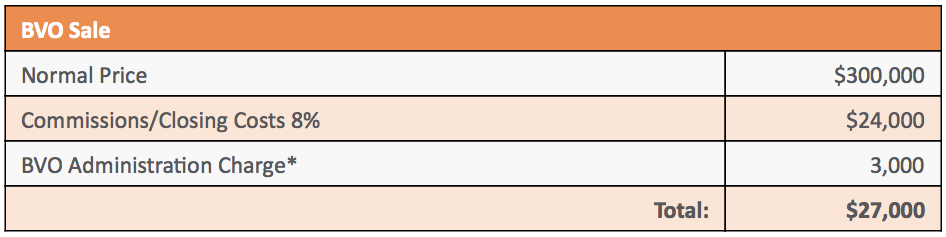
The Buyer Value Option (BVO) program avoids the costly process of “grossing up” dollars used to pay for the commissions and closing costs on the sale of a transferee’s home, enabling a company to reduce relocation expenses.

Typically, the commissions and closing costs associated with the sale of a transferee’s home represent the majority of the total costs incurred during a relocation. Reimbursement to a transferee of these expenses is considered taxable compensation by federal and state authorities.

Most corporations use a form of tax assistance, known as gross-up, to help offset the tax impact felt by the transferee receiving reimbursement. The gross-up expense can add substantial costs.

Example:

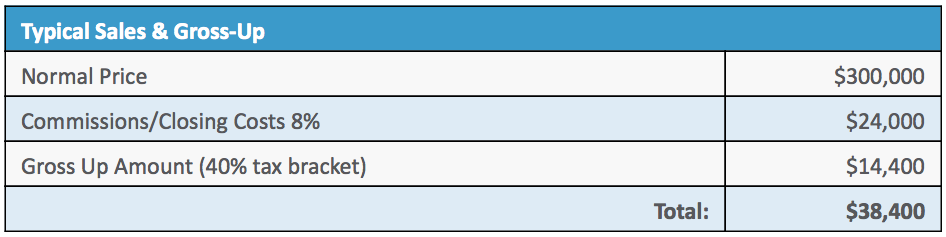
A transferee in the 40% tax bracket receiving a $24,000 home sale expense reimbursement will require around $39,900 in order to approximately cover the impact of income taxes being withheld and still net the $24,000 needed to cover the actual expenses.

Typical home sale with gross-up

Home sale with BVO cost savings

Total Savings:                           $11,400

*Commissions and closing costs shown reflect a 6% commission and 2% closing costs. Actual costs, including BVO fee, may vary.

Once a transferee receives a valid offer to purchase from a 3rd party buyer, and after the relocation management company (RMC) has been able to verify that all contractual terms are customary, the transferee turns the sale of the home over to the RMC.

The RMC then purchases the home from the transferee and subsequently transfers the home to the 3rd party purchaser. All closing costs and realtor commissions are paid by the RMC and billed directly to the employer. Since the transferee never incurs any home sale expense, normal reimbursement of these expenses is not required.

Fast, Easy, and Economical

Once the origin home is turned over to the RMC, the transferee relinquishes all obligations including attending the actual closing. The RMC manages the entire sale and closing process on behalf of the transferee. The BVO program allows the transferee to move quickly, and focus on his or her new job and community. This is one more way of reducing both the stress and expenses associated with workforce mobility.

To learn more about BVOs or other relocation programs, please visit our contact page and an experienced Global Mobility Solutions relocation consultant will answer all of your questions.

Categories
Corporate Relocation Domestic Relocation Global Relocation Relocation Challenges

Top Things to Consider to Ensure a Smooth Group Move

Smooth Group Move – Dwight D. Eisenhower once said that “Planning is everything.” The initial blueprints for the 1944 invasion of Normandy, in which the general moved over 132,000 ground troops across the English Channel, were first presented in July of 1943. Even though your group move will not be of D-Day proportions, it will still require advanced planning and ongoing support to accomplish your mission.

Group move success is not just measured in how many people you move from point A to point B. You need to ensure that your business goals are met. These may include the retention of talent, meeting budget guidelines, minimizing disruptions, and guaranteeing the happiness of the transferees and their families.


Key considerations for a smooth group move should include and are not limited to:

  • A proven methodology and customized solutions
  • Risk avoidance and compliance
  • Decision-making support to maximize acceptances
  • Robust tools and resources that ensure efficient communication
  • Total management of the relocation process


Although there are specific steps that can be taken in each unique phase of an employee relocation, there is some overall planning that must be considered to ensure a successful group move.


Inclusion and Alignment

It is important to start with developing customized resources for you and your employee population considering the move. This approach allows for stakeholders to fully understand the relocation programs available, the process and host location insights for decision making.

Your RMC needs to work with you to create and implement a strategy and project plan tailored to your business needs, organizational culture and employee demographics. Service options should include:

  • Employee surveys to assess the needs of your transferees prior to program development.
  • The design, development, and implementation of corporate relocation policies that focus on competitiveness, cost efficiencies and alignment with goals and objectives.
  • Budget development and oversight that identify and quantify mobility cost with other best practice group move programs, as well as provide savings and containment recommendations.
  • Site surveys of the new location with special attention to schools, housing, cost of living, etc.
  • Announcements and communications templates to ensure that transferees are properly informed every step of the move.


Pre-Decision

You want to make sure that you move the right talent to the right place at the right price. It can save a lot of time, money and heartache to ensure that this happens before you actually relocate an employee. Your RMC should support your pre-decision efforts by providing:

  • In-person, group policy overview and briefings
  • Customized web-based resources specific to the destination location
  • Live resource centers at both the origin and destination locations
  • Group area orientations that include housing tours, school visits, etc.
  • Assignment/relocation offer letter coordination
  • A summary and debrief of all pre-decision activity, findings, and recommendations


Pre-Move Planning

Once you determine which employees are participating in the group move, your Relocation Management Company (RMC) should help you and your transferees understand what is involved with the process of getting to the destination location. Services should include:

  • Household goods shipment surveys to take into account all of a transferee’s personal belongs to be shipped and deliver an inspection-based cost summary to be used for budgeting, accruals, and cost impact analysis.
  • Global relocation analysis reports include a comparable analysis of consumables, transportation, goods and services, housing costs, etc. in order to provide realistic expectations of the cost of living in the destination location versus the origin location.
  • Educational assessments offer comprehensive consultations with the relocating families and follow-up discussions about schools and education concerns the families may have.


Putting the Planning into Action

  • Policy counseling and needs analysis is conducted with every smooth group move. During this initial conversation, your RMC should conduct a comprehensive needs assessment and provide a detailed review benefits and procedures, as well as identify any special needs that will need to be addressed. They should also discuss any concerns that the employee may have about relocating so that the RMC is best prepared to help along the way.
  • Global Expense Management to manage and track your relocating workforce. By managing the expense submission and payment process, you should be able to track and report on 100% of mobility expenses for your company, including payment to vendors and local agencies.Key Benefits:
    – Easy to use platform for client and employee
    – Online submission of relocation expense reports
    – Expenses audit to policy and/or assignment letter
    – Auditing and payment of all vendor invoices
    – Timely (within 2-3 business days) payments
    – Single payment source, eliminates your administrative burdens
  • Home Disposition can provide your employees with global home sale and property management assistance services.
  • Destination Services ease transition to countries worldwide, freeing up the employee to concentrate on the business mission. Your RMC should deliver a comprehensive and worldwide array of global relocation services including area tour/orientation, home finding, school search and settling in.
  • Global Travel Services allow your RMC to coordinate global travel services with client or network partners, including: airport transportation, rental car, airline travel and hotel.
  • Meet and Greets arranged at the destination airport provide pick-up and accompanied transfer to the residence. Includes: Ground transportation for relocating employee and/or family to a hotel, temporary housing, permanent residence or other destination per instructions. This service can be provided as part of a bundled area tours, home-finding or settling-in program, or provided à la carte.
  • Area tours and orientations provide an overview of the new community and local amenities to assist in deciding about the assignment. This could include any of the following: Welcome packet and information on assignment location, tours of neighborhoods and typical housing, school tours and information (if applicable), locating grocery stores, medical facilities, places of worship, etc., security briefing.
  • Home finding assistance with finding suitable housing in accordance with personal preference and policy, facilitate the preparation and signature of an appropriate lease and manage all move-in formalities. This could include any of the following: Needs analysis, pre-screening properties (within budget), accompanied property viewings, lease negotiations, utility connections, walk-through support, and furniture rental assistance (if needed).
  • Auto leasing/purchasing service programs and long term rental solutions provide assignees with car leasing/purchasing of new/used vehicles, any make or model. In many cases, local credit scores, or even driver’s licenses, are not required.
  • Schooling searches will help assess the suitability and availability of local area public or private schooling and to assist with registration and entry requirements. This could include a briefing on different school systems, organizing appointments with administrators, assisting with enrollment, etc.
  • Global transportation services provide multiple estimates to drive competiveness without compromising quality.
  • Global temporary housing coordination assists the relocating employee in selecting and securing temporary accommodations within policy. Based on your relocation policy, accommodations may include hotel, extended stay and corporate housing at different facilities around the world.


Continued Support Once Your Transferees Reach the Beach

After the transferees involved with your smooth group move reach their destination, your RMC should continue providing value-added programs to ensure that they and their families thrive in their new location.

  • Settling-in assistance can provide an orientation to the new community, local amenities, utilities and government registrations. This could include bank account set up, driver’s license and vehicle registration, public transportation assistance, smart phone transfers, telephone and utility setups, registration of public utilities, assistance with sourcing local services, expatriate networking association assistance, and more.
  • Trailing spouse/partner family assistance addresses concerns about the job market for the accompanying partner, finances, children’s education, family healthcare, eldercare, and much more. At the same time, your company needs the right talent to fill critical positions and achieve business objectives. Understanding your employee’s concerns can help them make the right mobility decision. The right decision means better return on investment for your organization’s mobility program and a smoother transition for the employee and family.Programs include, but are not limited to, the following:
    – Spousal/Partner Career Assistance
    – Career Continuation Assistance
    – Job Search Strategy
    – Career Continuation Assistance
    – Entrepreneur Support
    – Locating Community Networks, Services, and Activities
  • Cultural and language training can be offered through instructor-led sessions or self-paced, web-based learning. This allows transferees and their families to understand the cultural nuances of the destination location and effectively communicate with the people there.


Planning is the Key to Victory

You might think that this looks like a lot of planning to pull off a successful and smooth group move. You’re right. However, a world-class RMC with award-winning breadth of programs and customer service can easily guide you through every step of your move – whether relocating one employee across state lines or moving a small army of talent across the English Channel, to ensure a smooth group move.


For information about how Global Mobility Solutions can make your smooth group move easy and stress-free for you and your employees, please contact us today.

Categories
Corporate Relocation Global Mobility Global Relocation Global Relocation Challenges

Increase the Success of Global Assignments with Language Training

Global Assignment Success – Moving top talent from one location to another has many hurdles. Global relocation has its own set of unique challenges. Of them, overcoming language and cultural differences are two of the most important. Without an understanding of how to properly communicate with business contacts in a host country, your transferees will not be able to accomplish anything positive and will not be effective ambassadors of your company. Austrian-British philosopher, Ludwig Wittgenstein explained, “The limits of my language means the limits of my world.”

To overcome these obstacles and have global assignment success, companies with global reach enroll their transferees in cultural and language classes. By having talent properly prepared, companies understand that their transferees will be able to immediately communicate with contacts upon arriving in their host countries. This has been proven to reduce limitations for transferees and increase the success of global assignments.

Individualized instruction can range from a self-paced, online class to live, instructor-led, virtual session. Not only can the employee take the course, but the whole family can engage in the training. Group lesson for employees are typically offered on site at a company’s facility or a physical location of the company’s choosing.

Companies value metrics and want to see their employee’s progress. Many programs have trainers who track the student’s progress at regular intervals and report it back to the company. Cultural and language training providers benchmark progress to internationally recognized assessment scales, such as the Common European Framework of Reference (CEFR) scale. Instructors are trained to administer assessments on the four major language skills: reading, writing, listening and speaking. Evaluations are also a key component to our philosophy of continuous improvement.

As a leader in the corporate relocation industry, Global Mobility Solutions (GMS) offers an array of cultural and language training options. To learn about how GMS can prepare your global transferees for success, please read our PDF.

Categories
Corporate Relocation Domestic Relocation Global Relocation

3 Ways to Save with Global Mobility Programs

Save With Global Mobility Programs – The saying goes that it takes money to make money, and global mobility is no exception. Even though you understand that the talent you on-board or relocate will help your organization grow and prosper, getting the transferees from their origin to their destination locations can be expensive. Don’t be discouraged, there are several ways to save when creating your global mobility policies.


Use a tiered approach

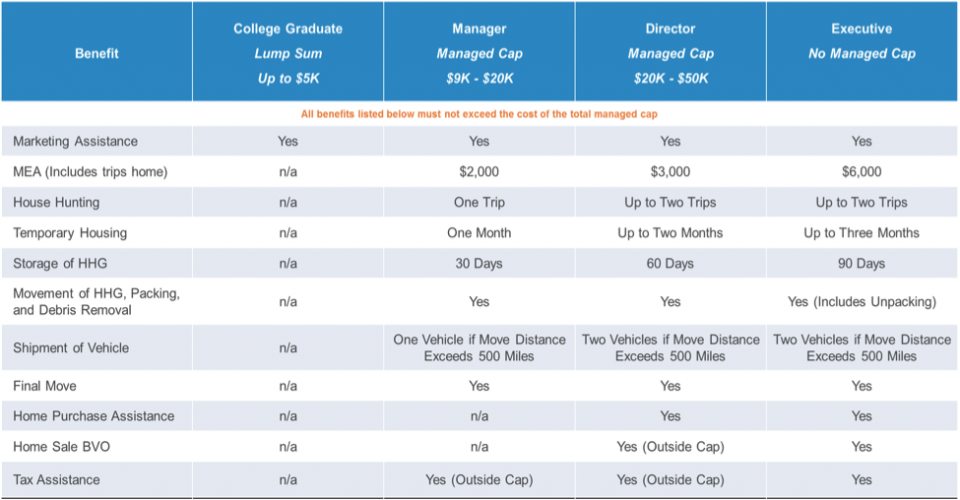
Not all employees are equal, therefore their relocation compensation shouldn’t be the same. It would make sense to pay the recent college graduate new hire substantially less than the amount awarded to a seasoned, executive-level employee. Additionally, not everyone requires the same amount of time to complete his or her move. Services can be tiered with regard to what they offer. For example, home-finding tours can be broken into half-day, one-day, or two-day options, then offered accordingly per your mobility policy. Tiered categories can be sorted by homeowners versus renters, or by how many school-age children a transferee has. Allowances for the shipping of household goods and vehicles can also be tiered based on the transferee’s position and distance to the destination location. It is very important to clearly state the various tiers in the company’s relocation policies. Tiered policies have been proven to reduce costs versus standard lump sum programs.

Below is an example of a tiered relocation policy based on position seniority:


Tiered-Policy-Sample global mobility programs


Bundle your services

As a company builds a relocation policy, it has many different services from which to choose – Pre-decision alone has over 30. By bundling various services together, such as home sale, household goods shipping, community tours, mortgage assistance, etc., companies can see significant savings. Typically, bundling can save companies up to 20% of what the services would cost individually.


Outsourcing

Lastly, by outsourcing mobility management needs to trusted, experienced, relocation experts, HR personnel can remain focused on department-specific tasks, such as enforcing company policies, finding new talent, and administering benefits and compensation. When expert mobility coaches guide transferees and their families through the relocation process, less calls are made to or by the human resources representatives. Generally, when working with a mobility management company, transferees arrive at their destinations happier, less stressed, and ready to work. In short, it saves sanity.


To learn more about the benefits of incorporating a mobility management company into your global mobility programs, please read Domestic Relocation Services and Global Relocation Services. You may also contact a GMS mobility specialist to get program details customized for your company’s specific needs.

Categories
Global Relocation

3 Tips For Seamless International Talent Relocation

Relocating business within the U.S. is difficult enough, but when a company needs to relocate talent to another country, things can get even more challenging. According to a recent Atlas Van Lines survey, 27 percent of respondents are expecting their international relocation volumes to increase. Keeping that in mind, here are three tips to help with an international talent relocation process:

  1. Help the employee get accustomed: Moving a single employee or a group of individuals is a complicated task, which is why it’s critical to help transferees get accustomed to their surrounding environments before they start working.
    International talent relocation presents unique challenges.
    International talent relocation presents unique challenges.

    If employees aren’t able to arrange a visit to the new location before they pack their things and move, they should do as much research on the area as they can, Forbes suggests. This may include reading local news or publications that focus on the surrounding area, which can help new residents get accustomed to the language and cultural interests. Cultural training is one of the most highly overlooked areas of employee training, and depending on the destination, can be crucial to assignment success. Culture shock is a very real phenomenon that impacts many western travelers. When preparing for or managing culture shock, the U.S. Bureau of Educational and Cultural Affairs recommends keeping an open mind, staying physically active and making an effort to get to know other people as much as possible.

  2. Paperwork exists outside of the office: When talent is relocating overseas, they must first get their paperwork in order, otherwise the move won’t happen at all. A business can significantly help its employees do their homework on important travel documents such as customs and immigration information to Visa acquisition or even identifying which vaccinations, if any, their talent has to get before they depart. Some countries have currency restrictions for entry as well – so companies that do their due diligence will make the moves much easier on their employees. The IATA and the U.S. Bureau of Consular Affairs are both excellent supplementary resources that outline what countries require upon arrival.
  3. Hire an experienced partner: If a business is unsure how to tackle this issue, global relocation management companies can provide insightful solutions necessary to navigate today’s mobility challenges. In fact, Relocate Magazine highly recommends employing a trusted partner in this capacity, especially if management or C-level executives are unfamiliar with global relocation, much less the new area where they’re moving their talent. Even if higher-ups have employee relocation experience, global relocation firms can provide unique and fresh insight into each move. Whether a company needs a partner to help with the entire move, or just needs to outsource certain aspects of a relocation effort, third-party talent relocation firms can help alleviate a large amount of stress and weight off of a business’s shoulders by providing faster, more efficient and often cheaper results.

Brought to you by Global Mobility Solutions, a trusted partner in global talent management.

Categories
Corporate Relocation Domestic Relocation Global Relocation

Employee Relocation or Workforce Mobility?

Workforce mobility or employee relocation refers to the processes or relocation services involved in the transfer of employees or potential employees from one location to another. Other terms that refer to these processes may include:

  • Employee Transfer
  • Employee Mobility
  • Global Mobility
  • Domestic Relocation
  • Corporate Relocation

While some of these terms may be used interchangeably, the terms global and domestic mobility may differ in the range of services commonly required for relocating an employee. Reference to global mobility is commonly used as an umbrella term, and includes domestic mobility processes. Reference to domestic mobility usually excludes processes commonly needed for international employee relocation such as visa acquisition, repatriation or language training.

Generally, a company’s management of workforce mobility accounts for ongoing employee support services, supplier management, candidate selection, relocation benefits and expense management. Corporate relocation programs may vary between companies due to size, need, or destination.

The overall process of employee relocation is commonly divided into one of four service brackets including:

Pre-Decision Services

According to Worldwide ERC data, the average cost to relocate an executive level home-owning employee comes to $97,000. For this reason companies seek assurances that a given employee is a good fit for relocation. Pre-decision services aim to uncover any potential issues that may arise prior to the employees relocation in order to reduce the risk of a failed relocation. Some of the most common reasons for failed relocations according to Worldwide ERC include:

  • Negative home equity
  • Slow real estate housing market
  • Family resistance to move
  • Spousal employment
  • High costs of housing

The below are examples of a few common pre-decision services:

Candidate Assessment – Services that assess candidate expectation, skills, personal qualities, family circumstance, financial preparedness, etc.

Cost of Living analysis – Cost of living comparison of origin and destination cities to help determine acceptable or competitive salary range.

Market analysis – Determines the likely home sale timeline and identifies potential home sale challenges such as negative equity.

School Reports – Public and Private School reports provided to the relocating employee to aid community selection.

Moving Cost Estimates – Cost estimates on household goods transport, helps budget for relocation costs.

Community Search and Tours – Coordinates community orientation tours to familiarize relocating employees to their new location, and assist in selecting an area that fits their particular interests.

Origin services

Origin services account for all services necessary at the transferring employees origin location. Some of these services include:

Expense Management – Establishment of expense reporting and management services for both the company and employee. Designed to track and contain costs during the relocation process. Utilized throughout the entire relocation process*

Home Sale Assistance – May include connecting employees with real estate agents, home marketing assistance, home buying programs, etc.

Household Goods Management – Management of household goods transport from origin to destination. May include procurement of van line services, replacement insurance, and guaranteed “not to exceed” estimates for goods transportation, etc.

Visa and Immigration Services – For international relocations, visa and immigration services organize company and employee documents required for visa acquisition.

Property Management – For employees not selling their home. May include rental marketing assistance, tenant management, vacant property management, landlord consulting, or property maintenance.

Destination services

Destination services account for all services necessary at the transferring employees destination location. The range of destination services sometimes includes a further segmentation of “settling in services” aimed at helping the employee acclimate to their new location. Some of these services may include:

Home Finding Services – Services include connecting employees with real estate agents at destination, home buying assistance, corporate housing, temporary housing, rental assistance, home finding tours, etc.

Settling in Services – Services that aid employee acclimation to their new location including access to online resources, attaining local driver’s license, child care, connecting utilities, locating a primary care physician, etc.

Vehicle Lease or Purchase – Services that assist relocating employees acquire a vehicle including loan support, lease negotiation, etc.

Family Assistance – Services that assist the relocating employee’s family, including spousal employment support, counseling services, stress management assistance, etc.

Return or Repatriation Services

In most cases,  employee relocation services for individuals returning from temporary domestic assignments are equivalent to services provided at departure. While there are some short term domestic relocation programs amongst companies, the majority of return services handle an employee’s return from international assignment. International assignments are usually classified into one of four categories:

  1. Extended Business Travel (EBT): an assignment of 3 months or less.
  2. Short Term: an assignment lasting 6 months to a year. (range may go up to 2 years)
  3. Long term assignments: An assignment lasting 2-3 years.
  4. Permanent: An assignment lasting 3 years or more.

For EBT, short term, and long term assignments, repatriation plans have become an industry recognized necessity for effective employee retainment. According to Atlas surveys around 40% of expatriate employees leave their sponsoring company after assignment. Repatriation services seek to close this gap, and help organizations maximize their workforce investment and retain employees that have acquired substantial knowledge capital. Repatriation is a dynamic service area that has wide variation. For example repatriation counseling helps employees returning from international assignment manage culture shock, and re-acclimate to domestic life. Other services may include:

  • Lease termination assistance
  • Home services termination (such as utilities)
  • Tax equalization

In all, workforce mobility seeks to analyze, manage, execute and optimize the processes involved in transferring an employee from one location to another. For more detailed descriptions of relocation services visit the following pages:

Global Relocation
North America Relocation

We're Here to Help! Request a Courtesy Consultation

Are you ready to talk to a Mobility Pro? Learn how GMS can optimize your mobility program, enhance your policies to meet today’s unique challenges, receive an in-depth industry benchmark, or simply ask us a question. Your Mobility Pro will be in touch within 1 business day for a no-pressure, courtesy consultation.

Looking for something?