


Categories
Global Mobility Global Relocation Global Relocation Challenges Global Relocation Tips Global Relocation Trends United States Economy

Vehicle Program for Foreign Nationals Relocating to the United States

Global Mobility Solutions’ clients often have transferees relocating to the United States who can use a vehicle program to obtain a car. Arriving from outside the country, foreign nationals quickly realize they need a vehicle after their arrival. Many international locations have extensive public transportation options. Most US cities lack extensive inter-city rail options, and often do not have robust local bus or light rail service throughout the metropolitan area, so transferees need a car.

A significant hurdle these transferees face is that they often do not have established credit in the US. As a result, they will not have a credit profile that lenders can use to determine their creditworthiness.

GMS spoke with Afia Arneja, Senior Vice President, International AutoSource (IAS). Afia agreed to share her expert guidance on this topic.

Challenges of Getting a Car in the US for International Assignees

According to Afia, many transferees moving to the US are not prepared for the challenges they will face when it comes to getting a car. Having a solution for their transportation is low on their list of priorities. However, upon arrival, these transferees suddenly understand the urgency of having a vehicle in this country with its large cities and wide suburban areas.

Biggest Obstacles That a Vehicle Program Helps Transferees Overcome

1: Lack of Credit History

Afia notes that many transferees are unaware that their overseas credit history doesn’t transfer with them to the US. If they are new to the US they will have to establish a credit history to obtain a loan for a new car. Some banks or financial institutions may offer a solution, but that comes at a cost in high-interest rates. These high rates are how these institutions offset their credit risk with the transferee.   IAS recognized this issue very early on. Serving the transferee community for over 20 years, IAS built unique programs by leveraging their manufacturer relationships. IAS also provides finance and lease options for transferees. These options are much more reasonable than those offered by banks and financial institutions.

2: No Access to International Driver History and Records

Similar to credit history, driving records do not transfer to the US. Unfortunately for transferees, Afia says this means that most insurance companies will consider transferees as new drivers. As a result, these insurance companies will charge them a premium for auto insurance. IAS is a full-service vehicle program provider that has partnerships with leading auto insurance companies to solve this problem for their customers. As a result, IAS can provide reasonable auto insurance rates with no penalties for not having a US driving history.

3: Confusing Car Buying Options Compared to Easy to Use and Easy to Understand IAS Vehicle Program

Upon arrival in the US, transferees are exposed to many car-buying solutions. Navigating through the overwhelming number of dealers and buying services that promise the “best deal” can be daunting.   Afia notes that IAS created a vehicle program to protect transferees from overpaying for their automobile. IAS has pre-negotiated prices with manufacturers that provide factory-direct access and cut out the middleman. Without having to work through a dealer, transferees receive competitive prices and avoid all the hassles of negotiation.

4: Driving Options

Transferees need to identify the right solution for their transportation needs. Afia believes this starts with determining the length of stay in the US. Many transferees need expert guidance to help them find the right option for their situation. The IAS vehicle program provides products that fit any situation.

For assignments less than 12 months, ReadyDrive Rental is a long-term rental program that offers competitive rates. Often these rates are lower than most corporate rates available with insurance coverage included.

For 2-3 year assignments, there are lease products available. These products take the hassle of selling the car at the end of the job out of the equation. Financing options are also available for those planning to stay longer than 3 years.

Important Points to Note on Working with IAS to Obtain a Vehicle for a Foreign National

  1. IAS does not require a local credit history to help transferees obtain a vehicle. However, an important point to note is that buying or leasing a vehicle is extremely helpful for a foreign national to start building credit in the US.
  2. IAS is able to connect with partners to obtain competitive insurance rates for the transferee. Of particular importance is that IAS can do this even if the transferee does not have a local driving record.

What Does This Vehicle Program Solution Mean?

Foreign national transferees who want to obtain a car in the US have multiple solutions with the IAS vehicle program. Even if the transferee does not have credit in the US or a local driving record, IAS can provide a solution for their needs. Solutions might include buying, leasing, or renting a vehicle.

What Should Employers do About a Vehicle Program?

Employers with foreign national transferees who want a vehicle in the US should review the various options offered through the IAS vehicle program. Relocation Management Companies with knowledge and experience can provide guidance on industry-leading solutions such as those offered by IAS. Employers should also review their relocation policies to determine if enhancements are necessary. Adjustments to policies can be made to further assist foreign national transferees who want to use the IAS vehicle program.

Conclusion

GMS’ team of corporate relocation experts has helped thousands of our clients understand how to communicate to foreign national transferees any issues related to obtaining a vehicle in the US. Our team can help your company understand how to proceed by providing guidance on how to help transferees obtain a car through the IAS vehicle program.

GMS was the first relocation company to register as a .com. The company also created the first online interactive tools and calculators, and revolutionized the entire relocation industry. GMS continues to set the industry pace as the pioneer in innovation and technology solutions with its proprietary MyRelocation® technology platform.

Contact our experts online to discuss your company’s need to help foreign national transferees learn about the IAS vehicle program in the US, or give us a call at 800.617.1904 or 480.922.0700 today.


Categories
Global Mobility Global Relocation Global Relocation Tips Global Relocation Trends Relocation Best Practices Relocation Challenges Relocation Programs United States Economy Visas and International Travel

Successful Language Training: What Does it Look Like, and What Can it Provide?

Successful language training often helps employees determine if they can easily accept a global assignment. Many transferees may have a commanding grasp of several languages. Language proficiency and other professional skills often prepare them well for work in a new location. However, their family members may not be as proficient in multiple languages. The prospect of relocating to a destination where language may become a barrier can be daunting.

Employers should inquire as to whether transferees, their spouses, and their family members have proficiency in the language that is most in use at their new location. If they do not have proficiency, employers should provide assistance with language training.

What Does Successful Language Training Look Like?

Language training programs may include several helpful elements. All of these elements work together to provide transferees and their family members with valuable communication skills. These programs provide professional resources that are proven to assist transferees and their family members successfully settle in to their new location.

GMS spoke with Inigo Lopez, CEO of BiCortex Business Language Services to learn more about how participants can get the most out of their language training programs. Inigo agreed to share his expert guidance on this topic.

Successful Language Training Should be Efficient

Inigo notes that for greatest efficiency, students should study in a private class. Also, the number of student in group classes should always be kept to a minimum. The best solutions are tailored to the student’s specific needs including:

  • Preferred location (home, office or a neutral location)
  • Level of education
  • Business industry
  • Student’s professional and personal objectives

Language training that uses multiple methods to teach students typically has the highest rate of success. These methods may include conversation, use of visual aids, grammar exercises, and self-study. Also, students report higher levels of satisfaction with the training program. As a result, they are also more highly motivated.

Successful Language Training by Expert Language Trainers

Inigo believes the best language training providers work with trainers with the following profile:

  1. Significant number of years within the field of education
  2. Native and multilingual teachers
  3. Qualifications from renowned colleges and universities
  4. Highly motivated specialists with excellent customer feedback

Language Training and Complementary Services

Beyond language training, good solutions offer a range of complementary services. Inigo believes language training and other services can work together to help students reach the highest level of success. For example, tutoring can extend beyond language to include academic support in schools, preparatory classes for examinations, diplomas, and entrance exams, or writing papers.

Additionally, training should incorporate a wide variety of formats. Live online classes, online module learning, and custom solutions all work together to help students learn at their own pace.

What are Students of Successful Language Training Saying?

Inigo provided comments from several students who have utilized language training solutions successfully. Their comments show the amount of value that language training can provide:

M. recently relocated from Colombia to the United States

“My goal is to learn the English language because now we live in the United States…the language training classes helped me a lot…my level is very low as a beginner. My advice to others who want to learn a new language would be that first you really need to want to learn and receive classes both on grammar and tenses, classes can be online as it is similar to face to face in my experience.

The best thing for me is to simply learn, I love to learn more things every day. English for me is a priority and is a goal of mine in 2020. My favorite resources were the internet based tools and videos.”

R. recently relocated from India to the United Kingdom

“My main goal is to be fluent in it, and be confident. So far it is good, my teacher helps very much, and I like her classes. My advice to others is try to use English every day, read books, when looking for a word you do not know yet, always use more than one dictionary.

The best thing about learning a new language is that I am able to develop my confidence level, improving my social interaction and encouraging connection between peers. For me, the best way to learn has always been watching movies and shows. A good way to learn and practice English is to talk with our friends.”

What Should Employers do About Language Training?

The most successful company relocation programs provide a wealth of support programs and services for transferees and their family members since they are often key to ensuring a successful relocation. GMS provides our clients with an extensive range of language training programs as well as other valuable business services so employee relocations are successful. Our high-touch service model fully extends to helping transferees and their family members with everything they need during their relocation process.

Conclusion

GMS’ team of corporate relocation experts has helped thousands of our clients develop successful language training programs to help their relocating employees and their family members settle in to their new location. Our team can help your company determine the best language training solution for your relocation program. As a result, this will help promote successful relocations.

GMS was the first relocation company to register as a “.com.” The company also created the first online interactive tools and calculators, and revolutionized the entire relocation industry. GMS continues to set the industry pace as the pioneer in innovation and technology solutions with its proprietary MyRelocation® technology platform.

Contact our experts online to discuss successful language training solutions to help your transferees and their family members, or give us a call at 800.617.1904 or 480.922.0700 today.

Categories
Business Services Global Relocation Challenges Global Relocation Tips Relocation Challenges Visas and International Travel

Business Faux Pas: Top 5 Tips to Cultivate Good Global Relationships

Global Mobility Solutions’ clients know that business faux pas can inhibit the development of a mutually beneficial relationship. Some customs that are completely acceptable in one country may not be acceptable in other countries. As a result, even the smallest gesture might not give a positive reflection. There are many ways to avoid these scenarios. Companies should provide resources and training for employees to help them learn how to cultivate good global relationships.

Top Emerging International Markets for Global Relocation

Many companies actively seek the top emerging international markets for investment. Companies focused on growth have a number of paths to choose as they look into global expansion. These choices may include some of the following:

  1. Business travel
  2. Short term assignments
  3. Work with a local partner
  4. Utilize services of International Professional Employer Organizations (PEO)
  5. Establish a local presence

Companies that are planning to use one or more of these paths should follow specific tips to avoid business faux pas. Careful research and investigation will help ensure good global relationships.

Top 5 Tips to Avoid Business Faux Pas

1. Research information about the location

GMS provides a number of valuable information resources for our clients. Global and Domestic Spotlights highlight information about culture, education, cost of living, climate, and many other points. Each of the spotlights provides information that can be used to learn more about important points for business contacts.

MyRelocation® Video Spotlights provide visual insights into a destination. Viewers can easily identify points of interest. They can also see the type of location, whether large city, suburban town, or small city located in the countryside. As a result, each of these locations will help the viewer understand how best to approach contacts in those areas.

In-depth research on a specific location can provide important points. For example, the city of Los Angeles recently enacted new regulations that may impact clients in various ways, and could certainly lead to business faux pas. This kind of research can also be provided with customized requests focused on specific locations and topics.

2. Get to know your contact

Many companies and their employees have robust pages on Linkedin. This social networking platform has risen in importance as a place where business people communicate with each other on relevant topics. Groups may be formed that are specific to interests such as Quality Auditing or Content Marketing. A contact’s participation in a group may provide helpful information on topics of importance to them.

Professional Organizations may have information about members. For example, the Arizona Department of Real Estate includes information on all licensees and brokers. Visitors to the website can search within the Department’s Public Database on topics related to licensing, education, development services, and compliance.

3. Ask questions to avoid business faux pas

Within your company or other professional contacts, do you know others who have visited the location? If yes, they may provide good information about the location, customs, and people. The more these contacts share with you, the better your chances are for creating a positive experience and avoiding business faux pas.

Do you or others in your circles know specific contacts at the location? Perhaps a supplier may have a facility located there. It may be helpful to reach out to these contacts and ask questions about their lives and experiences. Inquire as to what these contacts enjoy doing in their spare time, and what tips they can share about the local culture.

As you plan your travel, the places you stay may be able to provide valuable input for your visit. Contact local housing providers and ask if they have information about the location they can share. If you will be staying at a hotel, often the concierge is a source of valuable local information.

4. Review the business

Diligent research on businesses and contacts should include reviewing any publications such as the company’s annual reports, press releases, websites, and social media pages. Much of the contact that is shared can provide good insight into what is important for the company. It may also provide a number of talking points that can help open doors and leave an impression that you care about the company and their issues, needs, and goals.

Many business journals publish articles about companies. While not all of these articles are authorized, they may still provide helpful information. Some business journals to review include the Financial Times, The Wall Street Journal, Crain’s Chicago Business, and The Economic Times. Keep in mind that referencing an unauthorized article about a company to your local contact would indeed be a business faux pas.

5. Attend cultural training to learn how to avoid business faux pas

A virtual trainer for culture allows employees to access training anytime, anywhere. Cultural training modules include several topics in helpful settings, such as:

  • Personal training via webcam in one-on-one sessions
  • Trainers help employees learn how to view cultural differences to promote synergy
  • Guidance to operate in business settings includes practical and actionable points
  • Skill-sets found in other cultures are leveraged to help the employee learn more
  • Values such as mutual respect and understanding are shared and reinforced

Cultural training can be critically important as businesses pursue growth in countries that may be quite different from their own. For example, China’s culture includes a unique concept called “good guanxi.“ In China, the primary focus in business is relationships, not tasks. As a result, companies seeking to do business in China should learn the best ways to build business networks with good guanxi. This will go a long way toward avoiding any business faux pas.

What Should Companies do About Business Faux Pas?

Companies should work with a qualified Relocation Management Company (RMC) that has extensive experience in helping companies understand global issues. The RMC will help them understand how to research information about locations and companies. Additionally, the RMC will help the company learn how best to prepare for global expansion, whether through direct staffing efforts with global assignments or with the use of an International PEO.

Conclusion

Global Mobility Solutions’ team of global relocation experts has helped thousands of our clients learn how to avoid business faux pas, with a goal of cultivating good global relationships. Our team can help your company understand how to research locations, people, and companies. We can also help your company learn how to leverage cultural training modules for employees to promote successful global business development.

GMS was the first relocation company to register as a .com. The company also created the first online interactive tools and calculators, and revolutionized the entire relocation industry. As a result, GMS continues to set the industry pace as the pioneer in innovation and technology solutions with its proprietary MyRelocation® technology platform.

Learn more about how your company can avoid business faux pas and cultivate good global relationships. Contact our experts online or give us a call at 800.617.1904 or 480.922.0700 today.

We're Here to Help! Request a Courtesy Consultation

Are you ready to talk to a Mobility Pro? Learn how GMS can optimize your mobility program, enhance your policies to meet today’s unique challenges, receive an in-depth industry benchmark, or simply ask us a question. Your Mobility Pro will be in touch within 1 business day for a no-pressure, courtesy consultation.

Categories
Global Relocation Tips Global Relocation Trends Visas and International Travel

Brexit Financial Industry Impacts May Change Global Market Dynamics

European Union (EU) authorities are looking to change rules that may result in Brexit financial industry impacts for international banks. As a result, the financial rulebook known as MiFID II could be up for amendments that would negatively impact the United Kingdom (UK).

What is MiFID II?

MiFID II is reform legislation governing the financial industry. It came into being following the 2007-8 financial crisis. The EU’s purpose with MiFID II was to regulate financial markets in the trading bloc, and enhance protections for investors, thus restoring confidence.

MiFID II includes policies governing the following:

  • Commodities Trading
  • Derivatives Trading
  • Futures Trading
  • Record Keeping
  • Research Spending
  • Stock Trading

What Would Brexit Financial Industry Impacts Mean for International Banks?

Several Brexit financial industry impacts would alter how international banks interact with the EU and the UK. These impacts include:

  1. Financial services firms based in London must depend on an equivalence process to gain access to the EU
  2. The equivalence process will require the UK to prove to the EU that its rules post-Brexit are at least as strong as the EU’s
  3. The EU could unilaterally decide to exclude UK firms
  4. Equivalence process allows the EU to unilaterally change the requirements for equivalence

Should the EU choose to amend the MiFID II or alter the equivalence process, these changes will affect industry transactions. International banks with locations in the UK will face Brexit financial industry impacts that might:

  1. Halt adoption of open access, a provision meant to increase the competition in derivatives markets
  2. Remove the requirement that money managers pay separately for investment research and trading services
  3. Prevent large financial firms from providing research at low prices considered harmful to competitors

What Does This Mean?

Brexit financial industry impacts may be more far-reaching than initially thought. Since London is currently the largest financial market in Europe, other market areas in the EU may look to alter rules to help them gain business and increase their industry presence. As a result, financial services firms in the UK may soon face significant hurdles with respect to transactions in the EU.

What should Employers do About the Brexit Financial Industry impacts?

Employers in the UK should review their preparations for various Brexit scenarios that may arise in the negotiation phase. The Brexit Bill does not include all of the specific provisions that directly apply to financial industry points of concern. Issues covering these points may be determined during subsequent negotiations between the UK and the EU during 2020.

The UK has published several valuable resources with Brexit guidance for business. Companies should be sure to review the UK’s guidance to ensure they prepare accordingly. The UK has set up a portal to share information on the new rules for living, working, travelling, and doing business in the US and EU starting in January 21.

Conclusion

GMS’ team of global relocation experts has helped thousands of our clients understand how to respond to changing industry and international requirements. As a result, our team can help your company understand how various Brexit financial industry impacts may alter your need for relocating UK and EU workers.

GMS was the first relocation company to register as a .com. The company also created the first online interactive tools and calculators, and revolutionized the entire relocation industry. GMS continues to set the industry pace as the pioneer in innovation and technology solutions with its proprietary MyRelocation® technology platform.

Learn best practices from Global Mobility Solutions, the relocation industry and technology experts who are dedicated to keeping you informed and connected. Contact our experts online to determine how Brexit financial industry impacts may affect your relocation program, or give us a call at 800.617.1904 or 480.922.0700 today.

We're Here to Help! Request a Courtesy Visa Program Consultation

Properly managing a visa and immigration program involves meticulous coordination, precise communication, and worldwide interaction with government agencies, corporate personnel, and relocating employees.

At GMS, we provide you with peace of mind in knowing your mobility program is fully compliant and being managed by the best in the industry.

Request a no-pressure, courtesy consultation from a GMS Mobility Pro. We’ll be in touch within 1 business day.

Categories
Global Mobility Global Relocation Global Relocation Challenges Global Relocation Tips Global Relocation Trends United States Economy Visas and International Travel

Emergency Repatriation? GMS Experts Provide Guidance for Any Situation

Sometimes situations such as an emergency repatriation can present difficult challenges for even a seasoned relocation management professional. Such was the case on a recent request for assistance from a client. A small group of their employees on short term assignment in another country needed to return to the US as soon as possible. GMS was able to quickly assess all of the issues and provide clear guidance to help the client.

Health Precautions Drive Emergency Repatriation Needs

With many nations grappling to control the spread of COVID-19, a number of changes impact employees. Those on business travel face alternate arrangements. Others on assignment find themselves dealing with rapidly changing restrictions on movement.

Responses to COVID-19 across the world include several of the following:

Immediate Need Prompts Quick GMS Action

For the GMS client, the need for emergency repatriation rose quickly. Both the US Department of State and the government of the nation where the assignees were located acted nearly simultaneously to announce border closures and further travel restrictions. The client’s relocation services team contacted GMS with a request for immediate assistance.

Once the call came in to GMS, the team was able to act quickly and schedule a needs call within a few hours. Prior to the needs call, the GMS team worked together to determine the optimal solution.

During the needs call, GMS presented the necessary steps for an emergency repatriation. These necessary steps include:

  • Visa deregistration
  • Flight bookings: GMS contacted our in-house travel desk to identify the latest travel alerts and learn about any additional hurdles that may arise
    • GMS discovered that US citizens were being allowed reentry into the US but only at certain entry points and upon arrival they may need to self-quarantine
  • Lease negotiation
  • Interim medical benefits
  • School assistance to help get children out of their current school and registered into a school in the US
  • Household goods move – virtual consultation to estimate amount of goods
  • Storage of household goods
  • Auto shipment
  • Virtual departure services including area tour and orientation, home finding, spouse/partner career support, and settling in services
  • Temporary living arrangements upon arrival, including solutions if employee would need to self-quarantine

GMS promptly sent a proposal of these services for the client. The client’s leadership team held an emergency repatriation meeting that evening. GMS provided special discounted pricing in order to help the client with a focus on providing immediate service and appropriately filling their needs.

What Does This Mean for Situations such as an Emergency Repatriation?

GMS has a team of experts that help clients address nearly any relocation issue, including an emergency repatriation. Clients should work with a Relocation Management Company (RMC) that has extensive knowledge and experience to help them navigate all of the critical issues surrounding employees on assignment in other nations.

Conclusion

GMS’ team of global relocation experts has helped thousands of our clients understand how to respond to changing travel conditions and international border closures. Our team can help your company understand how to effect an emergency repatriation quickly, while identifying all aspects that should be addressed.

GMS was the first relocation company to register as a .com. The company also created the first online interactive tools and calculators, and revolutionized the entire relocation industry. GMS continues to set the industry pace as the pioneer in innovation and technology solutions with its proprietary MyRelocation® technology platform.

Learn best practices from Global Mobility Solutions, the relocation industry and technology experts who are dedicated to keeping you informed and connected. Contact our experts online for any issue related to an emergency repatriation, or give us a call at 800.617.1904 or 480.922.0700 today.

We're Here to Help! Request a Courtesy Visa Program Consultation

Properly managing a visa and immigration program involves meticulous coordination, precise communication, and worldwide interaction with government agencies, corporate personnel, and relocating employees.

At GMS, we provide you with peace of mind in knowing your mobility program is fully compliant and being managed by the best in the industry.

Request a no-pressure, courtesy consultation from a GMS Mobility Pro. We’ll be in touch within 1 business day.

Categories
Global Mobility Global Relocation Global Relocation Challenges Talent Mobility Visas and International Travel

Asia Relocation Trends: What Does the Future Hold?

As global economics combine with geo-political forces, Asia relocation trends reflect changing business priorities. Past trends led China to become a major destination for manufacturing, jobs, and relocation. However, recent trends show multinational companies are moving production outside of China. The US-China trade war is often cited anecdotally as a reason for this shift, and there is some evidence to support this claim.

The US-China trade war is only part of the reason for changes in Asia relocation trends. Economic factors in China such as rising costs as well as shifts in company market shares also impact talent mobility. Changing demographics also impact how companies might pursue global expansion. These forces lead companies to find new locations for manufacturing facilities in Asia.

Asia Relocation Beyond China

There are several countries, regions, and zones seen as viable alternatives to China for manufacturing and operating facilities. Several of these countries are members of the Association of Southeast Asian Nations (ASEAN), consisting of ten members:

  1. Brunei
  2. Cambodia
  3. Indonesia
  4. Laos
  5. Malaysia
  6. Myanmar
  7. The Philippines
  8. Singapore
  9. Thailand
  10. Vietnam

Spotlight on Malaysia: Asia Relocation Trends

Kuala Lumpur is the national capital and largest city in Malaysia. The city of Putrajaya is the seat of the federal government. Malaysia has an estimated population of over 30 million people. The country is multi-ethnic and multi-cultural. Approximately 50% of the population is ethnically Malay, and there are large segments of Chinese, Indian, and native populations.

Malaysia Economy and Growth Supports Asia Relocation Trends

Malaysia is a relatively open state-oriented and industrialized market economy. The country has a strong economic record, with Gross Domestic Product (GDP) rising on average 6.5% from 1957-2005 on an annual basis. Malaysia’s economy in 2014–2015 was one of the most competitive in Asia, ranking 6th in Asia and 20th in the world.

In 2014, Malaysia’s economy grew 6%, the second highest growth in ASEAN behind the Philippines’ growth of 6.1%. The economy of Malaysia in terms of gross domestic product (GDP) in April 2019 was estimated to be $999.397 billion, the third largest in ASEAN and the 25th largest in the world. Malaysia is projected to achieve high-income country status by 2024.

Overview: Kuala Lumpur Industrial Sector

Most of Kuala Lumpur’s industrial sector consists of facilities that are comparatively small in size. Larger facilities are located outside of the city, due to the high cost of land and buildings. Costs are often significant drivers of Asia relocation trends. Manufacturing constitutes about two thirds of the city’s industrial establishments, with service industries accounting for the other one thirds.

Kuala Lumpur Manufacturing Industries include:

  • Foundries
  • Metal and fabricated metal products
  • Paper and paper products
  • Plastics and plastic manufacturing
  • Printing and publishing

Kuala Lumpur Service Industries include:

  • Motor vehicle repairs
  • Storage facilities
  • Warehouses

City Plans: Become an International Commercial and Financial Center

Kuala Lumpur has a vision to become a world-class city. To do this, the city is focusing on the knowledge economy, and this will affect Asia relocation trends. As a result, Kuala Lumpur is investing in new technologies, examining building and infrastructure requirements, and developing a highly skilled labor force. Training facilities are noted as available in the Technology Park Malaysia, and other educational venues such as the German-Malaysian Institute. Overall, Kuala Lumpur remains highly competitive in terms of costs as compared to nearby cities such as Singapore and Hong Kong. The city has been following the Kuala Lumpur Structure Plan 2020, and the economy has grown significantly, benefiting from Asia relocation trends.

What Does This Mean?

Kuala Lumpur is one of many dynamic and successful cities in Asia competing for investment, jobs, and technology. As these cities compete with each other, many are investing in the necessary infrastructure to attract knowledge economy firms. Also, skills training and education for the local workforce are increasing. Cities are also focusing on design and amenities to attract workers and firms that will help transform their economies.

What Should Employers Do About Asia Relocation Trends?

Employers pursuing global expansion plans should review Asia relocation trends. Several ASEAN countries may have positive economic aspects and desirable locations for a variety of operations, including manufacturing and services. Cities such as Kuala Lumpur are actively pursuing investments within the knowledge economy. Nations in Asia are increasingly becoming viable alternatives to China for corporate expansion.

Conclusion

GMS’ team of global relocation experts has helped thousands of our clients understand how to determine a number of optimal locations for global corporate expansion. Our team can help your company understand how to leverage Asia relocation trends to support corporate growth initiatives.

GMS was the first relocation company to register as a .com. The company also created the first online interactive tools and calculators, and revolutionized the entire relocation industry. GMS continues to set the industry pace as the pioneer in innovation and technology solutions with its proprietary MyRelocation® technology platform.

Contact our experts online to learn more about Asia relocation trends, or give us a call at 800.617.1904 or 480.922.0700 today.

We're Here to Help! Request a Courtesy Consultation

Are you ready to talk to a Mobility Pro? Learn how GMS can optimize your mobility program, enhance your policies to meet today’s unique challenges, receive an in-depth industry benchmark, or simply ask us a question. Your Mobility Pro will be in touch within 1 business day for a no-pressure, courtesy consultation.

Categories
Global Mobility Global Relocation Global Relocation Challenges Global Relocation Tips Global Relocation Trends Immigration Rules Relocation Challenges United States Economy Visas and International Travel

Skills-Based Immigration Plan in United States on Target for 2020’s FY 2021 H-1B Visa Lottery Process

The Trump administration’s skills-based immigration plan is on target for implementation in 2020 and will impact the FY 2021 H-1B visa lottery process. Acting Director of U.S. Citizenship and Immigration Services (USCIS) Kenneth Cuccinelli II notes the immigration system is for the benefit of the nation. According to Cuccinelli, the approach is to improve the economy and the nation’s overall experience with immigration.

Basic Elements of the Skills-Based Immigration Plan

The Trump administration’s approach is similar to other points-based systems in use by countries such as Australia and Canada. The new merit-based plan provides opportunities for immigrants provided they have:

  • Specific skills sets
  • Current job offers

The administration’s goal is to increase the number of legal immigrants who are selected based on skill from 12% of the total to a much larger 57%. These immigrants must also meet the following requirements:

Of particular note, the administration believes that modernizing the current immigration process will create a fair system. As a result, the new skills-based immigration plan will promote equality and opportunity for all. The administration believes giving preference to skills over family ties increases the country’s competitiveness. Also, the approach gives the needs of employers and the skilled employees they seek higher priority over other immigrants.

H-1B Visa Lottery System Online Registration System Also on Track for 2020 Implementation

Cuccinelli also notes the USCIS’ new online H-1B visa lottery registration system, currently in testing, should be ready for use in 2020 as well. The new online system requires petitioners seeking to file H-1B cap-subject petitions, including any that are eligible for the new advanced degree exemption, to use the online system and register with USCIS. Petitioners must pay a $10 fee for every petition they submit that is subject to the H-1B cap.

What Does the Skills-Based Immigration Plan Mean for Your Company?

HR teams that are looking to hire foreign national employees through the H-1B visa lottery system should investigate and understand the new system’s requirements. The Trump administration’s skills-based immigration plan along with the new online registration tool and fees may present significant challenges without sufficient preparation.

HR teams should start the process of identifying employees that may be subject to the H-1B visa lottery cap as soon as possible. This with help ensure they can submit applications at the start of the lottery through the new online registration system.

Where Should You Start?

Global Mobility Solutions has a team of global relocation experts who can help you with the new FY 2021 H-1B visa lottery process. Our team’s knowledge and access to visa and immigration resources is without match in the relocation industry. As a result, we have helped thousands of companies with the H-1B visa lottery process reach successful results.

Conclusion

GMS’ team of global relocation experts has helped thousands of our clients prepare for the H-1B visa lottery. Our team can help your company understand the new skills-based immigration plan and fully prepare for the new FY 2021 H-1B visa lottery process.

GMS was the first relocation company to register as a .com. The company also created the first online interactive tools and calculators, and revolutionized the entire relocation industry. GMS continues to set the industry pace as the pioneer in innovation and technology solutions with its proprietary MyRelocation® technology platform.

Global Mobility Solutions is proud to be named and ranked #1 Overall, and #1 in Quality of Service by HRO Today’s 2019 Baker’s Dozen Customer Satisfaction Survey.

Contact our experts online to learn more about the new skills-based immigration plan and the FY 2021 H-1B visa lottery process, or give us a call at 800.617.1904 or 480.922.0700 today.

We're Here to Help! Request a Courtesy Visa Program Consultation

Properly managing a visa and immigration program involves meticulous coordination, precise communication, and worldwide interaction with government agencies, corporate personnel, and relocating employees.

At GMS, we provide you with peace of mind in knowing your mobility program is fully compliant and being managed by the best in the industry.

Request a no-pressure, courtesy consultation from a GMS Mobility Pro. We’ll be in touch within 1 business day.

Categories
Domestic Relocation Domestic Relocation Challenges Domestic Relocation Tips Domestic Relocation Trends Global Relocation Global Relocation Challenges Global Relocation Tips Global Relocation Trends

Business Traveler Health Precautions: Best Practice Recommendations

With so many concerns about health issues in the news, organizations should share business traveler health precautions with their employees. Employees who travel for work on a regular basis should have health information that pertains to their specific destinations. Those with health insurance coverage should confirm the processes to follow should a need arise while traveling to international locations.

Current Issues That Require Business Traveler Health Precautions

The Centers for Disease Control and Prevention (CDC) publishes a Current Outbreak List with travel notices for international travelers. CDC also maintains a Travelers’ Health Site with a complete list of notices, watches, and warnings that is easy to use and searchable by destination. The Travel Health Notices site is also searchable, and has an extensive amount of information that can be used for business travel health precautions. CDC may note information as:

  • Watch Level 1 (Practice usual precautions)
  • Alert Level 2 (Practice enhanced precautions)
  • Warning Level 3 (Avoid all non-essential travel)

CDC is often on the forefront of infectious disease outbreaks, and over the past two years has responded to over 750 health threats. As a result, CDC is an extremely valuable resource for information that can be used to define business traveler health precautions.

Coronaviruses and COVID-19 in China, Japan, Hong Kong

News media may highlight only a few medical and health issues at one point in time. For example, the recent coronavirus disease, officially named COVID-19, appears to be a new health phenomenon. However, the World Health Organization (WHO) notes that coronaviruses (CoV) are part of a large group of viruses. These types of viruses can cause illnesses such as:

WHO notes several standard recommendations against spreading CoV infections, including:

  • Avoiding contact with others who are coughing and sneezing
  • Covering mouths when coughing
  • Covering noses and mouths when sneezing
  • Frequent washing of hands
  • Thorough preparation and cooking of foods such as eggs and meats

Organizations should share WHO’s standard recommendations against spreading CoV infection as a best practice for business traveler health precautions.

Specific COVID-19 Recommendations

While these standard recommendations will help prevent the spread of CoV infections, WHO has several specific recommendations regarding COVID-19 that should be part of all business traveler health precautions, including:

Upon coughing or sneezing yourself:

  1. Cover nose and mouth to prevent spread of germs and viruses
  2. Discard used tissues immediately into a closed bin
  3. Clean hands with alcohol-based sanitizer or wash hands with soap and water

When around other people:

  1. Keep distance of 3 feet (1 meter) from others
  2. Take notice of those who are sneezing, coughing, or have a fever
  3. Avoid breathing in virus from people who spread droplets when sneezing and coughing

For your personal hygiene:

  1. Avoid touching mucous parts of your body such as nose, mouth, and eyes
  2. Touching these areas may transmit virus from contaminated hands into your body

If you have symptoms (fever, cough, and difficulty breathing) but did not visit China:

  1. Practice basic respiratory hygiene
  2. Practice basic hand hygiene
  3. Remain home until recovery

If you have symptoms (fever, cough, and difficulty breathing) and did visit China yourself, or have been in close proximity to someone who has been to China:

  1. Seek medical care
  2. Tell your doctor and other health care providers your travel history or that of the person you have been in close proximity to

What Should Employers do About Business Traveler Health Precautions?

Employers should share valuable resources with all employees who travel for business reasons. They should also review corporate plans that might need to change due to illness outbreaks. Companies with facilities located in areas impacted by outbreaks should investigate information and prepare for contingencies.

Best practice is to provide a wealth of information and guidance for employees that travel for business purposes. Employers should communicate business traveler health precautions and provide information on processes to follow should health issues arise.

Conclusion

Global Mobility Solutions’ team of global relocation experts has helped thousands of our clients understand how to plan for business travel and related contingencies. We can help your company understand how to develop business traveler health precautions as part of best practice recommendations in your company’s relocation and business travel programs.

GMS was the first relocation company to register as a .com, created the first online interactive tools and calculators, and revolutionized the entire relocation industry. GMS continues to set the industry pace as the pioneer in innovation and technology solutions with its proprietary MyRelocation® technology platform.

Global Mobility Solutions is proud to be named and ranked #1 Overall, and #1 in Quality of Service by HRO Today’s 2019 Baker’s Dozen Customer Satisfaction Survey.

Learn best practice recommendations for business traveler health precautions from Global Mobility Solutions, the relocation industry and technology experts who are dedicated to keeping you informed and connected. Contact our experts online or give us a call at 800.617.1904 or 480.922.0700 today.

We're Here to Help! Request a Courtesy Consultation

Are you ready to talk to a Mobility Pro? Learn how GMS can optimize your mobility program, enhance your policies to meet today’s unique challenges, receive an in-depth industry benchmark, or simply ask us a question. Your Mobility Pro will be in touch within 1 business day for a no-pressure, courtesy consultation.

Categories
Global Mobility Global Relocation Global Relocation Challenges Global Relocation Tips Global Relocation Trends Visas and International Travel

United Nations Report Show How Aging Impacts Country Demographics

The United Nations Department of Economic and Social Affairs/Population Dynamics report on World Population Prospects shows how aging impacts country demographics. The 2019 revision is the 26th round of official UN population estimates. Many countries will experience a dramatic shift in the proportion of people aged 65 and older. As a result, this shift will impact each country’s economy, politics, budget, immigration, and a number of other areas.

Aging Impacts Country Demographics in Japan More Than Any Other Country

The country of Japan will remain the world’s oldest country by demographics for several decades. In fact, the population of Japan that is 65 years and older will rise to 38% by the year 2050. Another trend during this timeframe is a decline in Japan’s total population. The report indicates the country of Japan’s total population will decline by 20%. Japan’s National Institute of Population and Social Security Research confirms these trends.

These two trends in Japan will lead to significant changes throughout the nation. The country’s aging population will increase the demand for nursing, health care, and products and services unique to this demographic. The declining population will impact the nation’s economic output and hamper employers’ ability to find qualified workers for open positions. Areas that face significant changes include:

  • Medical Care
  • Long Term Care
  • Nursing Care
  • Pensions
  • Social Services

Working-Age Population in Japan Also Projected to Decline

Along with the increase in Japan’s population of people aged 65 and older comes another significant population shift. Japan projects its working-age population to decline from 60% of the population as of 2017 to just 51.4% of the population by 2065. As a result, a smaller share of Japan’s population will support a larger share of elderly residents.

Japan Working to Mitigate How Aging Impacts Country Demographics

Japan has been working to increase immigration into the country by introducing a new work permit and two new visa categories for qualified foreign workers. Currently, foreign residents make up approximately 1.5% of Japan’s total population. The country’s amended Immigration Act in 2019 is expected to increase the nation’s pool of qualified workers.

However, Japan does not currently have structures in place to support a significant influx of workers from other countries. The Immigration Services Agency is considering a new Japan Public Certification System to support a rising number of foreign workers. Through June 2019, a record number of foreign people were registered in Japan as residents. The newly arriving foreign people in Japan have been entering the country on visas for engineers and international services, highly skilled professionals, and technical trainees.

Global Relocation can Help Employers in Japan Recruit Foreign Workers

Employers in Japan should consider highlighting their relocation program’s benefits in their recruiting materials. In the same way that aging impacts country demographics, aging also impacts industries. The healthcare industry has been responding effectively to mitigate critical talent shortages in several ways, including:

  • Defining a Superior Brand That Clearly Identifies the Employer
  • Focusing on Cultural Fit During Recruitment
  • Delivering Exceptional Candidate Experiences
  • Leveraging Data to Increase Recruiting Effectiveness
  • Keeping Candidates Engaged with Quick Processes

Relocation Management Companies (RMCs) are ideal sources for information on global candidate recruitment and relocation. Pre-Decision Services are critical for employers as they provide valuable information about a candidate’s ability to accept a position and be successful. Data gathered with Pre-Hire Assessment tools can be paired with structured interview questions to better understand the candidate’s interests, goals, and motivations.

Conclusion

GMS’ team of global relocation experts has helped thousands of our clients develop relocation programs that attract and retain qualified employees. Our team can help your company mitigate the effect of how aging impacts country demographics. Our experts will use industry best practices to design your relocation program. As a result, this will increase your company’s ability to attract and retain new employees.

GMS was the first relocation company to register as a .com, created the first online interactive tools and calculators, and revolutionized the entire relocation industry. GMS continues to set the industry pace as the pioneer in innovation and technology solutions with its proprietary MyRelocation® technology platform.

Global Mobility Solutions is proud to be named and ranked #1 Overall, and #1 in Quality of Service by HRO Today’s 2019 Baker’s Dozen Customer Satisfaction Survey.

Contact our experts online to learn more about how global relocation can be used to mitigate how aging impacts country demographics, or give us a call at 800.617.1904 or 480.922.0700 today.
Request your complimentary Visa Program Assessment

Categories
Global Mobility Global Relocation Global Relocation Tips Global Relocation Trends Visas and International Travel

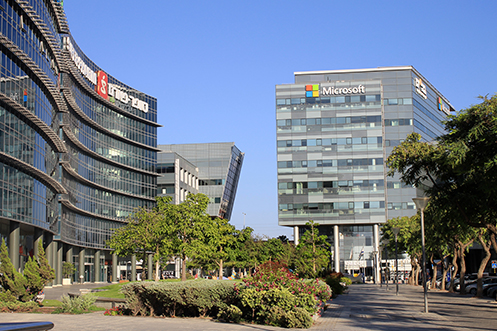
Israel Hi-Tech Sector Rises to Over 300,000 Workers

The Israel hi-tech sector has been growing in size and as a percentage of the nation’s economy. For the first time in the nation’s history, employment in this industry now exceeds 300,000 workers, representing 8.7% of the country’s workforce. Job growth continues to be strong, with surging demand for talent outpacing the supply of qualified workers.

What Companies Lead the Israel Hi-Tech Sector?

The Israel hi-tech sector is known as “Silicon Wadi” and is filled with a large number of multinational companies. Many of these companies have established research and development centers in and near the city of Tel Aviv. These companies have helped to propel Israel to become the tech hub of the Middle East. The nation receives a significant share of venture capital investment.

Large multinational companies that lead the Israel hi-tech sector include:

Apple

Cisco

IBM

Intel

Microsoft

In addition to these large companies, this sector has many other employers. In Israel, hi-tech includes many mature mid-size companies as well as young start-up enterprises.

What Jobs are Companies in the Israel Hi-Tech Sector Seeking to Fill?

The Israel Innovation Authority and Start-Up National Central published a joint study noting that the Israel hi-tech sector is growing faster than the supply of workers in the country. As a result, the nation is facing a shortage of about 15,000 skilled workers just to fill open positions.

Jobs that the industry is seeking to fill include:

Focus on Artificial Intelligence Start-Ups

Artificial intelligence is a branch of computer science that focuses on creating “smart machines” that can do tasks that humans usually perform. Artificial intelligence start-ups in the Israel hi-tech sector account for a significant portion of the industry’s employment growth. Several of these companies have received venture capital funding to continue their growth and development. Applications cover a wide range of processes in medical, industrial, and business settings.

The top 3 artificial intelligence start-ups in Israel as measured by their level of funding are:

Airobotics: automated industrial drones for gathering aerial data and developing insights

OrCam: artificial vision in an intuitive portable device

Cortica: simulation of the mammal cortex (largest component of the brain) for use in autonomous vehicles, drones, robotics

What Should Job Seekers do About the Israel Hi-Tech Sector?

Job seekers should investigate the Israel hi-tech sector for opportunities. A number of resources are available to learn about jobs in this sector. Professional networks such as Linkedin often have helpful information on companies and contacts, as does the Israel Job Board and the Jewish Agency for Israel. Job seekers may want to focus on a specific location such as Tel Aviv or Haifa and then identify specific employers to target their job preferences.

Job seekers in the Israel hi-tech sector should utilize professional career services to enhance their job search and achieve success in their career objectives.

What Should Employers in the Israel Hi-Tech Sector do?

Employers in Israel should review their employment needs and corporate growth objectives. This will help define their need for employees with requisite skills and training. They should review their relocation program to determine if it benefits their talent acquisition goals and corporate objectives. Employers should work with a Relocation Management Company that has the knowledge and expertise to help them design a relocation program that promotes talent acquisition.

GMS has recently published several Industry Benchmarking Studies that will help employers in the Israel hi-tech sector learn whether their company’s relocation program is designed following industry-specific best practices. There are many benefits to a corporate relocation policy benchmarking. For example, employers can learn how they can ensure their competitiveness in their industry to attract and retain talent with the highest level of skills and experience.

Industry best practice is to schedule a relocation program and policy review every 12 to 18 months to ensure your company maintains its competitive position. This review will help your company learn about how the relocation industry is evolving to meet the needs of the Israel hi-tech sector. It will also reveal increasing employee demands as they relate to their relocation process.

Conclusion

GMS’ team of global relocation experts has helped thousands of our clients develop hiring and recruiting programs to attract highly skilled job seekers. Our team can help your company determine how to attract job seekers looking for employment opportunities in the Israel hi-tech sector.

GMS was the first relocation company to register as a .com. The company also created the first online interactive tools and calculators, and revolutionized the entire relocation industry. GMS continues to set the industry pace as the pioneer in innovation and technology solutions with its proprietary MyRelocation® technology platform.

Global Mobility Solutions is proud to be named and ranked #1 Overall, and #1 in Quality of Service by HRO Today’s 2019 Baker’s Dozen Customer Satisfaction Survey.

Contact our experts online to discuss how we can help your company’s talent acquisition program in the Israel hi-tech sector, or give us a call at 800.617.1904 or 480.922.0700 today.

Request your complimentary Visa Program Assessment

Looking for something?